- V
- GF
- NS
- DF
- View Recipe Key
No-Butter Lemon Curd
No-Butter Lemon Curd
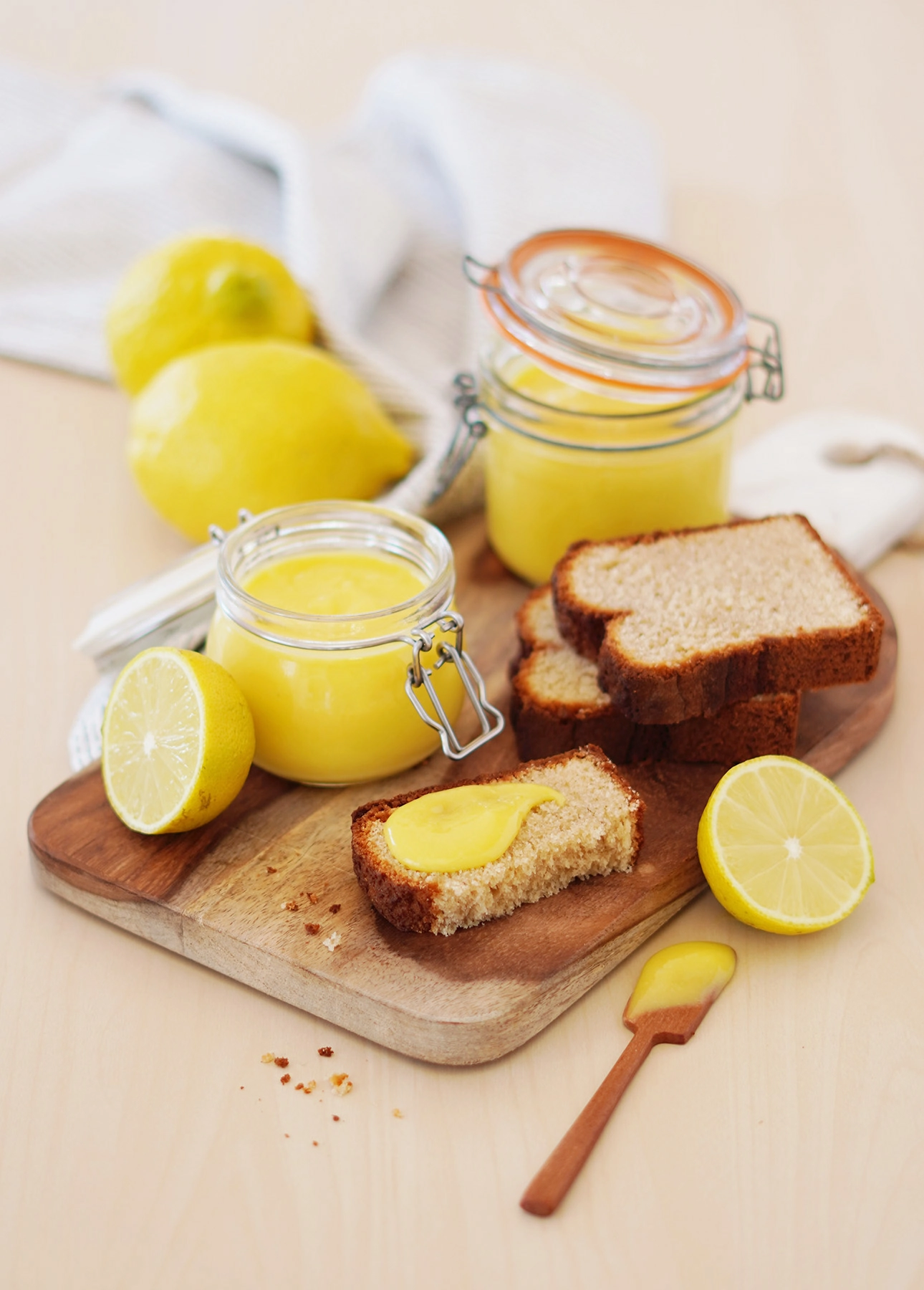
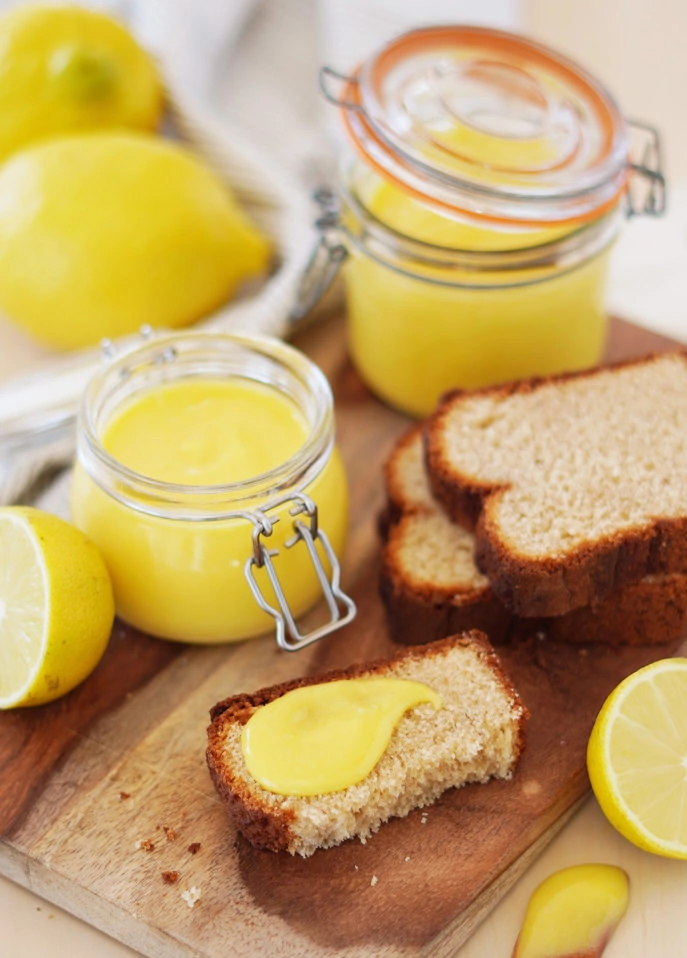
This no-butter lemon curd is better-for-you, yet just as rich and puckery as the traditional treat. Learn where lemon curd comes from, how to make it, and enjoy it from breakfast to dessert!
This post contains affiliate links. Full disclosure is at the bottom of the article.
Lemon curd is one of my favorite citrus condiments. Everything about it makes me happy: its bright yellow color, its zippy, puckery flavor, and the fact that you can enjoy it from breakfast to dessert.
A bit of lemon curd history: Lemon curd is a creamy fruit spread usually made with egg yolks, butter, sugar, lemon juice, and lemon zest. It’s an English condiment that dates back to the 19th century. Lemon curd was traditionally (and still is) served with afternoon tea as an alternative to jam on scones, bread, and cake. You can also use it to fill pastries and tarts.
After making traditional lemon curd for years, I started experimenting with variations to avoid the butter usually required in traditional recipes (and make it friendlier for my lactose-intolerant belly). After perfecting this completely butter-less lemon curd, I realized I didn’t miss the traditional, butter-laden variety at all. Everyone who tasted it loved it too, and no one noticed the lack of extra calories—so I’ve never looked back.
This no-butter lemon curd is now my go-to lemon curd recipe. A little cornstarch helps achieve the right silky consistency, and a touch of cream leaves room for a slightly puckery taste—the hallmark of the bright condiment.
I always keep a jar of this no-butter lemon curd in the fridge and use it on anything and everything, from breakfast to dessert. I’m addicted, you see, and I think you’ll quickly become so, too.
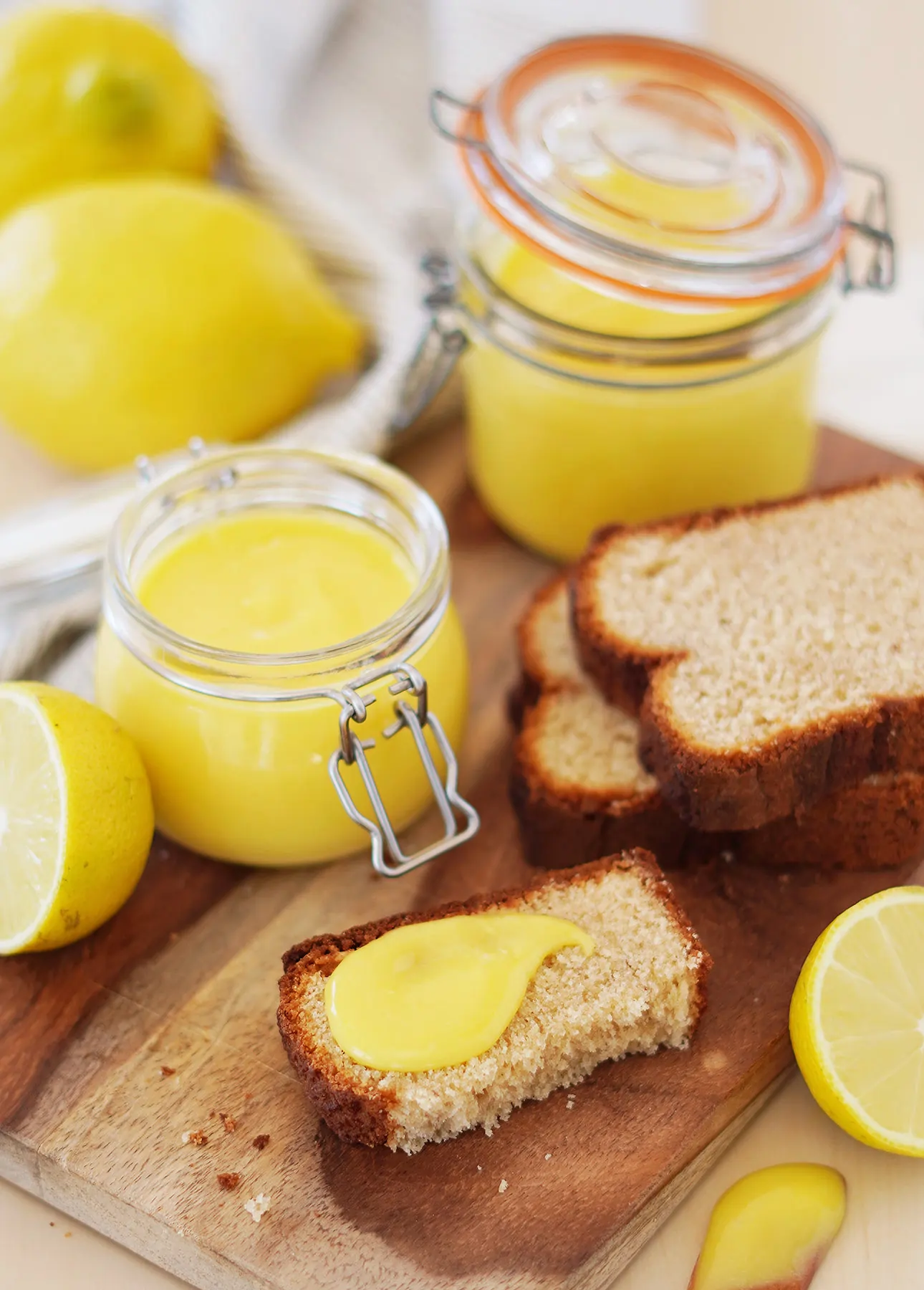
If you’re not very familiar with the condiment, here’s some background on why lemon curd is so delightful, plus tips for making it at home.
Why is lemon curd called a “curd”?
In 19th-century England, lemon “curd” was exactly that: people mixed acidic lemon juice into cream, then strained it through a cheesecloth.
Over time, butter, eggs, and sugar replaced the cream to create the rich, velvety spread we know today. Modern lemon curd is made like a custard: a liquid (lemon juice) thickened with eggs.
What ingredients are used to make traditional lemon curd?
Traditional lemon curd uses butter, eggs, and lemon juice. In traditional lemon curd, butter serves as both a thickener and a way to add richer mouthfeel and flavor. In my no-butter lemon curd recipe, I achieve the same velvety texture with a spoonful of cornstarch and a bit of heavy cream. This lets me leave the butter out of the equation, creating a better-for-you condiment.
Can you add more sugar to lemon curd?
Lemon curd is meant to walk that fine line between too acidic and just sweet enough. That said, lemon sweetness varies. I do understand that some people might enjoy the aromatic quality of lemon curd but not its puckery acidity. You can add up to 2 tbsp (24 g) granulated sugar to this no-butter lemon curd recipe to round off its edges.
But if you want a sweeter, less acidic citrus curd, I recommend using Meyer lemons, which are much sweeter than regular lemons, or swapping in a bit of orange, mandarin, or clementine juice for some of the lemon juice in the recipe. This will naturally sweeten the curd without adding more sugar.
Refer to my citrus fruit juice to sugar ratios below for more information about the different citrus fruits you can use to make curds and the associated amounts of sugar you should use to make them.
How long can I store no-butter lemon curd?
You can refrigerate no-butter lemon curd in an airtight jar for up to 5 days.
Can I freeze no-butter lemon curd?
You can’t freeze this no-butter lemon curd. This curd is cooked like a cornstarch-stabilized pastry cream. If you freeze no-butter lemon curd, it will thaw to a completely different texture. The rich, smooth texture will be replaced by a yucky, grainy one because the fats and proteins will separate during freezing/thawing. That silky smooth texture you want for your pastries will be gone. You can’t fix this. So please don’t freeze this no-butter lemon curd!
Can I use other citrus fruits to make lemon curd?
Of course, you can! You can use any citrus fruit to make curd. My favorite alternatives are clementines and mandarins because they’re so aromatic! Oranges are much sweeter than lemons, so if you’re swapping oranges for lemons, you’ll need to adjust the sugar in the curd, and you’ll get a much tamer, sweeter condiment. Those who specifically love the tartness of lemon curd will truly enjoy using limes or grapefruit! You can also mix citrus fruits, for example, lemons and clementines, to make curd.
Refer to my fruit juice-to-sugar ratios below to see the different varieties of curds you can make.
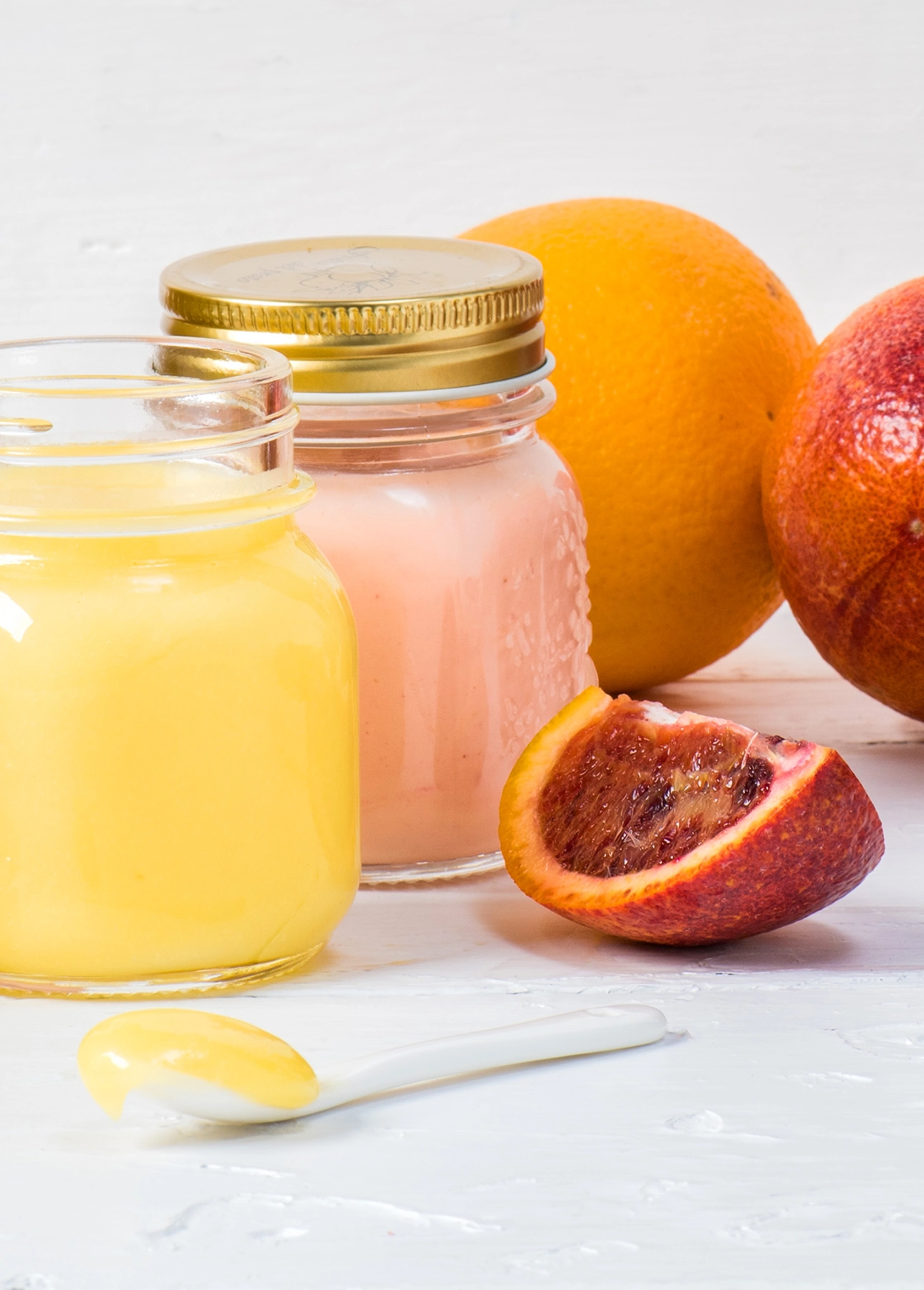
Photo above from my cookbook Simply Citrus.
Approximate citrus fruit juice to sugar ratios to make citrus curds
If you’re swapping lemons for other citrus fruits in this no-butter lemon curd recipe, you’ll need to adjust the sugar content. I’ve made nearly every variety of citrus curd, so here are the juice-to-sugar ratios I’ve created.
The number of citrus fruits indicated below should provide the amount of juice required in the recipe. Of course, citrus juiciness varies widely by provenance and season, so no matter which citrus you use, make sure you reach the required 3/4 cup (180 ml) of strained juice.
- 1 grapefruit, 4 lemons, 6 limes, or 18-24 key limes: use 1/2 cup (100 g) granulated sugar
- 6 Meyer lemons: use 1/3 cup (70 g) granulated sugar
- 3 oranges (blood, Cara Cara, or Navel) or 8 mandarins or clementines: use 1/4 cup (50 g) granulated sugar
- 1/2 cup (125 ml) bottled yuzu juice: use 1/2 cup (100 g) granulated sugar
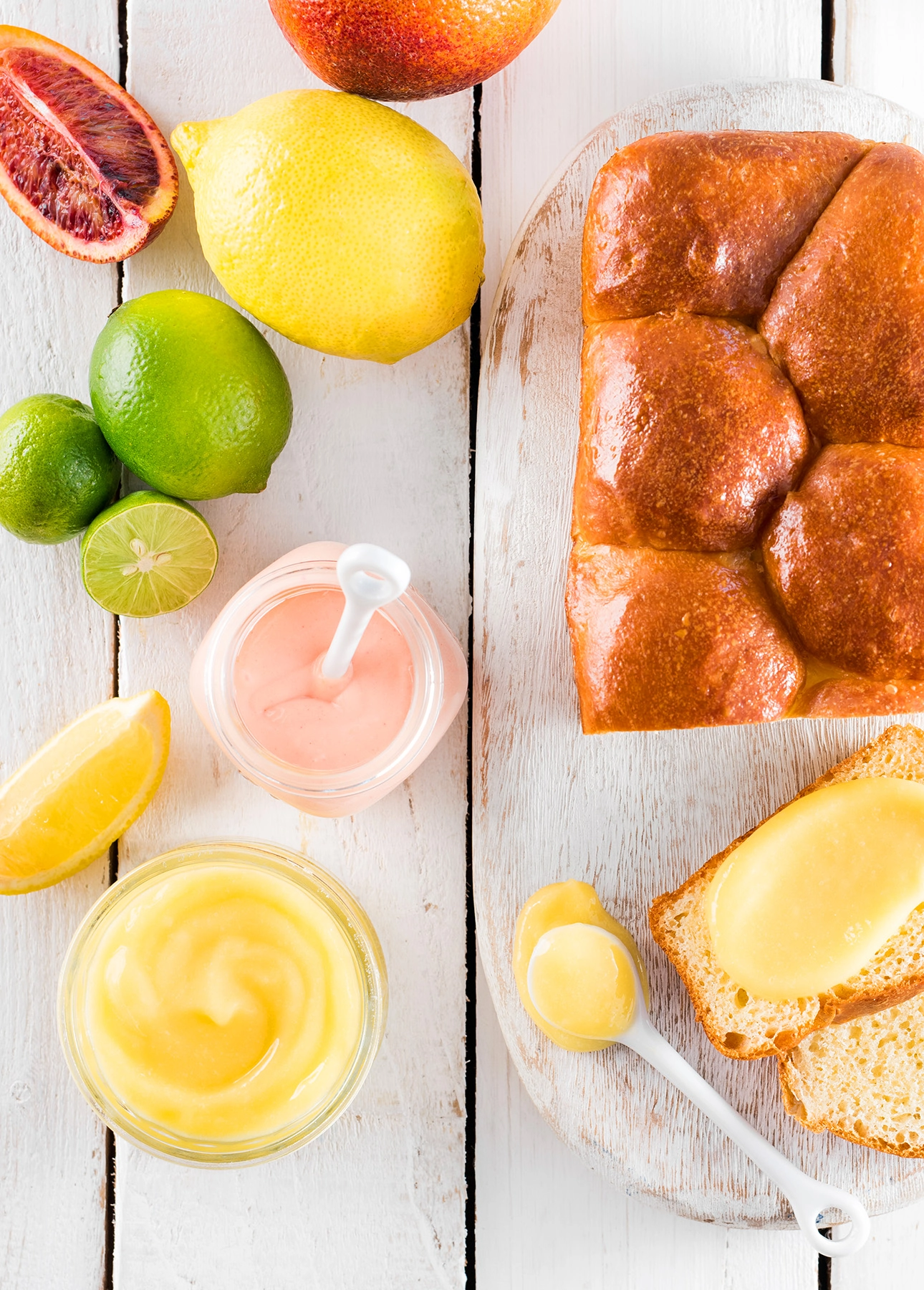
Photo above from my cookbook Simply Citrus.
Delightful ideas to use and serve lemon curd
- As a spread over scones, bread, toasts, croissants, muffins, and so on
- As a topping for angel food cake, quick breads, crêpes, pancakes, and waffles
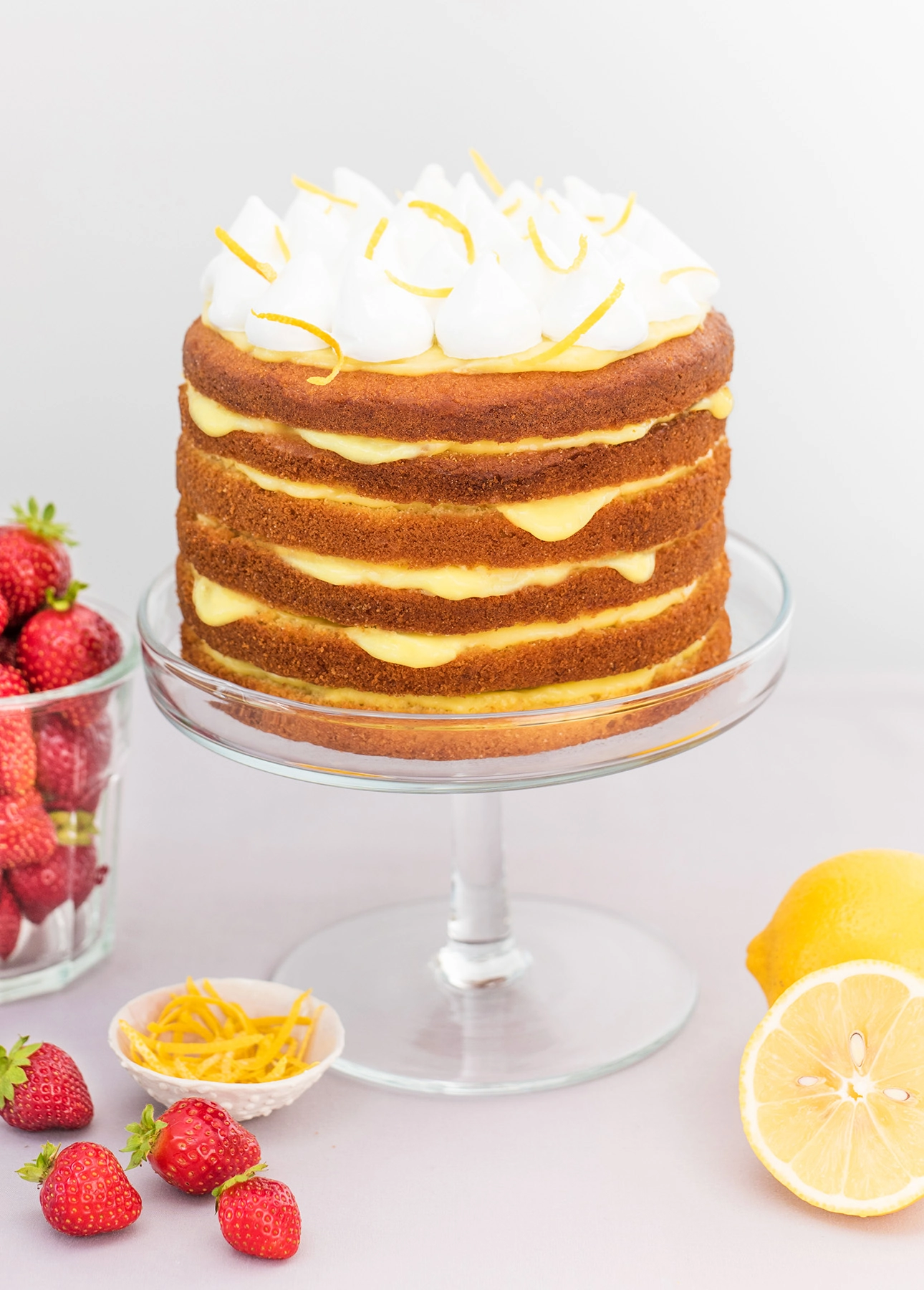
- As a filling for cupcakes and layered cakes, tarts and tartlets, cream puffs and éclairs, and thumbprint cookies
- As a garnish for gelato, ice cream, yogurt, and granola
You can also enjoy no-butter lemon curd straight from the jar, by the spoonful! No matter how you serve lemon curd, you can’t go wrong with this wonderfully versatile condiment.
Citrus Desserts Cookbook
Love zesty, citrus-centric dessert recipes? Then you’ll love my Citrus Desserts Cookbook! Filled with colorful, irresistible, meticulously tested dessert recipes—including cakes, tarts, breakfast treats, delicious bars, spoonable treats, and candies—Citrus Desserts features mouthwatering photography, countless clever tips, and variation ideas to make the recipes as versatile as possible. LEARN MORE
No-Butter Lemon Curd Recipe
Ingredients
- 1 tbsp cornstarch
- 1 tbsp water
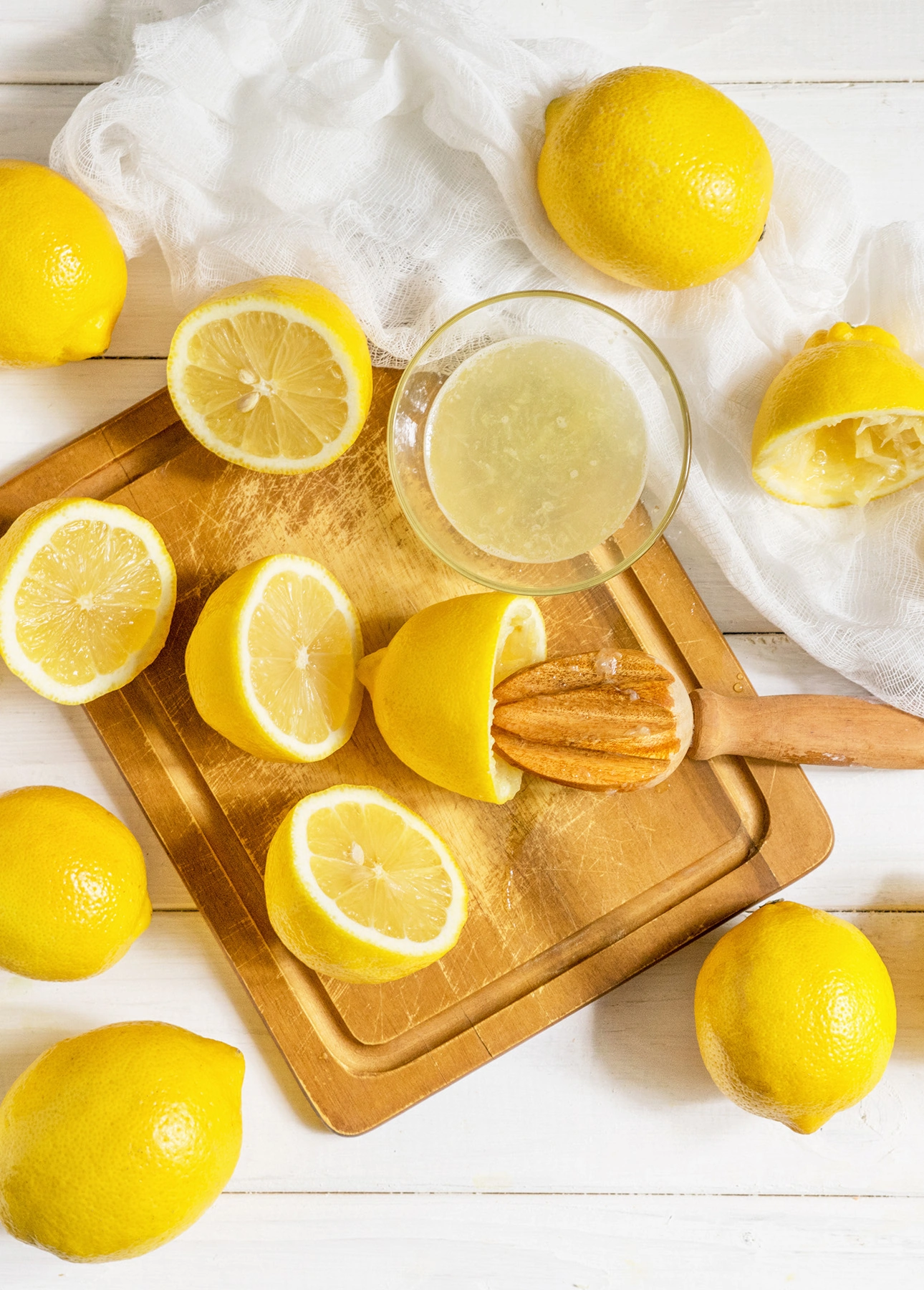
- ¾ cup freshly squeezed lemon juice (about 4 lemons)
- ½ cup granulated sugar
- 2 large eggs
- ⅓ cup heavy cream (35% m.f., see note, below, for a dairy-free alternative)
Instructions
- In a small bowl, dissolve the cornstarch in the water. Set aside.
- In a saucepan set over medium heat, whisk the lemon juice and sugar together until the sugar is completely dissolved (the mixture doesn’t need to boil.) Remove from the heat and let cool until warm. In a small bowl, whisk the eggs together, and gradually pour into the lemon-sugar syrup, whisking constantly to incorporate. Place the saucepan back over medium heat. Add the cornstarch mixture and whisk to incorporate.
- Continue whisking until the mixture is thick like a custard or a soft pudding (make sure to whisk constantly so the mixture doesn’t stick to the bottom of the pan and burn.) Remove from the heat. Whisk in the regular heavy cream. If you're expecting a brighter yellow hue, feel free to add a drop of yellow food coloring, but I prefer my lemon curd to retain its natural soft yellow shade.
- STORAGE: Transfer to an airtight jar and refrigerate until completely cold. The lemon curd will keep for up to a week.
- MAKE IT LACTOSE FREE OR DAIRY-FREE: Substitute lactose-free heavy cream or soy cream for the regular heavy cream.
Notes
- 1 grapefruit, 4 lemons, 6 limes, or 18-24 key limes: use 1/2 cup (100 g) granulated sugar
- 6 Meyer lemons: use 1/3 cup (70 g) granulated sugar
- 3 oranges (blood, Cara Cara, or Navel) or 8 mandarins or clementines: use 1/4 cup (50 g) granulated sugar
- 1/2 cup (125 ml) bottled yuzu juice: use 1/2 cup (100 g) granulated sugar
Did you make this?
Tell me how you liked it! Leave a comment or take a picture and tag it with @foodnouveau on Instagram.
This site participates in the Amazon Associates Program, an affiliate advertising program designed to provide a means for the site to earn fees by linking to Amazon and affiliated sites.
If you click on an affiliate link, I may earn advertising or referral fees if you purchase through such links at no extra cost to you. This helps me create new content for the blog–so thank you! Learn more about advertising on this site by reading my Disclosure Policy.
Author: Marie Asselin
The amount of substituting I did, I am honestly surprised it came out amazing.
Lemon subbed for lime and orange juice mix (honestly, tasted like lemon), sugar for xylitol and heavy cream subbed for canola oil mixed with evaporated unsweetened milk. Came out amazing though! If anyone lacks any of the ingredients listed, i can certify these work :)
I’m so glad it turned out well for you! You made quite a few substitutions, so I’m happy they worked in your kitchen. I’ll just add a small note for other readers: because I haven’t tested this exact combination myself, results may vary, but it’s always helpful to hear what worked for someone else. Thank you for sharing!
Can I add lemon zest to this recipe? If so, which step should I include it? Using a lemon without using the zest is always such a shame! Haha
Hello Amandine! You could add the zest along with the lemon juice and sugar in the first step. Proceed as indicated in the recipe, but simply make sure to strain the zest out before you transfer the lemon curd to a jar.
I want to swirl the curd into my homemade gelato (also your recipe) but in the faq section you say not to freeze the curd…that it will change texture. So is it OK to swirl into the gelato before it goes into the freezer, or not? Should I use it more like a topping?
Hey Susie! That is a really good observation, thanks so much for pointing this out! When making lemon gelato, you can and should swirl in the cold lemon curd as you transfer the just-churned gelato to a storage container. When swirled into the gelato, the curd keeps well and retains a creamy texture, too. The lemon curd is spread out in thin layers and is somewhat “protected” by the gelato mixture. However, freezing jars or a larger quantity of just lemon curd is riskier as the texture might be affected if you plan on serving it as a spread later on. Hope you’ll enjoy my lemon gelato, it’s one of my favorites!
Hi Marie,
Should I use 3/4 or 1/2 cup of juice to make the curd with other citrus fruits? The original recipe uses 3/4 cup of lemon juice.
Thank you!
Hey Wendy! Your comment made me realize there was a typo in the recipe note, so thank you! You do need 3/4 cup juice total to make the curd, whichever citrus fruit variety you use to make it. I just fixed the recipe. Hope this helps!
I just made a batch of lemon curd this very moment. It is beyond delicious and I honestly cannot tell that it doesn’t contain any butter. I’ll definitely save the recipe and pass it on. Thank you :)
Reading your message made me so happy! Happy you’re enjoying this delightful lemon curd as much as I do.
That’s just great! I’ve been looking for a recipe for a while. I could’t find any commercial lemon card. Now, I’m so happy to use this in cakes and other pastries.
Happy you loved my version of lemon curd Naiby!
Mmmm, this is the best lemon curd recipe. So simple and bright and delicious! I am almost out so I need to make more.
I’m all out so I need to whip up another batch as well! :)
I LOVE lemon curd and I love that this one is made without butter. It’s just as creamy and rich…such a wonderful addition to so many dishes!
I have nothing against butter… but when you can make such a satisfying lemon curd without it, who’s missing it? I know I’m not!
I love lemon curd but I’ve never made it at home. I’m glad I found this recipe, it was really fun to make and way easier than I thought it would be!
Yes lemon curd is so much easier to make than most people think! This version is pretty much foolproof.
This fresh, bright lemon curd is going to be the perfect addition to the lavender cake I’m baking this weekend. It looks so good I can almost taste it now. Can’t wait!
Oh yum, such a perfect flavor combination! Thanks for the inspiration!