- V
- GF
- NS
- DF
- View Recipe Key
Roasted Butternut Squash Risotto with Brown Butter & Sage
Roasted Butternut Squash Risotto with Brown Butter & Sage
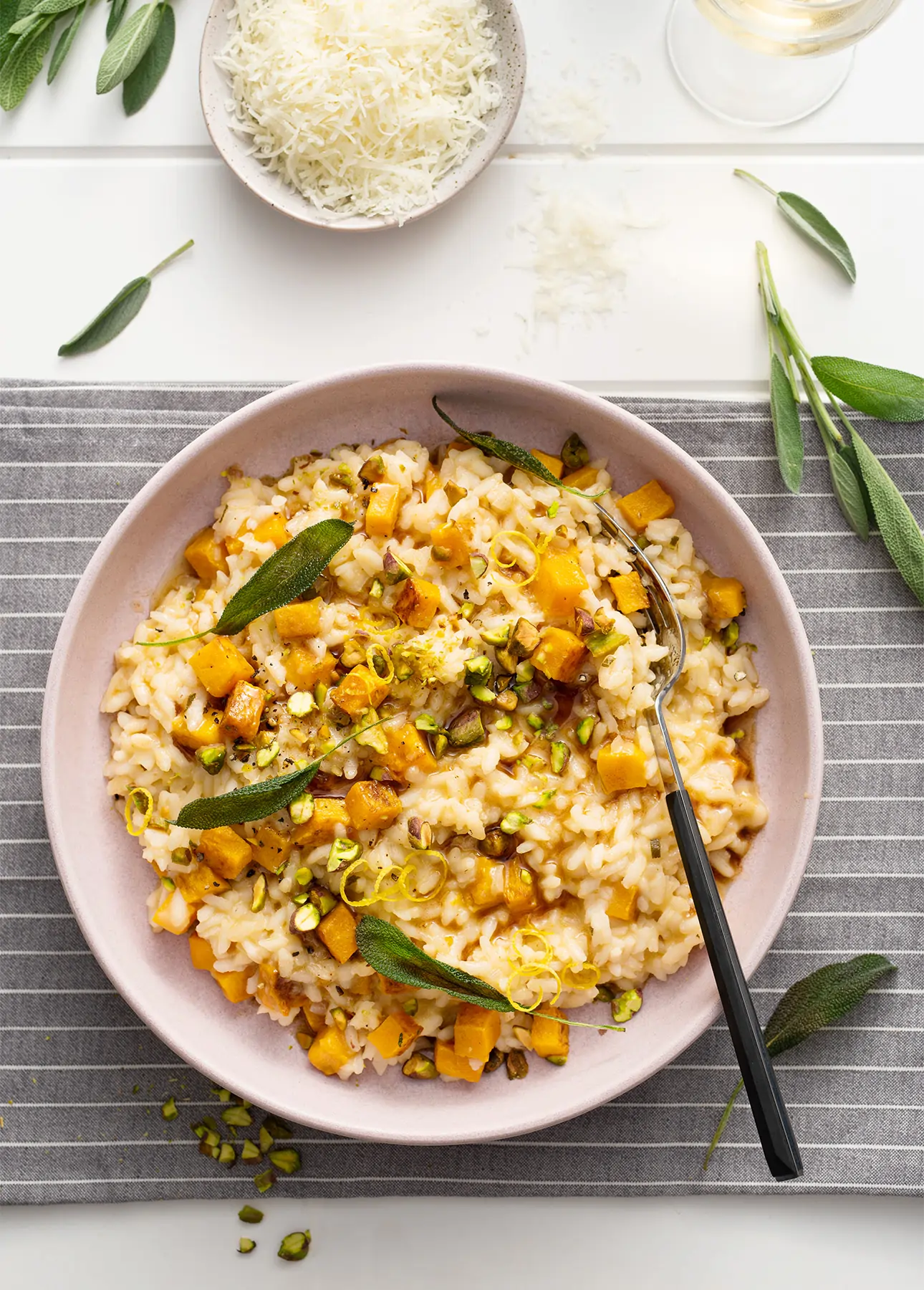
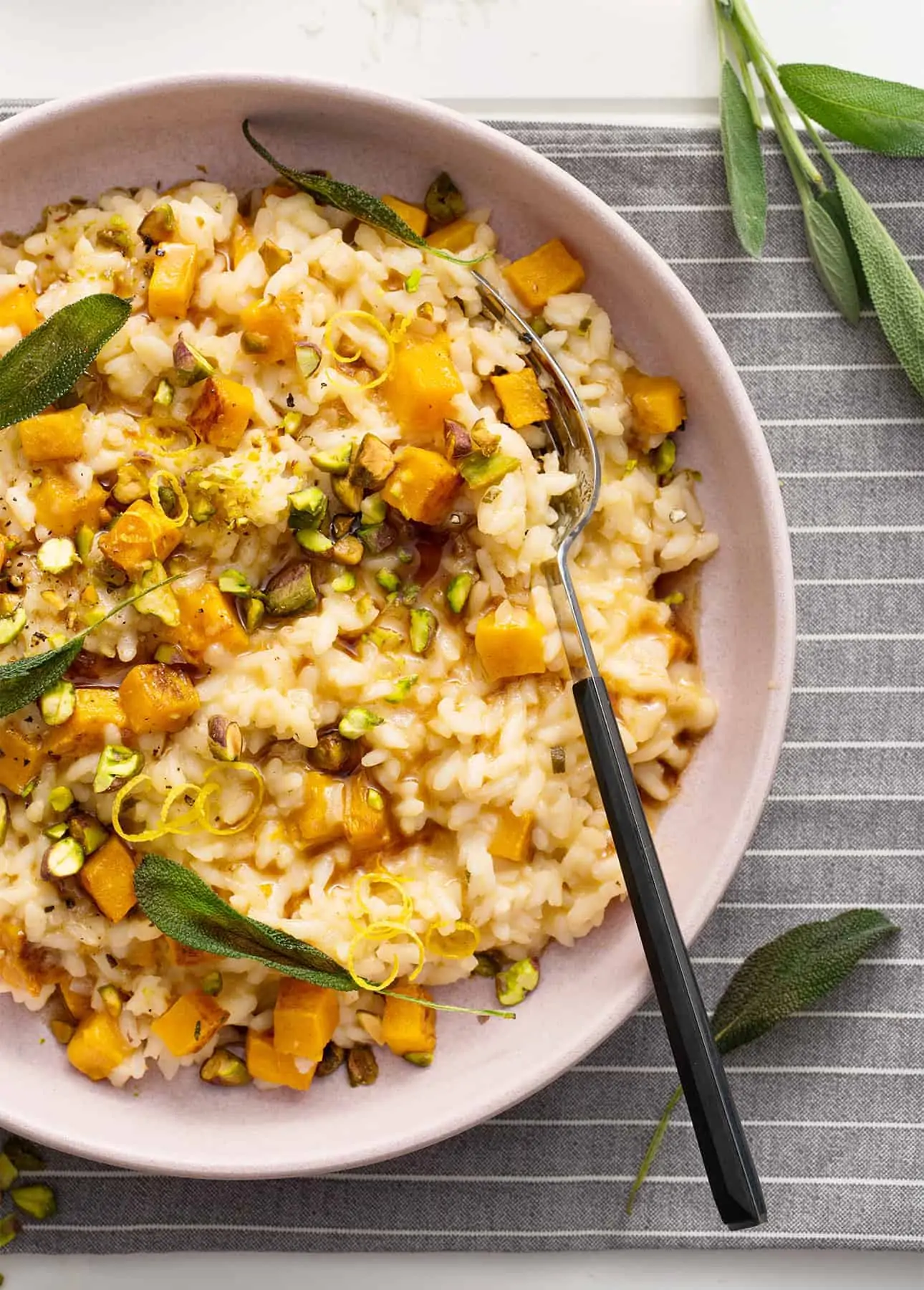
This creamy butternut squash risotto, finished with nutty brown butter, crisp sage, and a subtle Sicilian twist, is the ultimate fall comfort dish—simple enough for a weeknight, yet special enough for guests.
This post contains affiliate links. Full disclosure is at the bottom of the article.
When fall rolls around, I start craving comfort food, the kind that requires you to slow down. I don’t mean complicated food. Just food that smells so good halfway through cooking you already know it’s worth it. This butternut squash risotto is exactly that kind of meal: cozy, creamy. A little fancy but not showy.
This colorful squash risotto recipe traces back to a trip I took to Sicily in 2015. As one of the pistachio-producing capitals of the world, Sicily isn’t shy about using the neon green nut both in sweet and savory contexts. The latter surprised me the most: all my new favorite pistachio-centric dishes were savory! I just couldn’t get enough of the soft, almost creamy taste they contributed to delicately flavored creations, such as fish and seafood pasta dishes.
An irresistible pasta dish generously sprinkled with pistachios, at Cave Ox Pizza Bar in Sicily.

Before my trip to Sicily, I’d always used pistachios in desserts, such as cookies and gelato. There’s nothing wrong with that, but there’s so much more you can do! After that trip, I started tossing pistachios into everything: pasta, salads, snacks. And eventually, this butternut squash risotto.
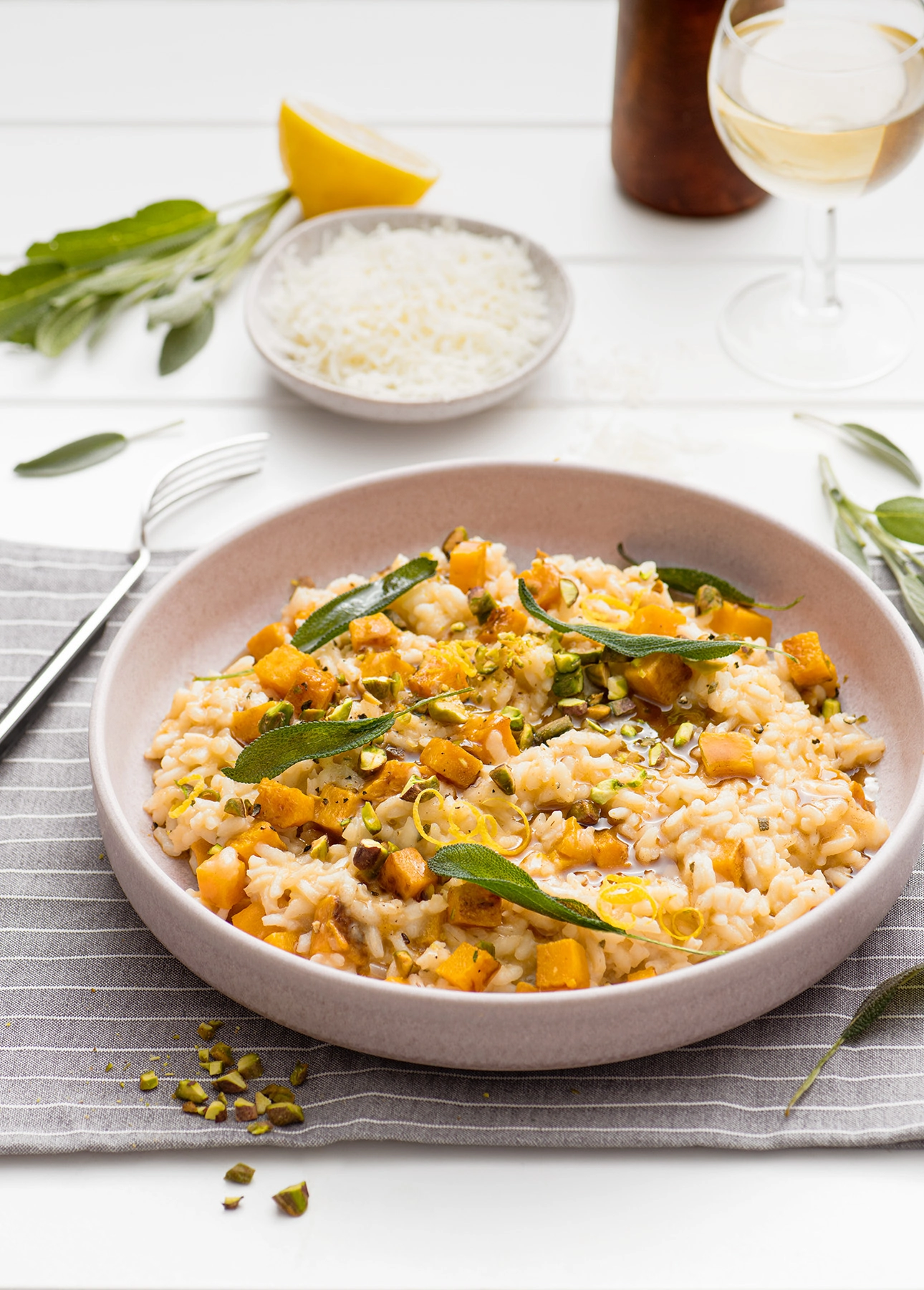
There’s something about roasted squash, nutty brown butter, and sage that just works. The flavors hit that perfect balance between earthy and sweet. The soft cubes of squash cozily blend into the creamy rice, the brown butter adds a nutty dimension, and the aromatic fried sage leaves add a subtle crunch, which is nicely complemented by the pistachios.
Though this butternut squash risotto definitely makes for an elegant holiday-worthy dish, don’t wait and make it on a weeknight, too! See my tips, below to prep and even freeze the butternut squash in advance. Once the creamy risotto is done, stir in the butternut squash as indicated, serve in simple bowls and enjoy it curled up on the sofa under a warm blanket, with a nice glass of wine and a movie. This is my definition of the perfect night in.
Helpful Tips for Making this Butternut Squash Risotto
Pick the right rice
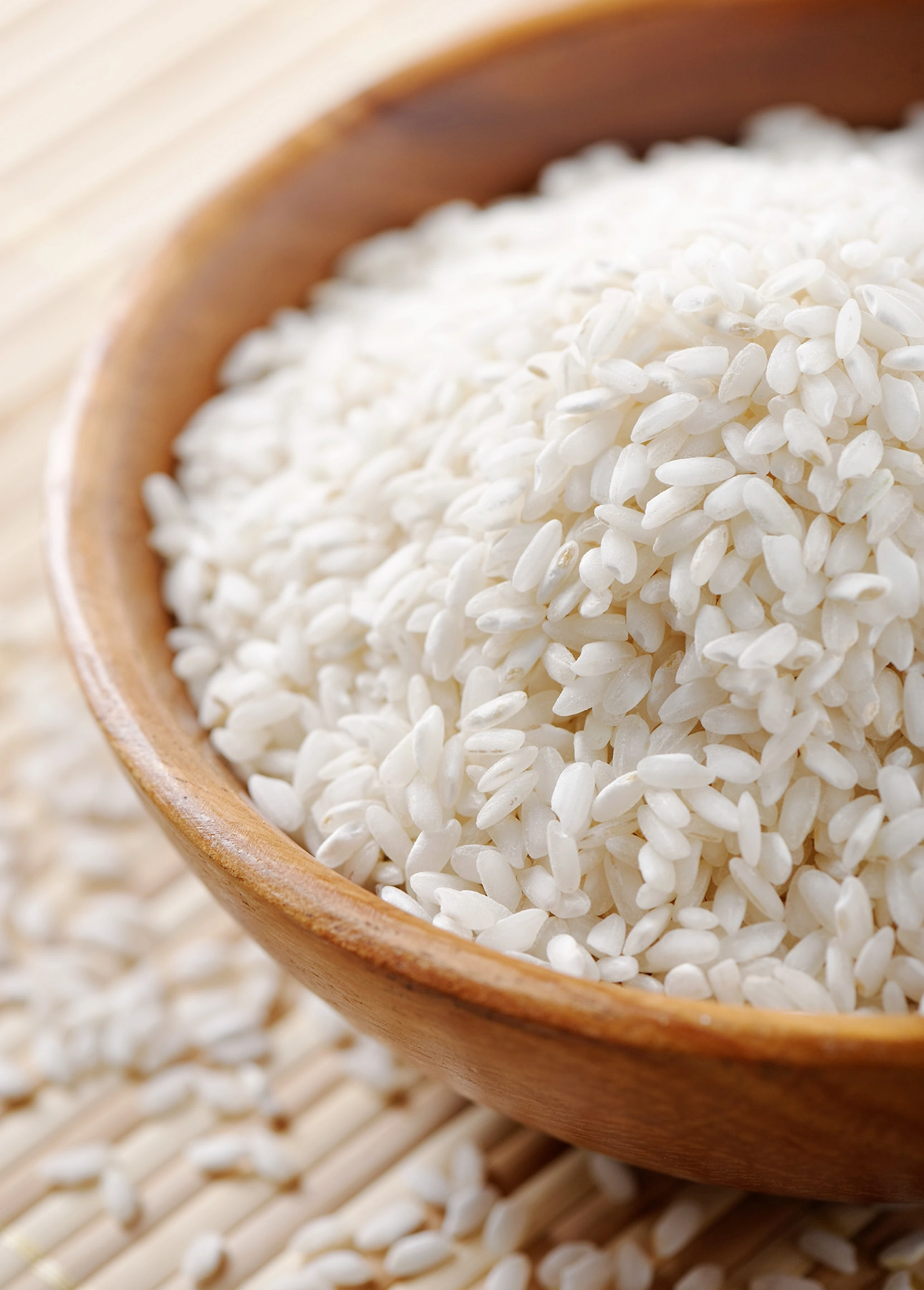
Risotto starts and ends with rice. Arborio rice is the easiest to find in most grocery stores and works fine, but Carnaroli and Vialone Nano are my favorites—both varieties stay creamy without ever turning mushy.
Never rinse your risotto rice before cooking! The starch clinging to those grains is what give risotto that silky finish.
If you’ve got the risotto bug after this, try my Sweet Pea Risotto. Same technique, completely different vibe—it tastes like spring in a bowl.
Use the best Italian cheese for the best flavor and creamiest texture
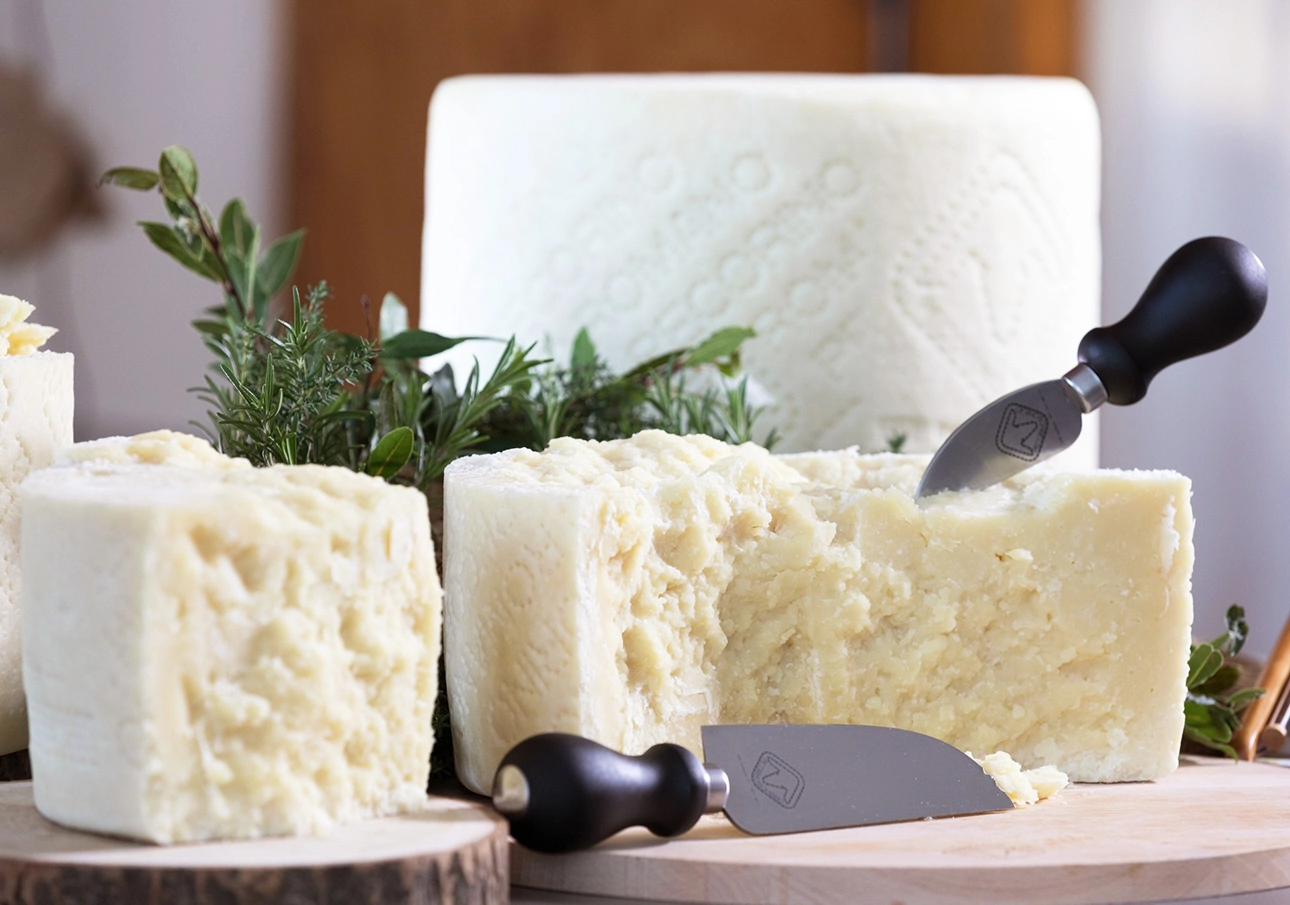
Classic, aromatic Parmigiano-Reggiano is often used in risotto recipes, but in this one, I like to use Pecorino Romano instead. Pecorino Romano is a hard Italian cheese made with sheep’s milk. It has a sharp, slightly peppery flavor and it’s super aromatic, which means it’s just the thing to balance out the milder, sweeter flavors of roasted butternut squash and brown butter.
Be aware that Pecorino Romano is quite salty, in fact, it’s saltier than Parmigiano-Reggiano, so you’ll need to use less to provide flavor and creaminess to the dish. Make sure to wait until you’ve stirred in the Pecorino Romano cheese into the risotto before adding any salt to the recipe; depending on the cheese, you might not need to season the risotto at all.
Roast the squash for that extra caramelized touch
You could simmer the diced squash directly in the risotto, but roasting it instead gives it so much depth and extra flavor! High heat transforms butternut squash into little caramelized nuggets of sweetness. If some cubes get darker than others, even better—those toasty bits are flavor bombs.
You can roast butternut squash in advance, meal-prep style, then freeze it in portions so you’re ready to use it in this risotto whenever you get a craving for it. Just make sure to shave off 5 minutes from the roasting time to account for the fact that the freezing and thawing process tends to make vegetables more tender.
Learn how to brown butter
Making brown butter may sound complicated and intimidating, but it’s actually very easy. Once you’ve learned how to make brown butter, you will want to use the deliciously nutty concoction in a variety of dishes, from this butternut squash risotto to French financiers and blondies and so many more irresistible dishes!
The process is very simple—it takes all of 5 minutes to complete. I’ve got a full article that teaches you to make it from scratch and explains how life-changing it can be to use brown butter in both sweet and savory contexts! You can also watch my short How to Make Brown Butter video to see me make it, or browse through my mouth-watering list of aromatic Sweet and Savory Brown Butter Recipes.

VIDEO: How to make brown butter
Learn how to make brown butter step by step. It’s an easier technique than you think and it brings a world of flavor to your dishes!
Keep risotto broth warm throughout the process
Here’s the thing: cold broth shocks the rice. If you try to incorporate it to your hot risotto, you’ll lose your creamy rhythm and end up cooking (and stirring!) forever. Keep your broth barely simmering on a nearby burner—both vegetable and chicken work in this recipe. If I’ve got one on hand, I toss a Parmesan rind into the broth while it simmers. It boosts the flavors and adds that irresistible umami touch!
Stir… but don’t wear yourself out doing it
You don’t need to hover over the pan—risotto isn’t that high-maintenance. Stir every couple of minutes, just enough to keep the rice moving and prevent sticking. You’re looking to gently coax starch out of the grains, not training for an arm workout!
Know when to stop
When the rice looks glossy and the grains are tender with the tiniest chew left in the middle—you’re done. The risotto should be quite loose before you add in the cheese, because the cheese will thicken it further. If the risotto seems stiff at this point, ladle in an extra bit of broth to loosen it before you incorporate the cheese.
Turn the heat down to the lowest setting, then add the grated cheese, stirring until it’s fully melted and incorporated into the risotto. Stir in the lemon juice, then taste and adjust the seasoning if needed.
In the end, the texture of the risotto should reach a creamy, slightly loose consistency. When you ladle it into warm bowls, it should spread out. Italian chefs call this texture “all’onda,” meaning perfectly cooked risotto should ripple like a wave.

If your butternut squash risotto doesn’t seem to reach that perfect texture (too thick? too loose?), make sure to look at my troubleshooting tips below to get it right.
Love risotto and looking to try something new? My Sweet Corn Risotto is the summery cousin to this one. Same technique, but lighter and brighter.
Add that chef’s touch
This butternut squash risotto is gorgeous and ready-to-eat as soon as it’s finished cooking. But if you can take an extra minute to top each serving with fresh, textured ingredients such as fried sage leaves, lemon zest, pistachio nuts, and a final drizzle of that aromatic brown butter to push it to chef’s levels, both in terms of looks and textures.
Easily scale up the recipe to serve the number of guests you’re serving
Most risotto recipes serve 4 to 6, with ingredient quantities that are hard to split into halves or thirds. This has always annoyed me because I usually make risotto for 2 people. So I’m writing all my risotto recipes to serve 2, which means the math is easier to scale up the ingredients to serve 4 or 6 guests.
Note that this butternut squash risotto recipe produces a generous 2-serving yield—you could stretch it to 3 servings if this dish is part of a more elaborate menu that includes appetizers and sides.
Ingredient Swaps & Add-Ins
- Cooking dairy-free? Omit the butter. Skip the Pecorino Romano and use a splash of vegan cream plus a sprinkle of nutritional yeast to give it a rich, nutty finish.
- Out of wine? Add extra broth, then brighten the dish at the end with a little lemon juice or a teaspoon of white wine vinegar.
- No butternut squash on hand? Pumpkin, kabocha, or sweet potato can stand in for butternut squash—they all bring a different personality. And if sage isn’t your thing, both thyme or rosemary both cozy up nicely with brown butter.
- Want to make this risotto even heartier? Add in the meat of 1 mild Italian sausage, or ½ cup (about 75 g) diced pancetta right as you’re cooking the shallot. Once the meat is golden brown, add the risotto rice and resume following the recipe as described, below.
Make-Ahead, Storage & Reheating
You can roast the squash a couple of days ahead and keep it refrigerated, or freeze it for weeks in advance. When dinnertime comes, you’re halfway there!
Cooked butternut squash risotto keeps well for three days, sealed tight in the fridge. To reheat, spoon it into a pan with an extra splash of broth or water. Stir as it warms and loosens back into its creamy self. Don’t put it over high heat—low and slow is key. It might be tempting to just microwave leftovers, but only the stovetop method will return your risotto to its irresistible creamy self.
If you’ve got leftovers, turn them into arancini. Arancini are Sicilian risotto balls, fried until crisp outside and soft inside.
If you’re planning a dinner party, go bolder next time and try my Red Wine Risotto. It’s the dramatic, ruby-colored sibling of this one!
Troubleshooting
- Risotto looks too thick? You might have cooked it a bit too long, or perhaps it had time to cool down. Stir in a bit more hot broth to return it to its silky glory.
- Risotto looks soupy? Keep it over low heat for an extra minute or two, stirring until the texture tightens up.
- Rice still a little crunchy? Keep feeding it broth until it softens.
- Bottom sticking? Turn the heat down. Risotto likes low and slow heat. If you keep stirring over low heat, I guarantee your risotto won’t stick.
Once you’ve got the hang of making risotto, you can riff endlessly. My Wild Mushroom Risotto is another comforting favorite—darker, moodier, and perfect with a glass of red wine
FAQ
Can I make butternut squash risotto without wine?
Yes! Simply substitute the white wine with the same amount of hot broth. Add an extra squeeze of lemon or a teaspoon of white wine vinegar at the end to keeps things bright.
How do I know when risotto is done?
Taste it! The rice should be tender but not mushy. When you ladle it out in your serving plates or bowls, perfectly cooked risotto should slowly spread out—kind of like lava moving slowly. That’s risotto cooked “all’onda,” meaning “rippling like a wave.”
What’s the best pan for risotto?
A wide, shallow, heavy stainless steel sauté pan, or a cast iron braiser are ideal for cooking this butternut squash risotto. A wide pan provides ample space to stir and allows the liquid to evaporate at a controlled pace.
How long does it take to make this butternut squash risotto?
All in all, this risotto requires about 20 minutes of prep time, and 45 minutes of cooking time. The butternut squash takes 20 minutes to roast, then you’ll need about 25 minutes to stir that risotto to perfection.
Serving Suggestions
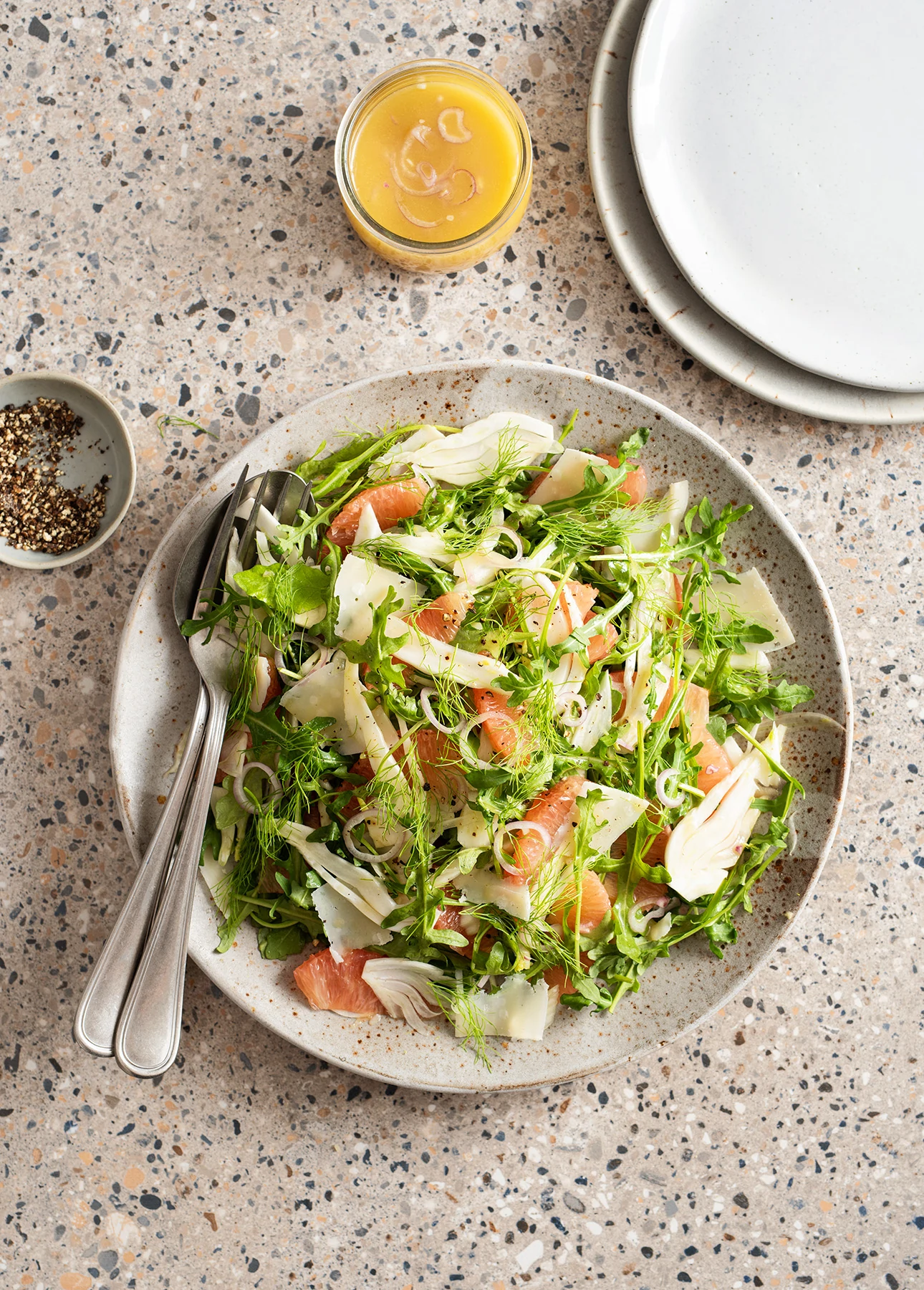
This risotto doesn’t need much alongside it. A simple green salad would do, or if you’d like to upgrade, go for my bright, Sicilian-inspired Grapefruit Fennel Salad.
And because I can never resist a sweet bite at the end, I like to serve financiers after this delicious risotto. Just sweet enough and not too filling, financiers have the same brown buttery soul as this butternut squash risotto, just in tiny cake form!

Wine Pairing Ideas
Since Sicily inspired this butternut squash risotto, I tend to always serve it with a Sicilian wine.
If you like white wine, a Grillo or an Etna Bianco are both ideal with this risotto. They’re both crisp and mineral, which complements the sweetness of the squash and the richness of the brown butter nicely. Other great picks from the Italian mainland would be a Soave Classico or a Verdicchio.
If you’d rather drink red, opt for a Nero d’Avola for a soft and smooth wine, or a Chianti Classico, which pairs well with rich and creamy dishes.
For a festive touch, reach for a bubbly wine! A Prosecco will make this risotto feel even more special. Make sure to check the sugar levels in the Prosecco you pick because some can be very sweet.

Roasted Butternut Squash Risotto Recipe
Ingredients
For the roasted butternut squash
- 1 cup ½-in (1 cm) butternut squash cubes (see note)
- 1 tbsp extra-virgin olive oil
- Pinch kosher salt, or fine sea salt
- Freshly ground black pepper
For the brown butter
- ¼ cup unsalted butter
For the fried sage leaves
- 1 tbsp extra-virgin olive oil
- About 6 fresh sage leaves
For the butternut squash risotto
- 3 cups vegetable broth
- 2 fresh sage leaves, minced
- 1 tbsp extra-virgin olive oil
- 1 shallot, minced
- 5 oz risotto rice (Arborio, Carnaroli, or Vialone Nano)
- ½ cup dry white wine
- ½ cup freshly grated Pecorino Romano cheese
- Finely grated zest and juice from ½ a lemon (about 1 tsp / 5 ml zest and 2 tbsp / 30 ml juice)
To serve
- ¼ cup shelled pistachio nuts, coarsely chopped
Instructions
- For the roasted butternut squash: Preheat the oven to 425°F (210°C). Line a baking sheet with parchment paper. Spread the squash cubes over the sheet, drizzle with olive oil, and season with salt and pepper. Toss to coat evenly, then spread the cubes out in a single layer. Roast for about 15 minutes, or until the squash feels soft when pierced with the tip of a knife. Start checking around the 12-minute mark so the cubes don’t turn to mush. Broil for 1 to 2 minutes for extra color, if desired. Remove from the oven and set aside.(You can roast the squash up to 2 days in advance. Let it cool and refrigerate in an airtight container. You can also freeze the roasted squash for up to 1 month.)
- To brown the butter: In a small stainless steel pot, melt the butter over medium heat until it starts to simmer. Continue cooking over medium-low, swirling the pot occasionally. If the butter bubbles too much and you can’t see the bottom, lift the pot off the heat for a few seconds until the foam subsides.The butter is ready when the milk solids at the bottom turn light brown and smell nutty. Remove from the heat, pour into a small bowl, and let cool completely. Watch my short video to see how easy it is to make brown butter.
- For the fried sage leaves: In a small nonstick skillet over medium-high heat, heat the olive oil until shimmering. Add the sage leaves in a single layer. Fry for just a few seconds, until they shrink and turn dark and crisp, turning once. Watch closely—they burn fast. Transfer to paper towels to drain and set aside.
- For the butternut squash risotto: Pour the vegetable broth into a saucepan and add the minced sage. Bring just to a simmer over medium heat, then reduce to the lowest setting to keep warm.
- In a large sauté pan or cast-iron braiser over medium-low heat, add half the brown butter (stir it first to scoop up the browned bits), then add the olive oil. Stir in the shallot and cook for 3 to 4 minutes, until soft. Add the rice and stir for 2 minutes, until the grains are translucent around the edges.
- Pour in the wine and stir vigorously, scraping up any browned bits. Simmer until the wine is absorbed. Add one ladleful of warm broth and stir occasionally until nearly absorbed. Continue adding broth, one ladle at a time, allowing each addition to be absorbed before adding more.
- When about 1 cup (250 ml) of broth remains, stir in the roasted butternut squash. Add ½ cup (125 ml) of broth and cook until nearly absorbed. Stir in the Pecorino Romano until melted and incorporated. Add the lemon zest and juice, season with black pepper, and taste for salt. Stir in the remaining broth.
- The risotto should be loose and super creamy. Cover, turn off the heat, and let rest for about 5 minutes. Serve as soon as possible for the best texture.
- SERVING: Spoon the risotto into warm bowls. Drizzle with the remaining brown butter, then top with fried sage leaves, chopped pistachios, and extra lemon zest, if desired. Finish with freshly ground black pepper and serve immediately.
- NOTE: You’ll need about ¼ of a medium butternut squash for this recipe. Peel it with a vegetable peeler, halve it, and scoop out the seeds. Dice until you have 1 cup (250 ml). You can freeze the remaining diced squash to use in another risotto or soup.
- MAKE IT DAIRY-FREE & VEGAN: Omit butter. Skip the Pecorino Romano cheese and use a splash of vegan cream plus a sprinkle of nutritional yeast to give it a rich, nutty finish.
- MAKE IT HEARTIER: Add in the meat of 1 mild Italian sausage, or ½ cup (about 75 g) diced pancetta right as you’re cooking the shallot. Once the meat is golden brown, add the risotto rice and resume following the recipe as described.
Did you make this?
Tell me how you liked it! Leave a comment or take a picture and tag it with @foodnouveau on Instagram.
This site is a participant in the Amazon Associates Program, an affiliate advertising program designed to provide a means for the site to earn fees by linking to Amazon and affiliated sites.
If you click on an affiliate link, I may earn advertising or referral fees if you make a purchase through such links, at no extra cost to you. This helps me create new content for the blog–so thank you! Learn more about advertising on this site by reading my Disclosure Policy.
Author: Marie Asselin
I’m so excited to try this! I’m thinking of adding either scallops or shrimp to the recipe. Thoughts?
Sauteed scallops or shrimp would be an amazing, super elegant addition to this risotto! I’d recommend sauteeing them in brown butter and adding a splash of lemon juice at the end of cooking. Delicious!
So disappointed with this :(
Way too much lemon. Unfortunately not worth the time / calories for me. It had all my favourite ingredients too.
I’m sorry the recipe didn’t work for you Sarah. I’ve received so many amazing comments about this risotto over the years and it’s a personal favorite, too! Did you measure out the amount of lemon juice you added to the recipe? I mention “half a lemon” but also give a quantity (2 tbsp) because lemons vary in size so widely. I think the hint of lemon is just what this risotto needs to balance out the rich flavors of brown butter and parmesan.
This is the perfect risotto recipe made with the BEST flavors! You have some great tips for this as well! Thank you!
It’s such a comforting risotto. Happy you’re enjoying this recipe Leslie!
This was a delicious recipe! I especially loved the browned butter and sage. I’m adding this one to our Thanksgiving feast.
I think it’ll be your Thanksgiving hit Amy! Just be prepared to repeat it year after year 😉
Yum! Excited to give this recipe a try!
I know you’ll love it Liz!
As we live in Verona, Northern Italy, we make a lot of risotto in the winter. Our rice of choice is vialone nano because it’s cultivated here. I love how you’ve added the classic Italian butter and sage into the risotto. Plus, the addition of pistachios is lovely. My hubby is actually Sicilian and when we visit his family there, I always buy pistachios from Bronte for my larder. They really are a delicious addition to both sweet and savoury dishes!
Thanks so much Jacqueline! Your message means a lot. I’ve been missing Bronte pistachios so dearly (I can’t find them where I am), but I’m hopeful my family and I will make it back to Italy soon. I’ll need to bring a whole empty suitcase to fill it up with all the edible souvenirs I’m craving! 🙊
I love using pecorino in pasta and risottos too! Its stronger flavor makes every dish so much more flavorful!
I agree, Pecorino packs a punch!! It adds a lovely creaminess to risotto but you don’t need to add a lot to boost the savory flavor of the dish.
My family loves risotto and the addition of the butternut squash made this their new favorite risotto.
It’s the perfect fall dish! My family loves it too.
This is my new favorite recipe! The flavors, textures are the spot on! Going to make it again this weekend for the big family dinner.
Thanks Veronika!
This is my sign to make risotto!! I have never actually tried risotto, but I definitely need to! This looks amazing! :)
Oh wow I’d be so happy to know you’d make your very first risotto from one of my recipes 😍 If you ever do, make to let me know how it goes (I think you’ll love making and eating it!!)