- V
- GF
- NS
- DF
- View Recipe Key
Caprese Pasta Salad with Pistachio Pesto
Caprese Pasta Salad with Pistachio Pesto
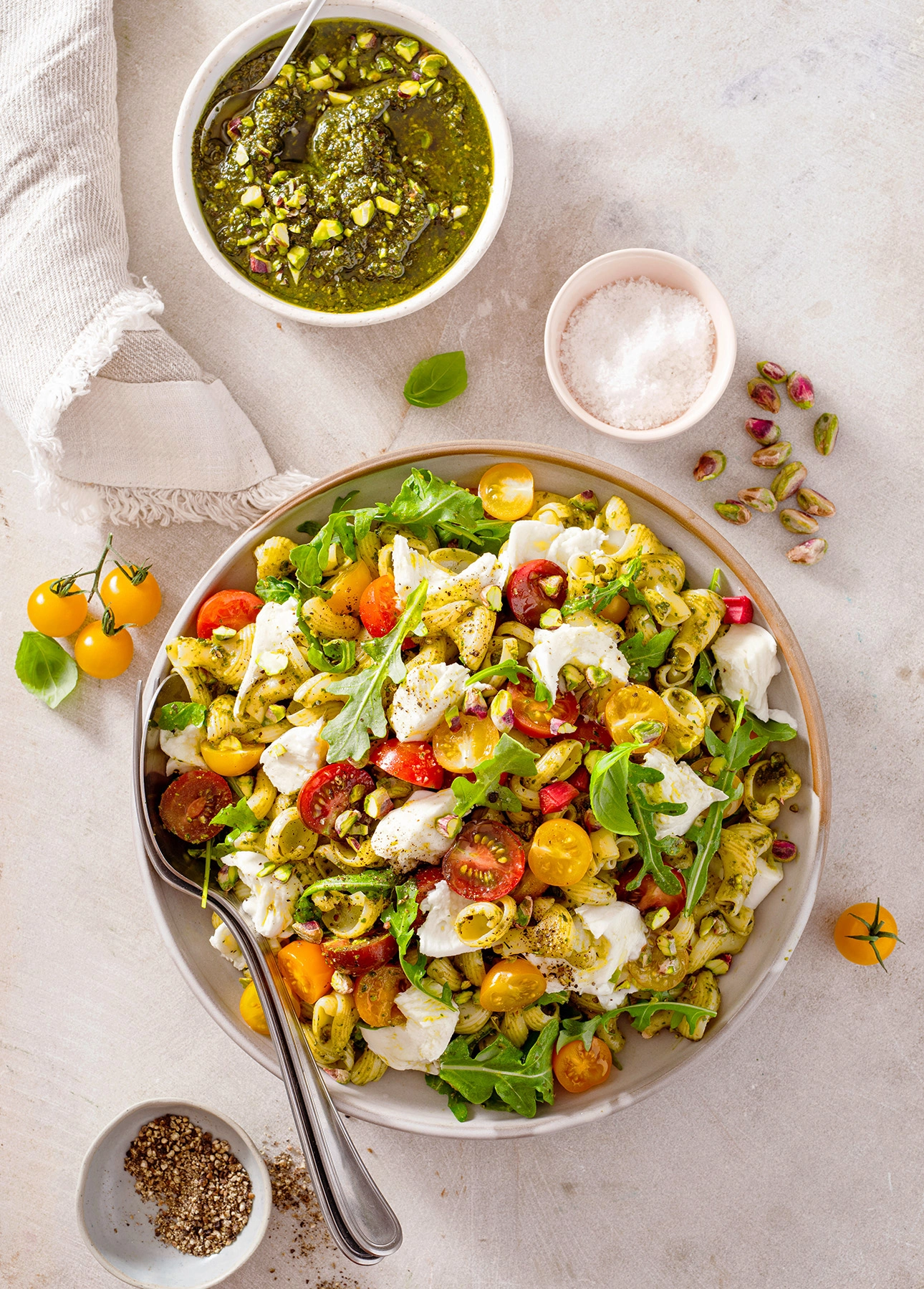
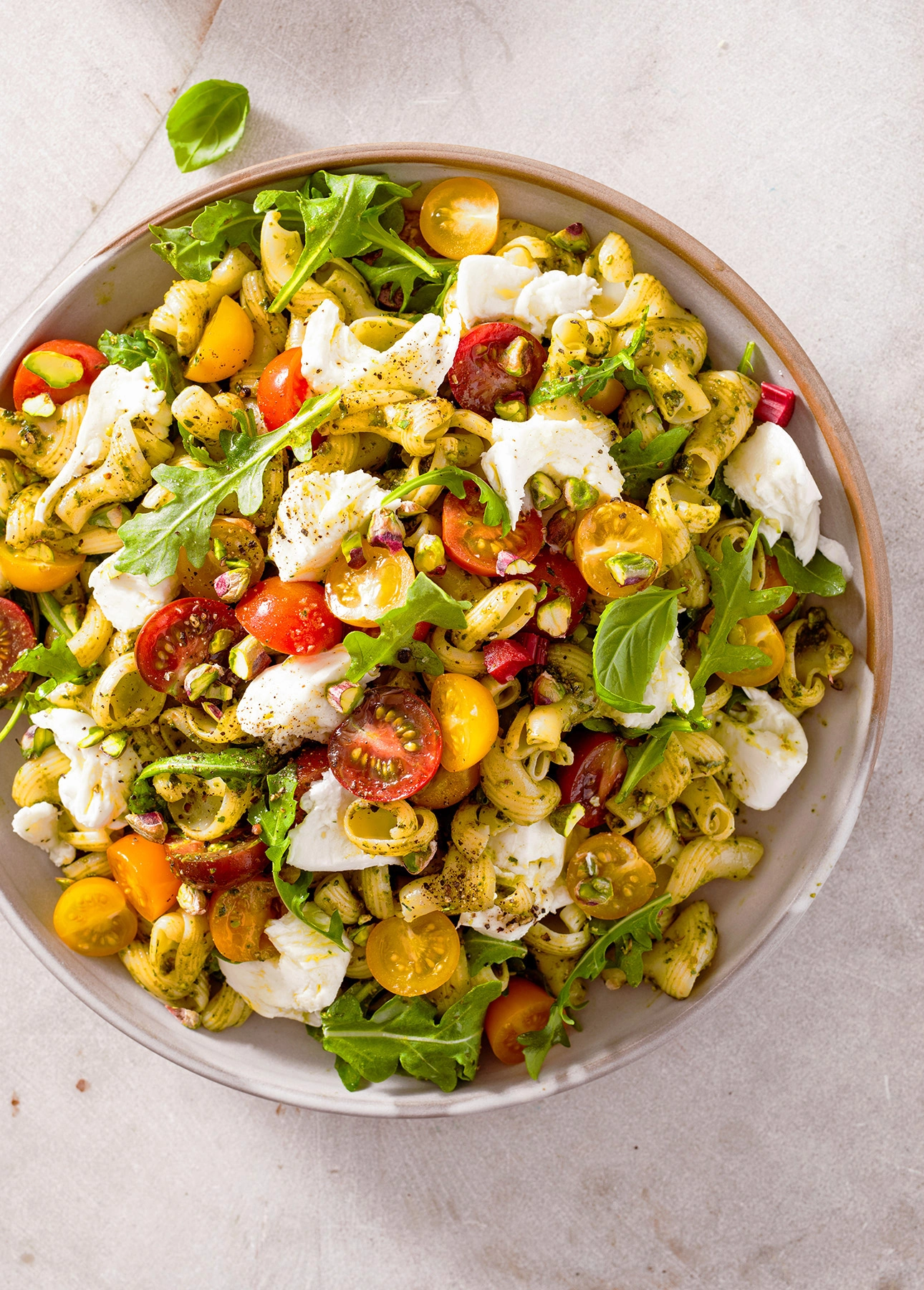
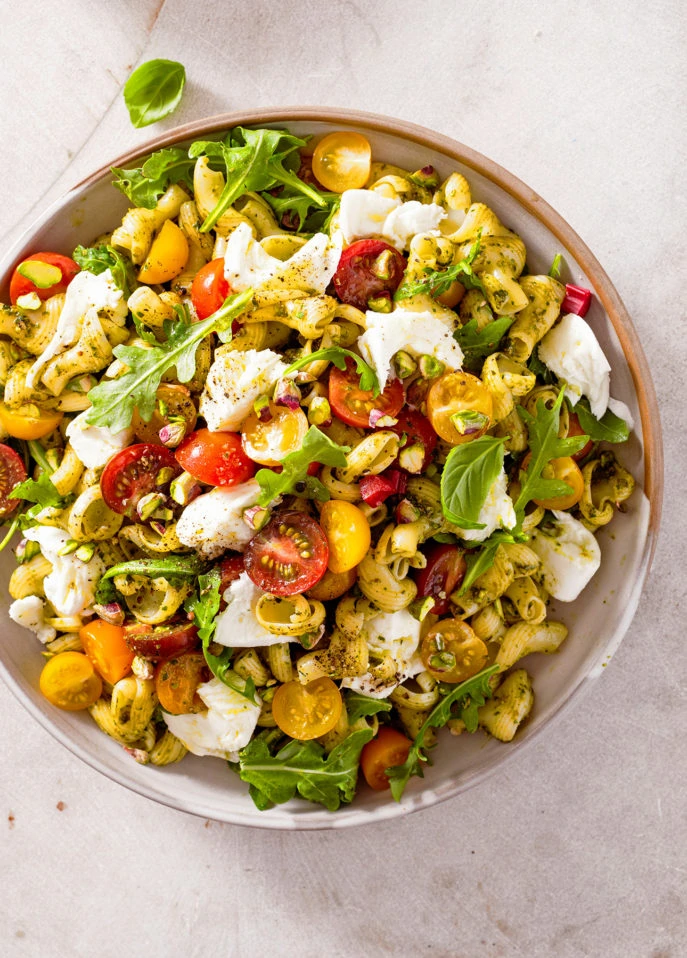
This Caprese Pasta Salad with Pistachio Pesto combines juicy tomatoes, creamy mozzarella, arugula, and crunchy pistachios in a fresh, summery pasta salad. Serve it as an easy vegetarian main, or bring it along to picnics, potlucks, and summer gatherings!
This post contains affiliate links. Full disclosure is at the bottom of the article.
This Caprese pasta salad is what I make when tomatoes are at their juiciest and basil perfumes the kitchen before I even tear a leaf. This is a dinner dish that’s colorful and generous without being complicated to make. Short pasta is coated with vivid pistachio pesto, then tossed with sweet cherry tomatoes and peppery arugula. Torn mozzarella di bufala and roasted pistachios go on at the end, giving every serving a mix of creamy, juicy, herbaceous, and crunchy textures.
The first time I tasted truly fresh mozzarella di bufala was at an agriturismo perched on a hill in Tuscany. I still remember how delicate it was: barely holding together, with a soft, milky center and a flavor that was much more distinctive than the supermarket mozzarella I knew at the time. It immediately made me understand why such a simple cheese deserves to be served with equally simple, carefully chosen ingredients.

I have been rather particular about fresh mozzarella ever since. Mozzarella di bufala is still my first choice when I want to make this salad especially luxurious, but an excellent cow’s-milk fior di latte, bocconcini, or fresh mozzarella pearls will also work beautifully. Freshness matters more than the shape of the cheese—and even more than whether it is made with buffalo’s or cow’s milk.
I first began making this Caprese pasta salad because I wanted to turn the classic combination of tomatoes, mozzarella, basil, and olive oil into a complete meal. Pasta made the salad more substantial, but I did not want it to lose the freshness and simplicity that make Caprese so appealing in the first place.
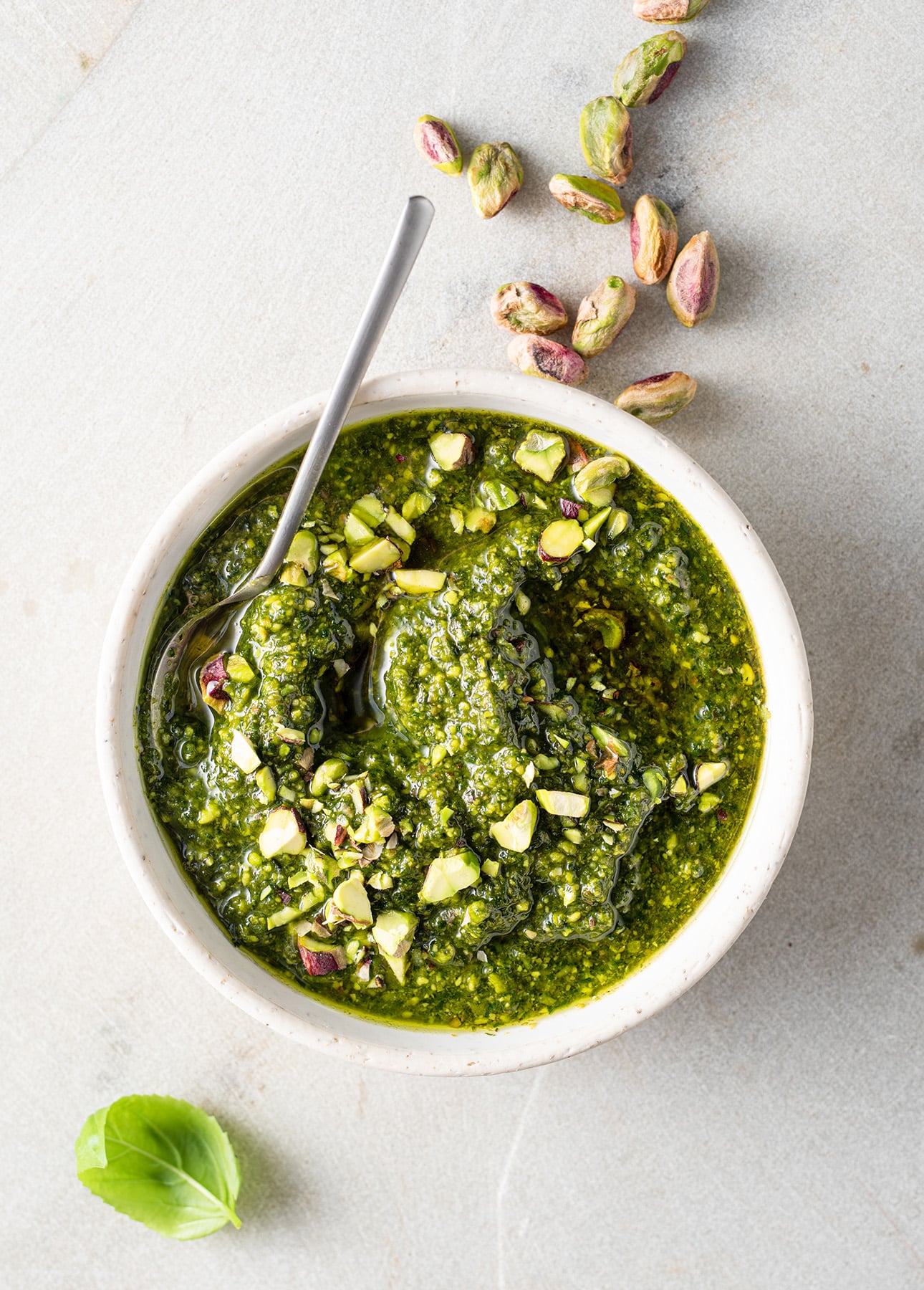
What sets this Caprese pesto pasta salad apart is the homemade pistachio pesto, which replaces the balsamic dressing commonly used in similar recipes. The pistachios give the pesto a rounded, subtly sweet nuttiness, while lemon and Parmesan keep it bright and savory. You can use a good-quality store-bought basil pesto when you need a shortcut, but my homemade pistachio pesto is what gives this salad its distinctive character.
A few small details make a noticeable difference:
- Loosening the pesto with hot pasta water helps it coat the pasta evenly instead of sitting on it in oily clumps.
- Seasoning the tomatoes separately gives the salt a chance to draw out their juices, which mingle with the pesto and become part of the dressing.
- Finally, adding the mozzarella just before serving protects its delicate texture and keeps the salad from becoming watery.
The result is an easy Caprese pasta salad recipe that works equally well as a light meal, a picnic lunch, or a generous side dish for a barbecue or a cookout. Serve it at room temperature, when the tomatoes are fragrant, the pesto is silky, and the mozzarella is at its softest.
For another fresh way to pair ripe tomatoes with creamy mozzarella, try my Tomato and Peach Panzanella Salad.
Quick Summary
- What it is: A fresh Caprese pasta salad with cherry tomatoes, mozzarella di bufala, arugula, basil, pistachio pesto, and roasted pistachios.
- Why it is different: Pistachio pesto replaces the more common balsamic dressing and gives the salad a rich, nutty coating.
- Best serving temperature: Room temperature rather than refrigerator-cold.
- Make-ahead option: Prepare most of the salad several hours in advance, then add the arugula, basil, mozzarella, and pistachios shortly before serving.
- Useful shortcut: Substitute a good-quality prepared basil pesto for the homemade pistachio pesto.
Why This Caprese Pesto Pasta Salad Works
A good Caprese salad is built on contrasts: juicy tomatoes, milky mozzarella, aromatic basil, fruity olive oil, and enough salt to make each ingredient shine. Pasta adds substance, but it also absorbs flavor, so the dressing has to be generous enough to remain noticeable after the salad rests.
The pistachio pesto accomplishes that while adding another layer of flavor and texture. The tomatoes contribute freshness and natural acidity, the arugula brings a peppery edge, and the roasted pistachios provide crunch. Adding the mozzarella at the end keeps its creamy texture intact and prevents it from disappearing into the salad.
No separate salad dressing or balsamic vinegar is necessary here. The lemon in the pistachio pesto and the juices released by the seasoned tomatoes provide enough brightness without covering the flavor of the mozzarella or darkening the pasta.
This is also a flexible recipe. Serve it as a vegetarian main course, bring it to a picnic or potluck, or pair it with grilled vegetables, chicken, fish, or sausages. For more ideas like this, browse my collection of easy Italian pasta dishes.
Helpful Tips for the Best Caprese Pasta Salad
Choose a short pasta that holds the pesto
Fusilli, rotini, cavatappi, casarecce, radiatori, orecchiette, campanelle, and small shells are all excellent choices. Use your favorite short pasta, ideally one with curves, ridges, or openings that can capture the pesto and tomato juices.
Choose a pasta shape close in size to the halved cherry tomatoes. This makes the salad easier to toss, serve, and eat.
Cook the pasta until tender but chewy
Pasta firms as it cools, so avoid undercooking it aggressively. Cook it according to the package directions, then taste a piece before draining. It should be fully cooked and pleasantly chewy, but not so soft that it breaks apart when tossed.
A very firm al dente texture that works well for hot pasta can seem tough once the pasta has cooled.
Don’t rinse the pasta for this recipe
Rinsing is useful in some cold pasta salads, but it is not the best choice here. The thin layer of starch left on the pasta helps the loosened pesto cling to its surface.
Drain the pasta well, transfer it directly to the pesto, and toss while it is still warm. The pasta will absorb some of the sauce as it gradually cools to room temperature.
Loosen the pesto with pasta water
Pesto straight from the refrigerator or food processor can be too thick to coat an entire bowl of pasta evenly. Reserved pasta water thins it, while the starch helps bind the water and oil into a smoother sauce.
Pro Tip: Reserve more pasta water than you think you will need before draining. Begin with the amount specified in the recipe, then add another spoonful if the pesto still looks thick or the pasta seems dry.
Add the pasta water gradually. It is easy to loosen the pesto further, but difficult to correct if you add too much water at once.
Season the tomatoes before adding them to the recipe
Halve the cherry tomatoes, season them with flaky salt and pepper, and let them rest for a few minutes. The salt draws out some of their juices and seasons the tomatoes more thoroughly.
Add those juices to the pasta along with the tomatoes. They loosen the pesto and give the salad a fresher, more tomato-forward flavor.
Cherry and grape tomatoes are especially convenient because they hold their shape well. Larger garden or heirloom tomatoes can also be used, but remove excess watery pulp before chopping.
Drain the mozzarella and add it last
Fresh mozzarella contains a considerable amount of moisture, especially mozzarella di bufala. Drain it thoroughly before using it, but do not press or squeeze it.
Tear the mozzarella directly over the finished salad just before serving. Any small amount of milky liquid that escapes will mingle with the pesto, while the larger pieces of cheese will retain their creamy interior.
Mozzarella di bufala is my favorite choice, but fresh fior di latte, bocconcini, or small mozzarella balls such as ciliegine are all good alternatives. If you’re using a larger ball of fresh mozzarella, tear it into generous bite-sized pieces just before serving. Avoid low-moisture mozzarella or pre-shredded cheese; neither will provide the soft, milky texture that defines a Caprese salad.

Serve this Caprese Pasta Salad at room temperature
Cold temperatures firm up fresh mozzarella and mute the flavors of tomatoes, basil, pesto, and olive oil. Take the salad and the mozzarella out of the fridge about an hour before serving.
When time is short, keep the sealed container of mozzarella in a bowl of warm—not hot—water for 20 to 30 minutes. This gently warms it without heating or melting the cheese.
Make-ahead tips
You can combine the pesto-coated pasta and seasoned tomatoes several hours in advance. This also makes the salad convenient for meal prep, although I recommend keeping the arugula, basil, and mozzarella separate until you’re ready to eat. Cover and refrigerate them until about an hour before serving.
Wait to add the arugula, fresh basil, mozzarella, and pistachio garnish until shortly before the salad goes to the table. This keeps the greens fresh, the basil bright, the pistachios crunchy, and the mozzarella soft.
Give the salad a thorough but gentle toss before serving. Taste and add flaky salt, pepper, pesto, or olive oil as needed because pasta continues absorbing the dressing as it rests.
How to refresh leftover pesto pasta salad before serving
Refrigerated pesto thickens, and the pasta will continue to absorb oil and moisture overnight. Let leftovers return toward room temperature, then loosen them with a spoonful of pesto or a drizzle of extra-virgin olive oil and a small splash of water.
Add fresh basil, arugula, or pistachios to restore some of the salad’s original color and texture. For the best quality, plan to eat leftovers within two days.

Substitution tips
- A prepared basil pesto is the easiest substitute for pistachio pesto. Choose one with a fresh green color and a short ingredient list, and loosen it with pasta water in the same way.
- Baby spinach can replace the arugula, although it won’t provide the same peppery contrast. Toasted almonds or pine nuts can replace the pistachios used as a garnish.
- For a gluten-free Caprese pasta salad, use a short gluten-free pasta that remains firm after cooling. Cook carefully and start checking it earlier than the package time, because some gluten-free pastas soften quickly.
Keep this salad chilled when taking it outdoors
Because this salad contains fresh mozzarella, keep it refrigerated or in a well-packed cooler until shortly before serving. Return leftovers to the cooler promptly rather than leaving the bowl in direct sun or summer heat.
For another easy salad that works especially well at barbecues and potlucks, try my Easy Tomato Corn Salad.
FAQ
Can I make Caprese Pasta Salad ahead?
Yes. You can assemble the pesto-coated pasta and tomatoes several hours ahead and refrigerate. For the freshest texture, add the arugula, basil, mozzarella, and pistachios shortly before serving.
Take the salad out of the refrigerator about an hour before eating so the pesto can soften and the flavors can deepen. Toss well and add a little extra pesto or olive oil if the pasta looks dry.
Can I use store-bought pesto?
Yes. A good-quality prepared basil pesto is the easiest substitute for homemade pistachio pesto.
Because prepared pesto can be quite thick, loosen it with a spoonful or two of reserved pasta water before tossing it with the pasta. Taste before adding extra salt because commercial pesto is often saltier than homemade.
The flavor will be more traditionally basil-forward, while the pistachio pesto recipe gives the salad a richer, nuttier character.
Does Caprese Pasta Salad need balsamic vinegar?
No. Although balsamic vinegar is common in many Caprese pasta salad recipes, it isn’t needed in my version.
In this recipe, lemony pistachio pesto and the juices from the seasoned tomatoes provide enough brightness and acidity. Skipping balsamic also preserves the salad’s fresh green color and allows the delicate flavor of the mozzarella to remain prominent.
For another summer recipe that puts tomatoes and pesto front and center, try my Heirloom Tomato Crostata with Homemade Pesto.
Caprese Pasta Salad Recipe
Ingredients
- ½ cup Pistachio Pesto, or good quality store-bought pesto
- 10 oz dry, short pasta
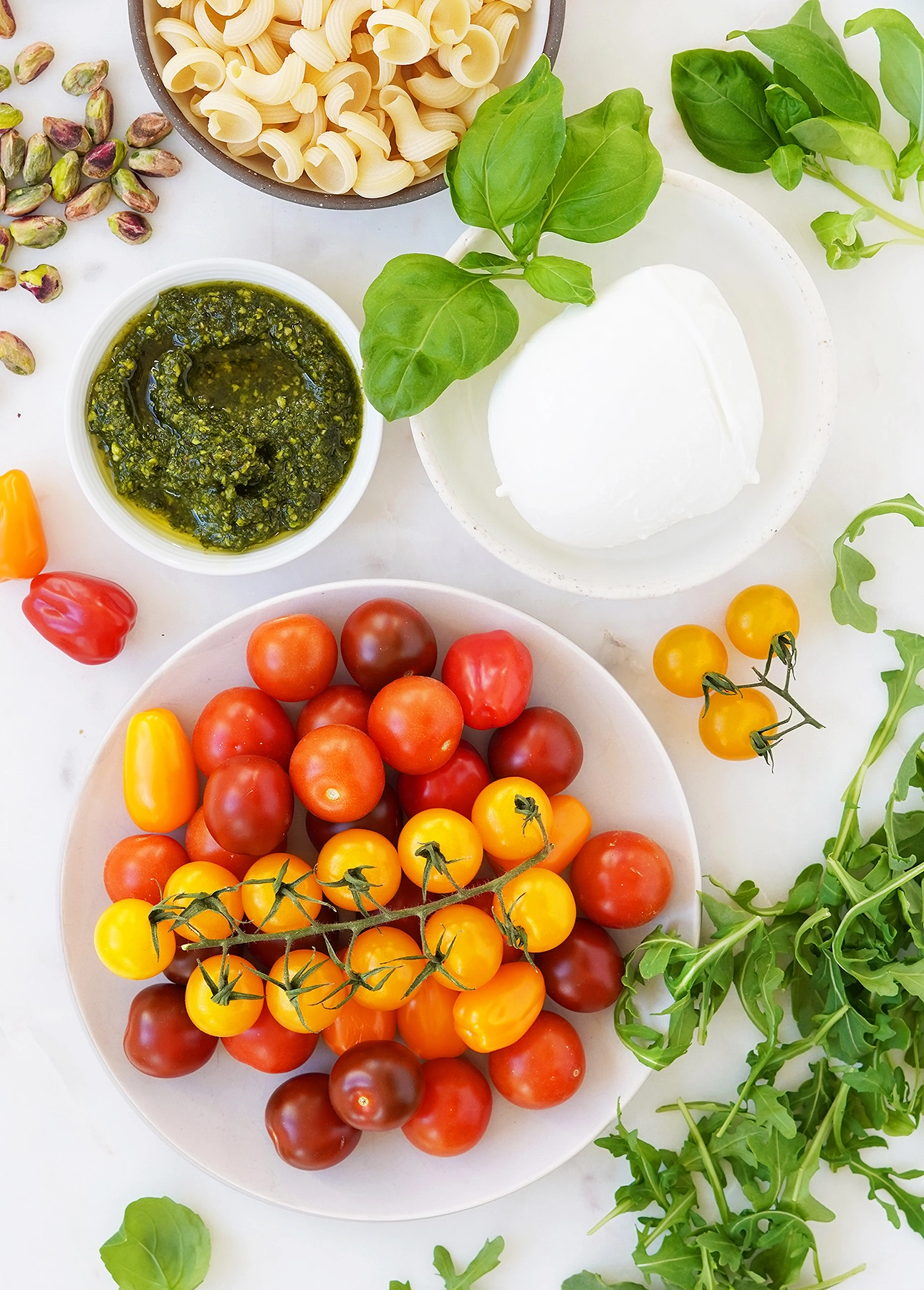
- 8 oz cherry tomatoes
- 1 large handful arugula leaves
- Fleur de sel, or flaky sea salt
- Freshly ground black pepper
- 1 ball Italian mozzarella di bufala, about 8 oz / 225 g
To Serve
- Fresh basil leaves
- Crushed pistachios
- Extra-virgin olive oil
Instructions
- For the Caprese Pasta Salad: Place the required amount of Pistachio Pesto in a large mixing bowl or a salad bowl. Set aside.
- Cook the pasta according to the manufacturer’s instructions. Towards the end of the cooking time, scoop ¼ cup (60 ml) of the pasta cooking water and mix into the pistachio pesto.
- Drain the pasta, then transfer to the bowl with the pesto. Toss to coat the pasta with the pesto, then let cool to room temperature.
- While the pasta is cooling, halve the cherry tomatoes, then transfer to a plate or bowl. Sprinkle with a generous pinch of fleur de sel or flaky sea salt and some freshly ground black pepper. Let rest for 5 minutes.
- Add the cherry tomatoes and the arugula to the pasta and gently toss to combine. Taste and adjust seasoning, if needed. Transfer the caprese pasta salad to a large serving plate.
- SERVING: Tear the fresh mozzarella into chunks and scatter over the caprese pasta salad. Garnish with fresh basil leaves, crushed pistachios, and a generous drizzle of extra-virgin olive oil. Enjoy!
- STORAGE: This Caprese pasta salad can be made up to a half-day ahead of time and refrigerated, covered with plastic wrap, or in an airtight container. Incorporate the arugula and fresh basil leaves just before serving to prevent them from wilting. Make sure to return the caprese pasta salad to room temperature at least 1 hour before serving.
Did you make this?
Tell me how you liked it! Leave a comment or take a picture and tag it with @foodnouveau on Instagram.
This site participates in the Amazon Associates Program, an affiliate advertising program designed to provide a means for the site to earn fees by linking to Amazon and affiliated sites. If you click on an affiliate link, I may earn advertising or referral fees if you make a purchase through such links, at no extra cost to you. This helps me create new content for the blog–so thank you! Learn more about advertising on this site by reading my Disclosure Policy.
Author: Marie Asselin
WHAT DID YOU THINK OF THIS RECIPE?
Rate + Review