- V
- GF
- NS
- DF
- View Recipe Key
Foolproof Shortcrust Pastry (Food Processor Method, VIDEO)
Foolproof Shortcrust Pastry (Food Processor Method, VIDEO)

This foolproof recipe allows you to make flaky shortcrust pastry in seconds by using a food processor. Sweet, savory, and whole-wheat variations included!
This post contains affiliate links. Full disclosure is at the bottom of the article.
For years, I was wary of making pie crusts from scratch. Everything about the process annoyed me: my attempted crusts would be too dry or too wet, they would crack badly when I rolled them out or upon baking, or they would turn out dry or tasteless—never flaky and delightfully buttery—no matter the amount of butter I used.
Part of it was inexperience: I’d never properly learned to make shortcrust pastry, so I didn’t know what to look for. No matter how many recipes I tested, (which all repeated the same advice over and over again—don’t cut out the butter too small, don’t overwork the dough, let it rest), it seemed like I couldn’t master the task. I would’ve gladly resorted to buying pre-made pie dough, except I couldn’t find 100% butter pastry where I live. So, for the longest time, I didn’t make pies at all. A tragedy, right?
A few years ago, I decided I’d tackle the task once and for all. If I’d mastered finicky things such as macarons and éclairs, surely I could make simple, humble pie dough, right? I returned to my reference books and applied myself to the task. I took notes of what worked best for me and tweaked my recipe until I got it down to a science. Now, I can make it with my eyes closed, and the recipe never fails. Ever.
But let’s start at the base: what is shortcrust pastry, exactly? You can use different types of dough to make pies, but shortcrust pastry, also called short pastry or pâte brisée, is probably the most versatile. You can use shortcrust pastry to make both savory and sweet pies and tarts: it’s a supple dough you can roll out to line pie plates and flute to create pretty edges, fold up and over fillings to create free-form galettes, or cut out to weave lattice patterns.
Basic pie dough uses flour, butter, and water at an approximate 3:2:1 ratio. Shortcrust pastry also includes an egg, which alters the classic ratio a little bit, and also makes the dough more supple and easier to roll out. A standard shortcrust pastry flour-to-butter ratio would be closer to 2:1. While tweaking my version of shortcrust pastry, I found out I could use just a bit less butter and still achieve that perfect balance of easy-to-make to buttery deliciousness. There would be nothing wrong with using a 1/4 cup (57 g) more butter in the recipe, but I suggest starting with the amounts stated in the recipe below to see how easily the pastry comes together and get a feel for its texture. Then, tweak it from there if you want to.
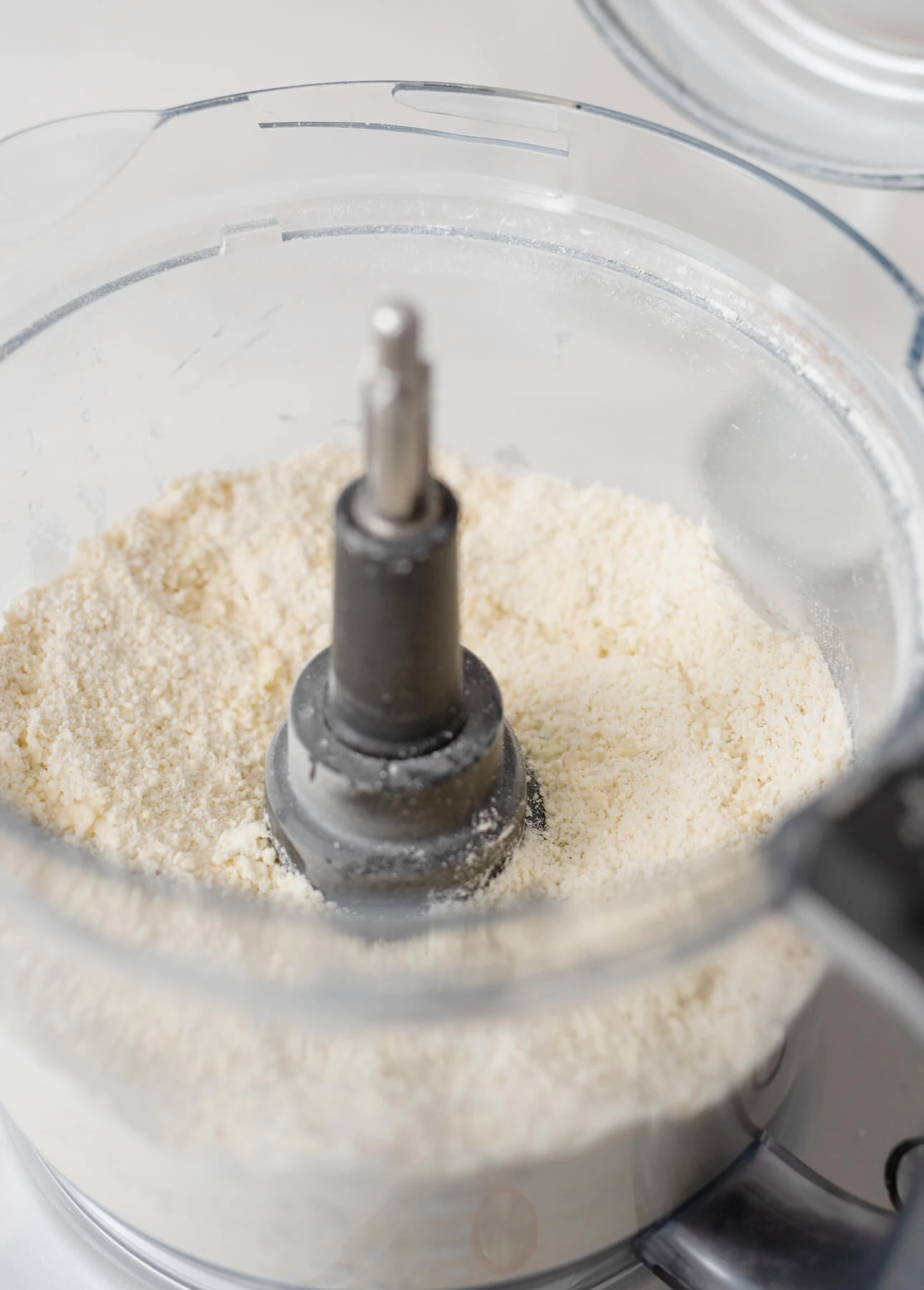
Most pie crust recipes will instruct you to keep large pieces of butter in the dough (pea-sized, or even larger), which produces the flakiest pastry. In my experience, this produces a dough that’s more fragile, stickier, and harder to work with. I prefer blending the butter into the flour until the mixture resembles coarse breadcrumbs, which creates a sturdier dough that’s still super flaky but holds any and all kinds of fillings well, including juicy fruity ones.
This food processor method for making shortcrust pastry is perfect if you’re:
- a pie-crust novice (like I used to be)
- lazy (like me) or
- in a hurry (like I pretty much always am)
A food processor allows you to control the shortcrust-making process, giving you a consistent result, every time. It also considerably shortcuts your way to homemade pie dough. My recipe produces perfect shortcrust pastry in less than a minute. Really! I’ve carefully timed how long you should run the food processor at each step, providing the exact time in seconds. This recipe will never fail you: I now routinely make this shortcrust pastry with my son, allowing him to count the seconds in between the steps, and it works, every time.
Learning how to make shortcrust pastry in the food processor is also a great way to familiarize yourself with the looks and texture of “proper” pastry. Making shortcrust pastry by hand introduces so many uncertainties: the result will vary according to the temperature of your hands, that of your working surface, the tool you’re using, and so on. Because a food processor allows you to produce consistent results, you’ll see and feel the pastry as it should be. In time, you’ll be able to go back to the hand method if you want to and enjoy that relaxing feeling you get when you make things from scratch.
My shortcrust pastry recipe includes options to make whole-wheat crusts—great for savory galettes and quiches—and sweet crusts, for desserts. It has now been my go-to crust for years, and it never fails me. If you’ve been shying away from making pie crusts from scratch, or unsatisfied with the recipe(s) you currently use, I hope you’ll give my shortcrust pastry a try. It will surely make you more confident in the pies you make—and happier with the results!
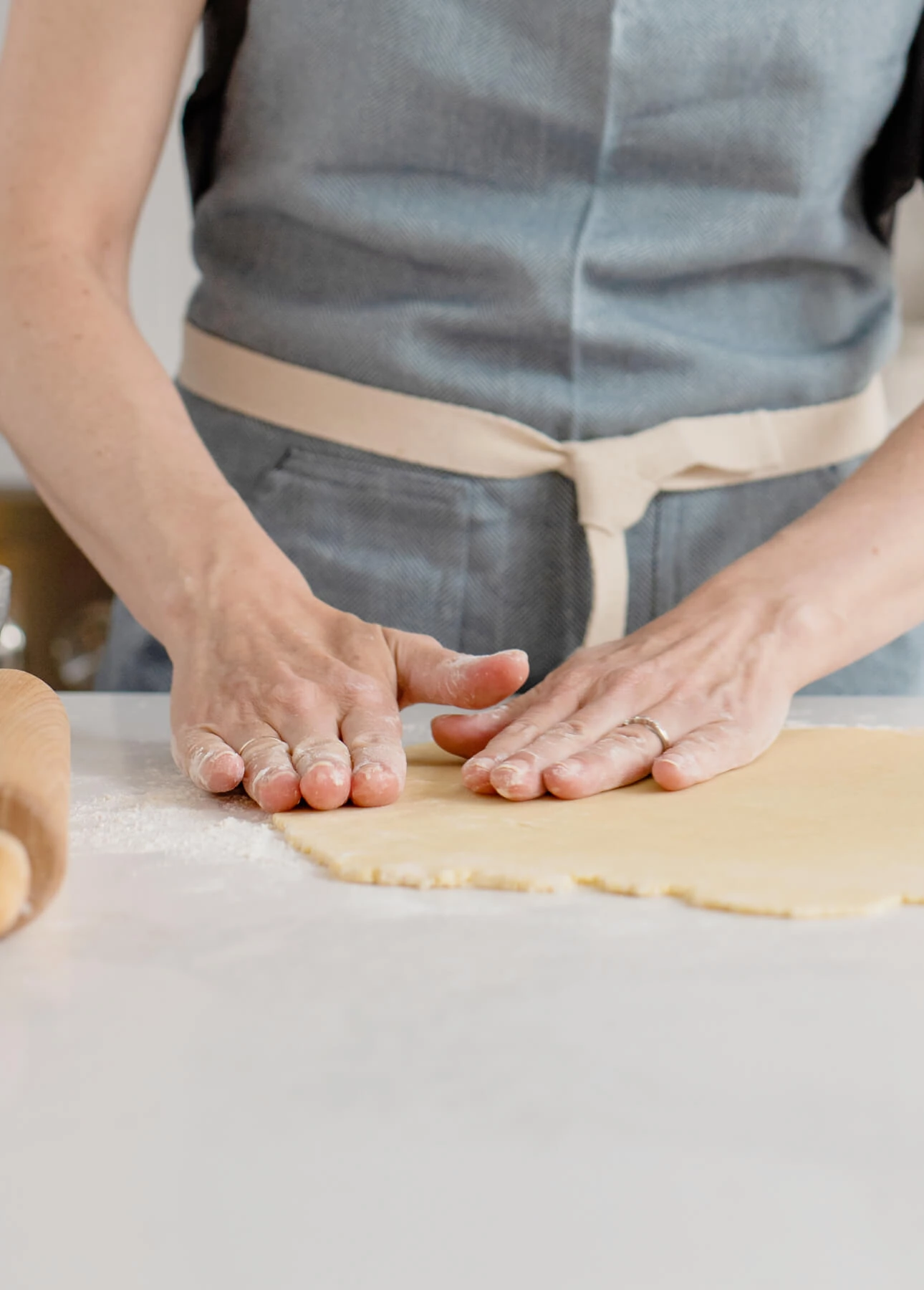
Helpful Tips to Make Perfect Shortcrust Pastry
RECIPE VIDEO: Foolproof Shortcrust Pastry Video
See how incredibly easy it is to make shortcrust pastry using a food processor!
Keep butter and water cold—ice cold
This is crucial: The butter and water you use should in this recipe should be very cold—not room temperature, not cold from the fridge, *ice cold*. Ice-cold butter better distributes into the flour, and ice-cold water allows the dough to come together without melting the butter, both of which are key to producing tender, flaky dough.
- To make ice-cold water, simply pour a bit of water in a small bowl, then fill it with ice. The water will be cold enough to use a minute or two later.
- To make ice-cold butter, cut it into cubes, spread the cubes over a small plate, then plate it in the freezer for 20 minutes.
Shortcut your way to shortcrust
Keep portions of pre-cubed butter stored in airtight containers in the freezer. Whenever I want to make a pie crust, no need to wait 20 minutes for the butter to cool—I simply take out a container of frozen butter cubes and add it straight to the food processor. I prefer this to freezing shortcrust pastry because mixing a fresh batch of dough with frozen butter is much, much quicker than letting shortcrust pastry thaw to room temperature.
Be accurate
This shortcrust recipe works, but only if you’re counting accurately. You’re literally seconds away from under- or overmixing the dough, so don’t take your eyes off the food processor while you make the shortcrust pastry. If needed, look at your watch or use the stopwatch function of your phone to time things accurately.
Roll it out now, not later
If you’ve long been frustrated by cracking pie pastry, I feel you. Freshly made shortcrust pastry needs time to rest in the fridge before baking (at least one hour), which lengthens the dough-making process, as you need to properly let the dough come back to room temperature (about 30 to 45 minutes) before you roll it out.
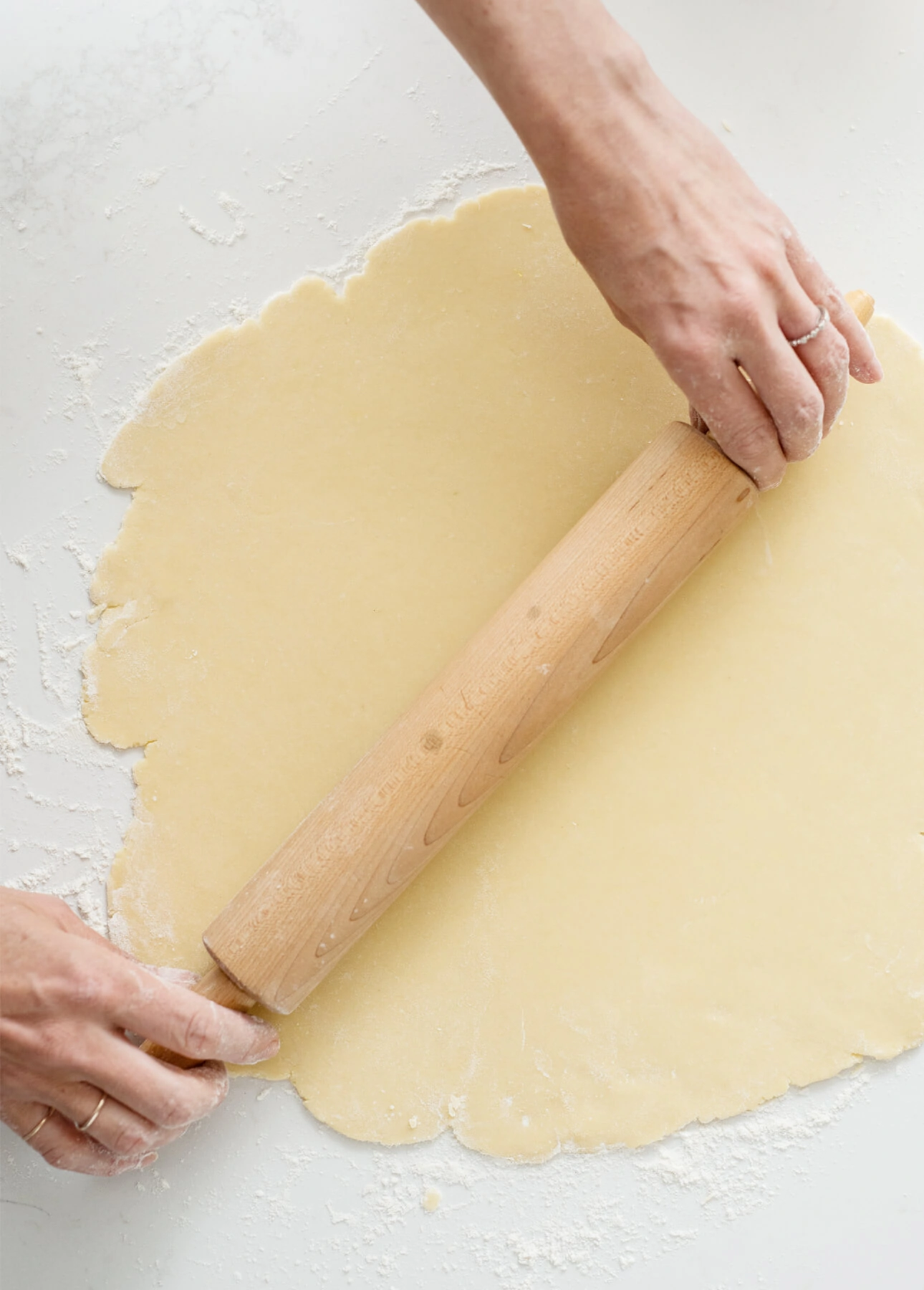
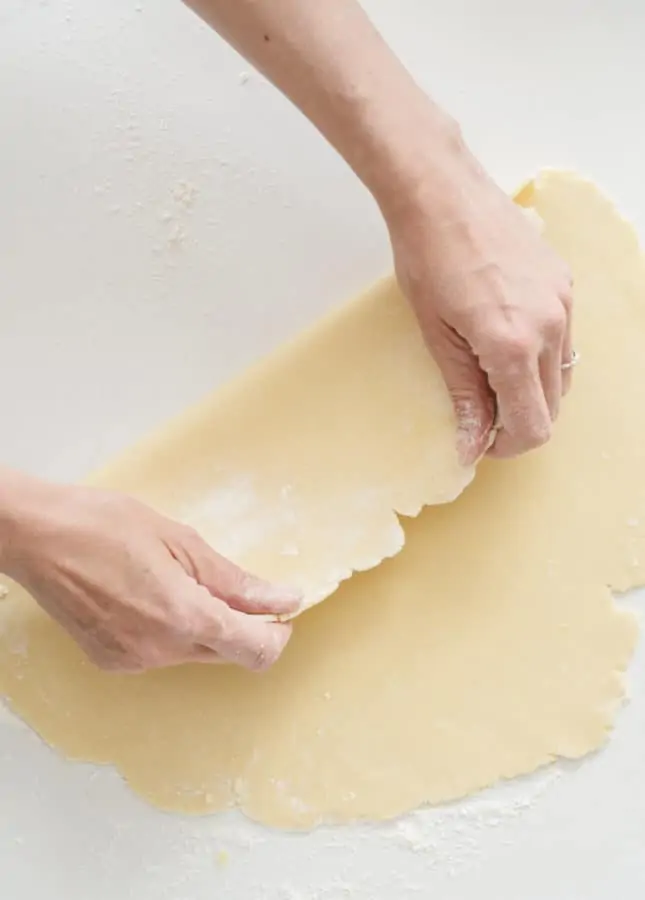
Here’s how to fast-forward your way to homemade pie crust: Roll the dough out *before* you refrigerate it. I picked up this game-changing tip from Parisian cookbook writer Clotilde Dusoulier: when shortcrust pastry is freshly made—that is, straight out of the food processor—it is wonderfully supple, just like brand new Play-Doh is. This makes rolling it out really easy and actually fun!
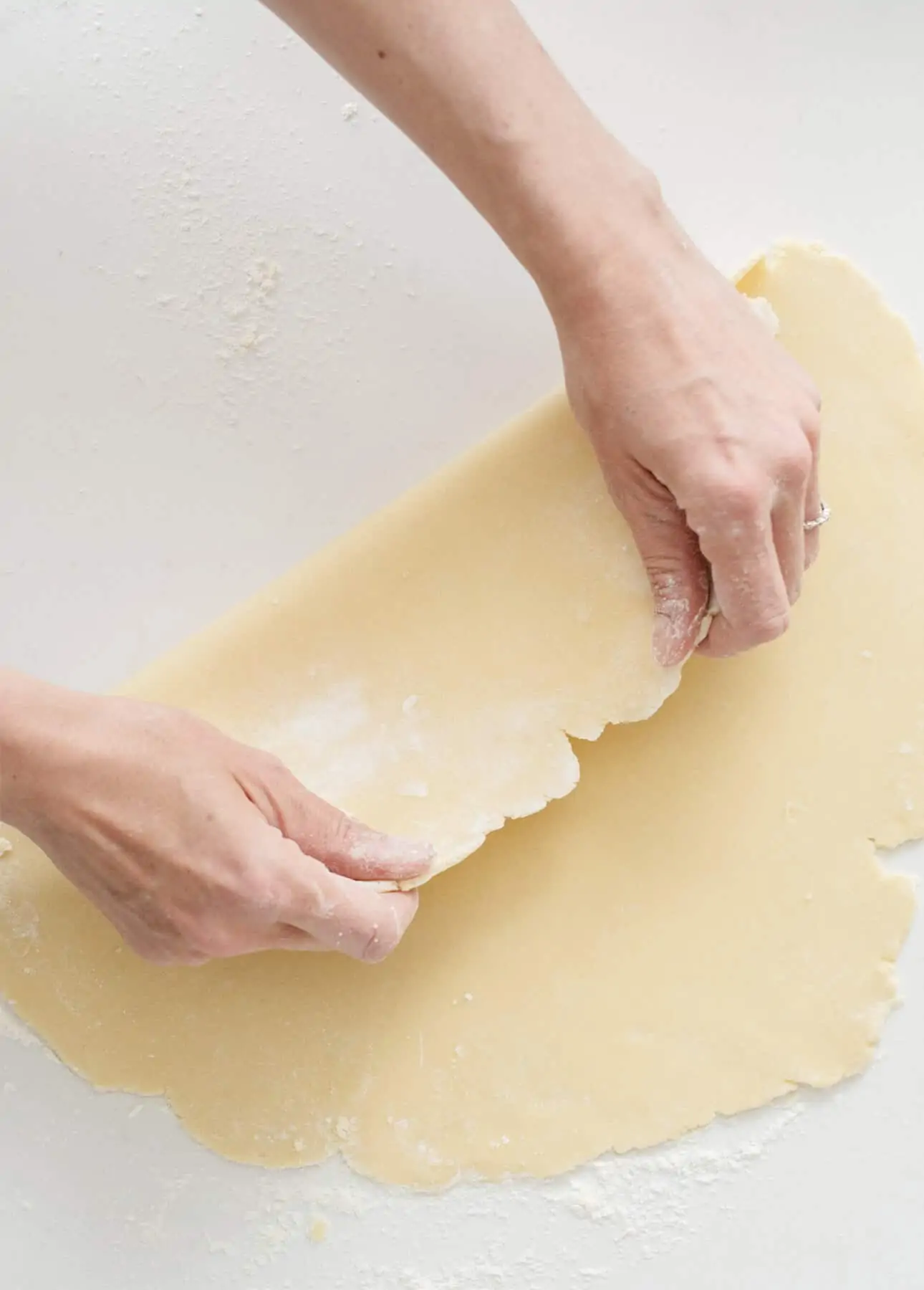
After you take the shortcrust pastry out of the food processor, gather it into a ball, then flatten it a bit. Lightly sprinkle your working surface and rolling pin with flour, then roll out the dough to the desired shape and size. Ease into the pan you want to use, letting the excess overhang, or spread it out on a baking sheet. Refrigerate for 30 minutes, then bring back to room temperature 10 minutes before trimming, filling, or shaping the dough.
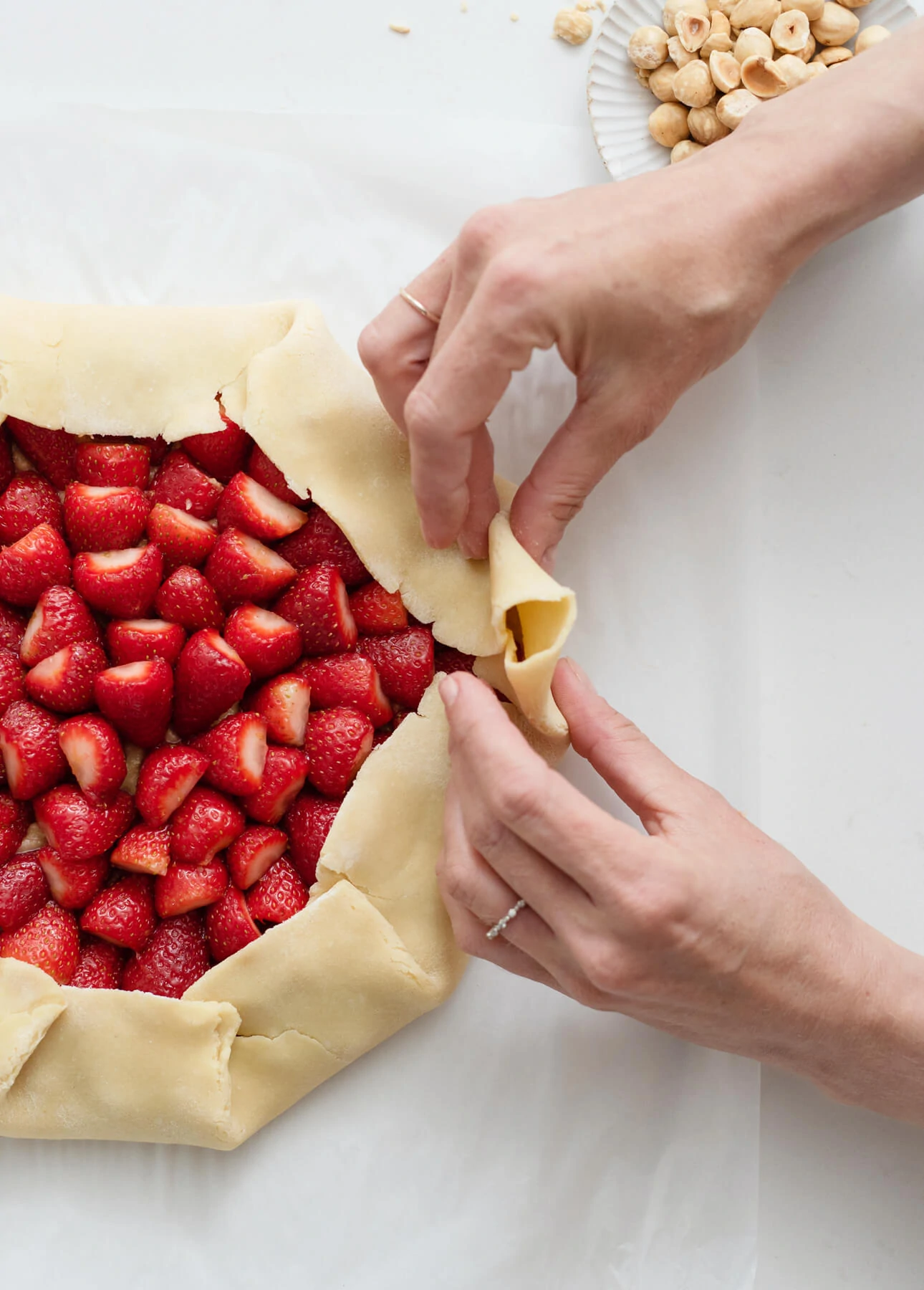
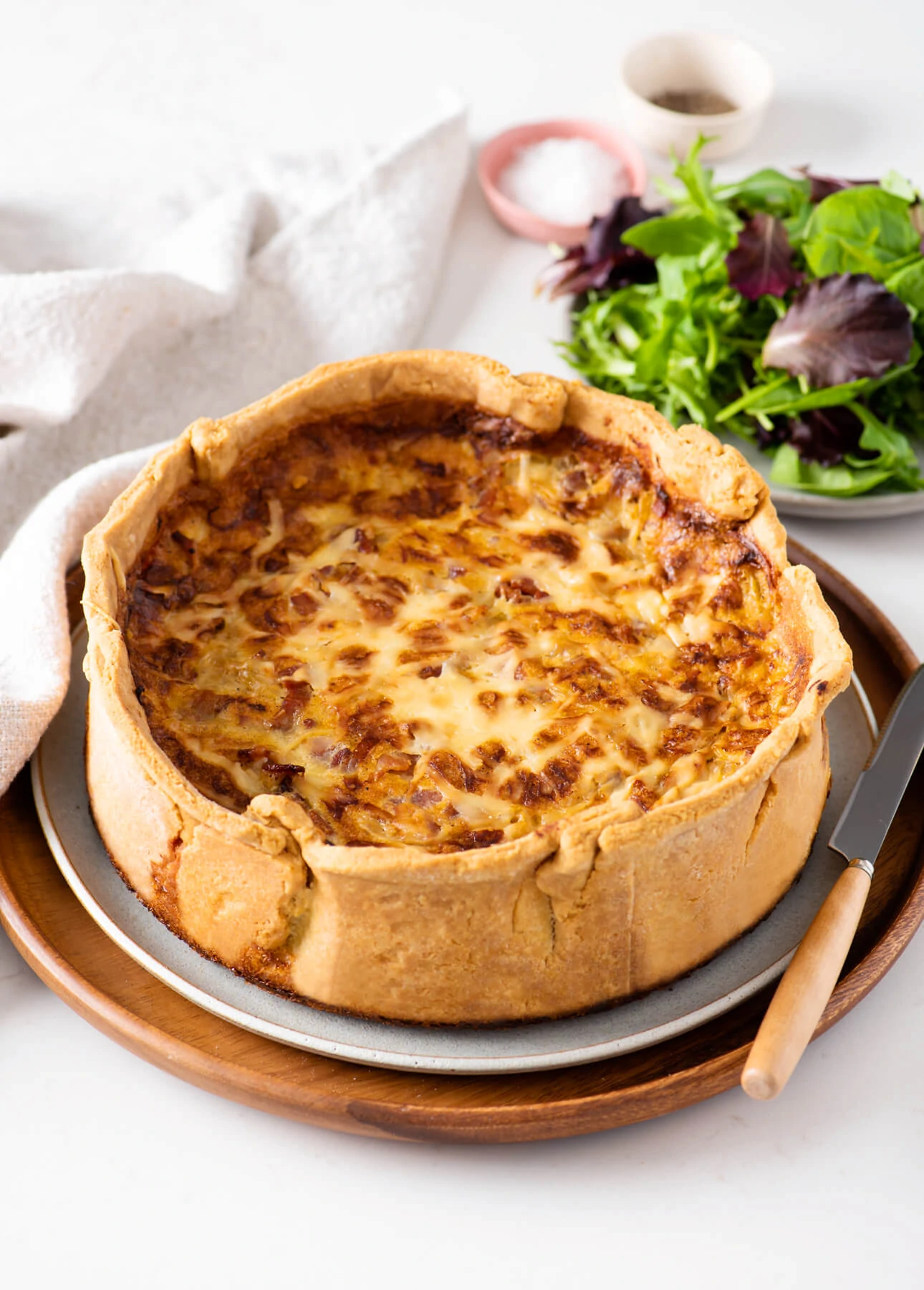
Savory and sweet recipes that use my foolproof shortcrust pastry
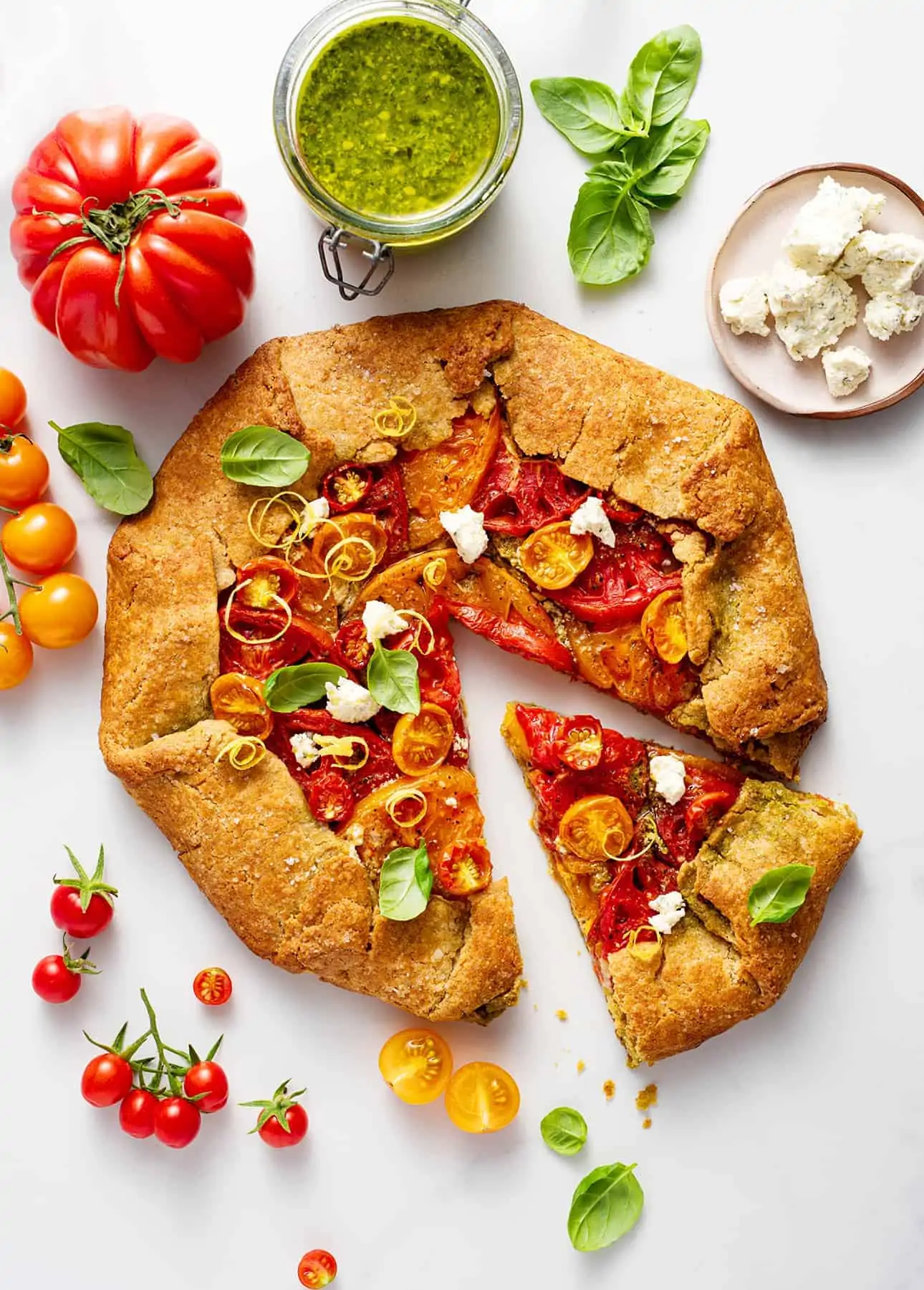
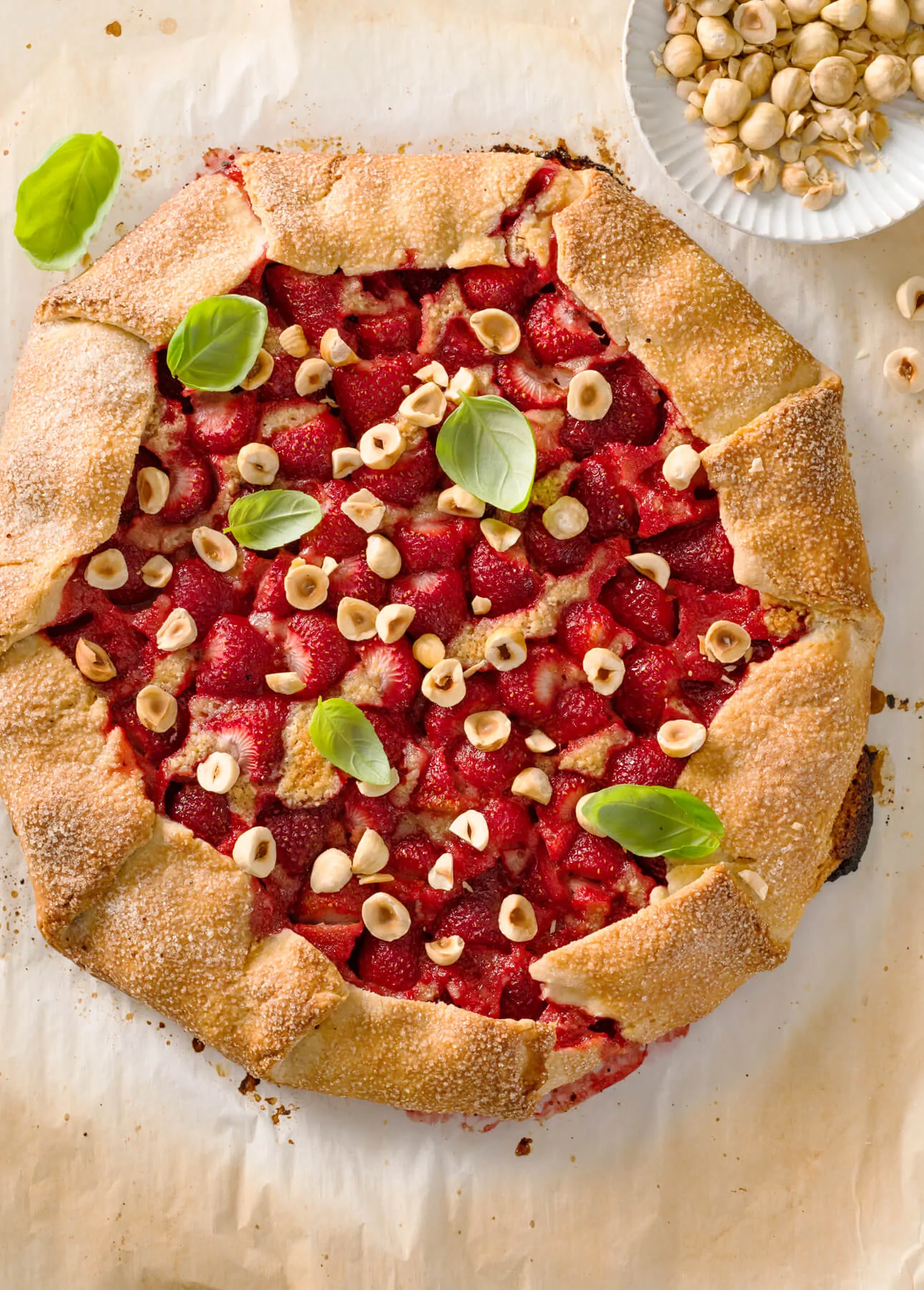
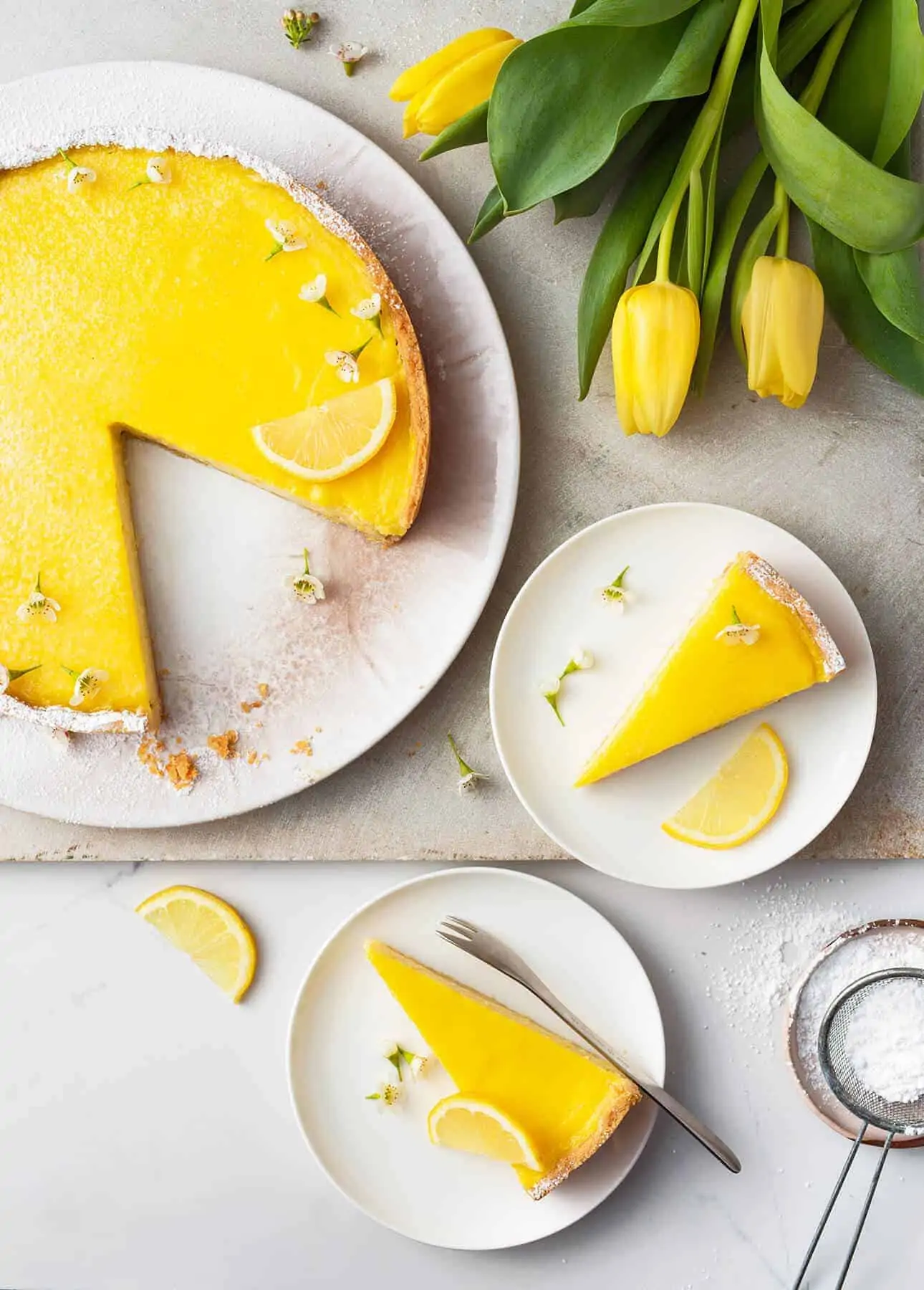
There are so many sweet and savory pies, galettes, and tarts you can make with this foolproof shortcrust pastry! Sky is the limit, really. If you need inspiration to get started, I’ve got some ideas for you right here, and you’ll find even more through this link.
Hazelnut and Strawberry Galette
Foolproof Shortcrust Pastry (Food Processor Method)
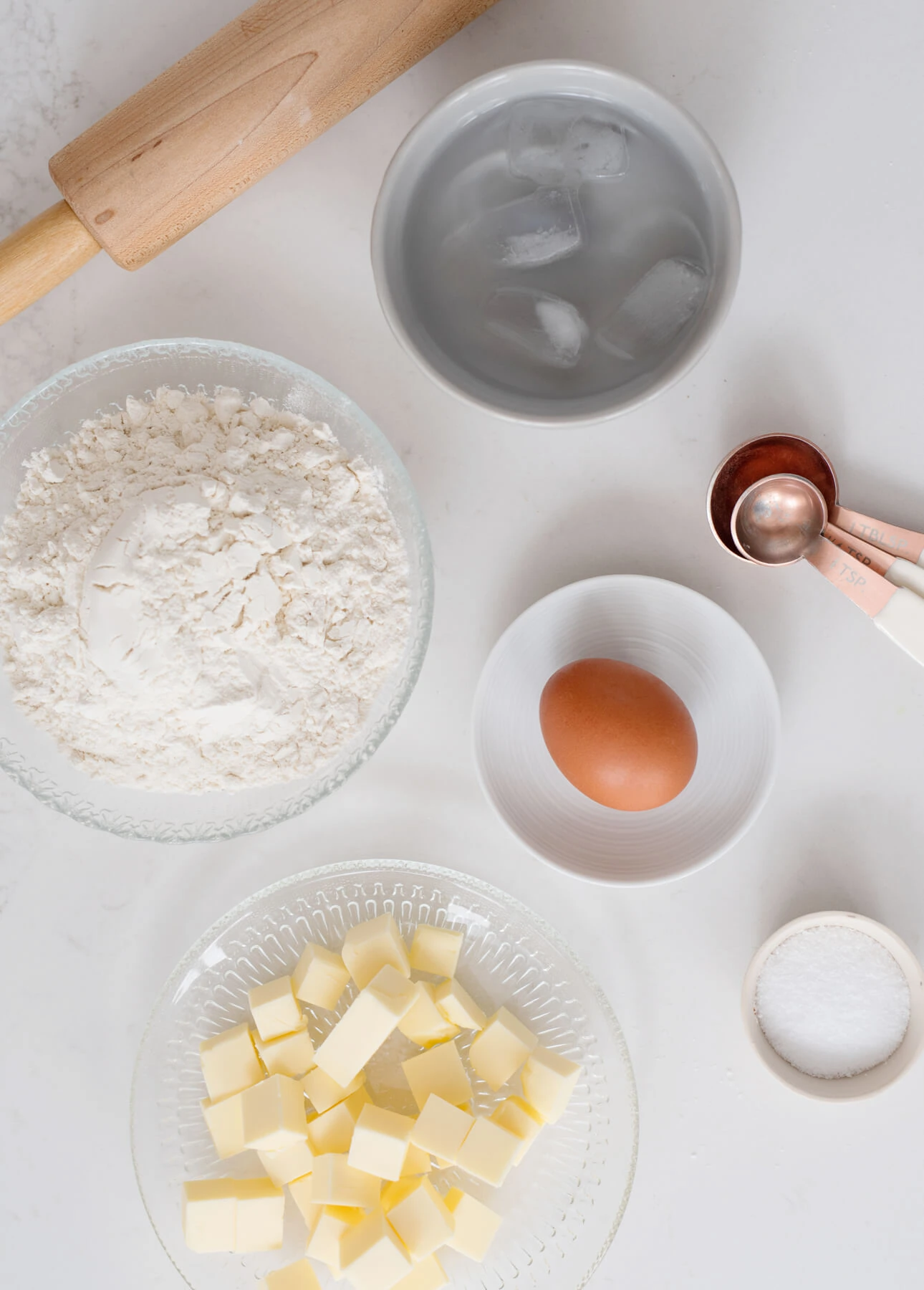
Ingredients
- ½ cup cold unsalted butter
- 1 ½ cups all-purpose flour
- ¼ tsp kosher salt, or fine sea salt
- 1 large egg
- 2 tbsp ice water
Instructions
- Cut the butter into small cubes and arrange on a small plate. Freeze for 20 minutes.
- Add the flour and salt to a food processor, then pulse to combine. Add the butter and process for 10 continuous seconds, until the mixture looks like coarse breadcrumbs.
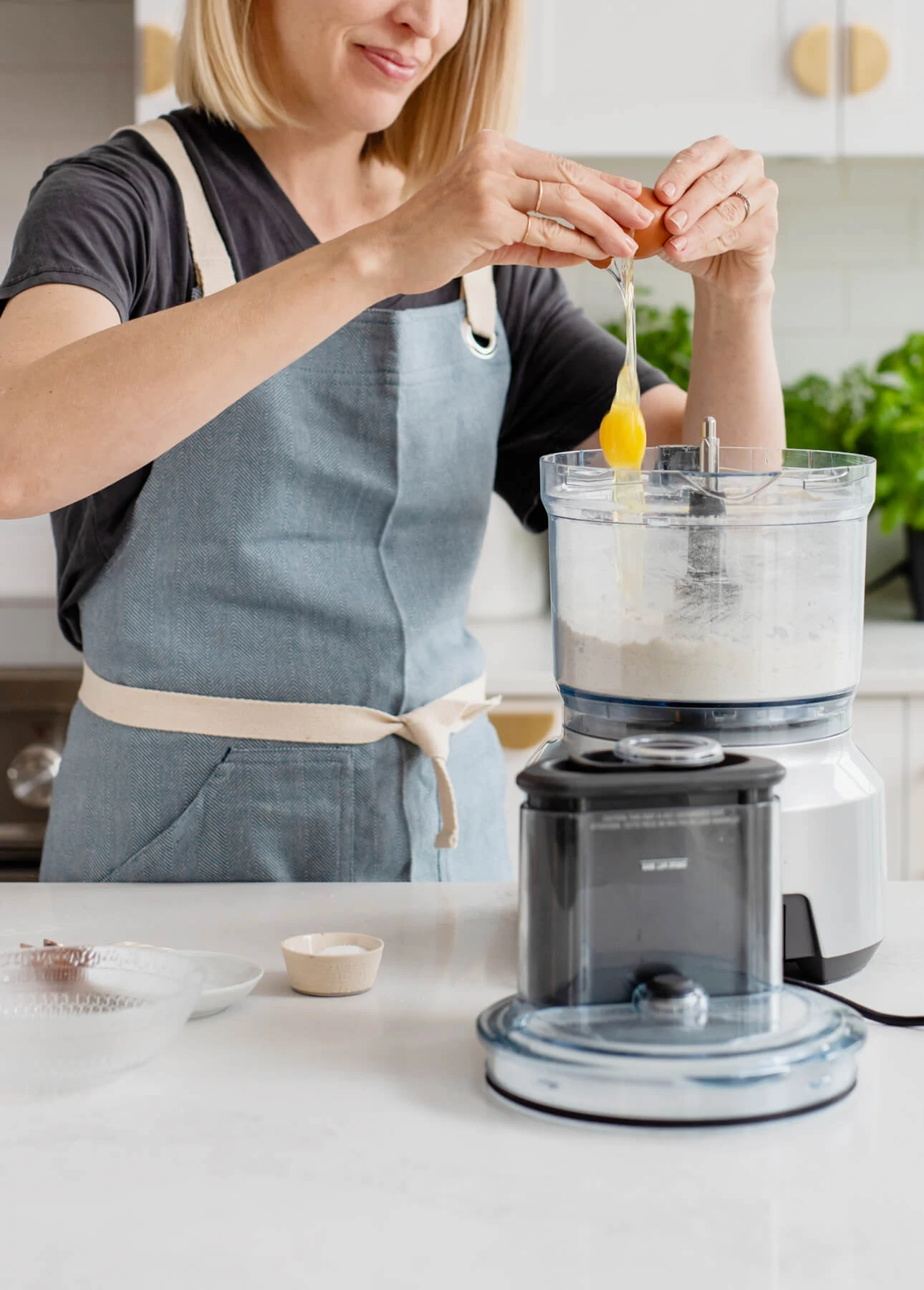
- Add the egg and process for 5 seconds. Add the ice water and process for 20 seconds. The dough should now start clumping together. Turn the mixture out onto a work surface. The mixture will easily hold together when pressed. Using your hands, gather the dough into a ball then flatten into a disk, kneading it as lightly as possible.
- If you’re making shortcrust pastry right before you need to use it, gather it into a disk, set it on a lightly floured surface, and roll it out to the required size. Ease into a pie or tart pan, lay flat on a baking sheet, or cut out and fit into muffin pans if making tartlets. Refrigerate for 30 minutes to an hour. Use as instructed by the recipe.
- You can alternatively wrap the ball of shortcrust pastry in plastic wrap and refrigerate it for 3 days, or freeze for 1 month.
- Bring refrigerated shortcrust pastry back to room temperature at least 30 minutes before rolling. Thaw frozen shortcrust pastry overnight in the refrigerator, then bring back to room temperature at least 30 minutes before rolling.
VARIATIONS
- Whole-wheat shortcrust pastry: Instead of the full amount of all-purpose flour specified in the recipe above, use 1 cup (125 g) all-purpose flour and ½ (65 g) whole wheat flour.
- Sweet shortcrust pastry for desserts: Add 1 tablespoon (12 g / 15 ml) granulated sugar to the flour mixture.
Video
Did you make this?
Tell me how you liked it! Leave a comment or take a picture and tag it with @foodnouveau on Instagram.
Disclosure Notice: This site is a participant in the Amazon Associates Program, an affiliate advertising program designed to provide a means for the site to earn fees by linking to Amazon and affiliated sites.
If you click on an affiliate link, I may earn advertising or referral fees if you make a purchase through such links, at no extra cost to you. This helps me creating new content for the blog–so thank you! Learn more about advertising on this site by reading my Disclosure Policy.
Author: Marie Asselin
Thank you for this wonderful recipe. It worked perfectly! I weigh my ingredients and just needed to add a teaspoon of extra water. It was a breeze to roll out and I made a pumpkin pie. Will be making the deep dish quiche for an Easter brunch.
Hi Angela! I’m so happy to hear it worked perfectly for you. And great call adding a touch of water after weighing (humidity and flour brands can make that tiny adjustment necessary). Love that you used it for pumpkin pie too 🙌🏻
And yes, this crust is perfect for deep-dish quiche—Easter brunch is going to be delicious. Thank you so much for taking the time to leave a review!
I am eager to try your recipe for shortcrust pastry, as my mother always used lard/shortening for her pastry and so have I. What would be the difference as mine always seemed to turn out really good ? Thank you for your wisdom : )
Hi Linda! If your lard/shortening crust turns out great, you’re already doing something right 😊 The main differences come down to flavor and texture: lard/shortening tends to make an extra-flaky, sturdy crust, but it’s usually a bit less flavorful than an all-butter crust. Butter brings that classic rich taste and it also browns more, so you get better color and a slightly crisper, more “buttery” bite.
My recipe is designed to be very consistent (especially with the food processor method), but it’s not meant to say lard/shortening is wrong—just a different result. If you ever want the best of both worlds, you could try a 50/50 mix of butter and lard/shortening! Let me know how it goes if you do give it a try.
Thank you. What temperature is this cooked at please?
It depends on the recipe you want to make with it! Usually shortcrust pastry cooks at 350°F (175°C) but some recipes might require a slighter hotter oven. You can look at my pie and tart recipes for pointers.
Thank you for this recipe- it is wonderful. I make it a huge batch of about 8-10 all at once and then freeze them. So good and foolproof!
The pastry comes together so fast, it’s a great idea to make several batches and freeze! That way a delightful sweet or savory pie is always an option 😍
After failing to make half decent pastry for 50 years, thanks to you, I can now do it!
Brilliant
I’m very grateful!
For over fifty years my pastry making skills have eluded me. I found this site today and followed the recipe and instructions to the letter. I’ve never been able to successfully produce short crust of such quality as I’ve made today. Thank you very much indeed
Thank you so much for this wonderful comment! I’m always so happy to read I’ve enabled bakers to add shortcrust to their routine. There’s nothing like it!
I made the quiche with this the other day and it was fantastic! Thank your for the simple recipe!
The only issues I had were a bit of shrinkage (blind baked with beans) . As commented below this could be due to overworked dough but I did substitute the flour with 100% fresh milled whole wheat flour from an heirloom wheat called English Square Head. ESQ is a nearly perfect substitute for traditional all purpose flour. Just need to add a tiny bit more hydration – in this case 1/2 Tablespoon more ice water. The real issue was the butter pooling in the bottom of the crust and leaking a bit into the oven (I stupidly forgot to place a baking sheet underneath when baking the crust). I will be making this crust and the quiche again. Thank you again!
Hey Dan, thank you for taking the time to write, I really appreciate your observations. They will surely be helpful to other quiche lovers! I do find that whole wheat flour can result in a bit more skrinkage. The bran in whole wheat flour absorbs more water, which means water evaporates more quickly in the oven, which then shrinks the pastry. Bran also prevents gluten to develop, which creates a dough that a bit less supple and elastic. I do like to incorporate whole wheat flour in my shortcrust too, so here are a few tips you might want to try next time: Add a bit more water (your instinct was right but you might want to try adding a full tablespoon next time), let the dough rest longer before baking (up to 60 minutes), and roll out the crust slightly thicker if you can as this should help keep a better structure to your crust. I hope these tips will be helpful, please make sure to report back!
Haven’t made this yet but can I use a blender…I don’t own a food processor?
The jar of a blender doesn’t have the same volume as the bowl of a food processor, so it won’t behave the same way. The blender is too tight and won’t allow the shortcrust to come together properly. If you don’t have a food processor, you’d be better to try and make shortcrust pastry by hand.
I made your pastry crust for the second time today. I really like how easy it is to work with and the flavour is phenomenal.
However, I do have an issue with shrinking. It shrinks so so much. I followed your recipe to the T, making each batch individually, chilling the dough. I even timed the seconds when making it.
The first time, I made your Quiche Lorraine (which tasted incredible btw), followed your instructions for blind baking with pie weights (trimmed the pastry) and it shrunk back so much I could only use half the filling. Today, I left a really generous overhang and that saved me because it happened again.
Do you have any ideas as to why that could have happened?
Thank you!
Hello Justine! Shortcrust pastry shrinking can be due to different things, but in my experience, the main culprit is often overworking. Your food processor might be a bit more powerful than mine, which might have an impact on the result. At the last mixing step (after adding the ice water) I would suggest making sure to stop the food processor as soon as the pastry starts clumping together (right after the water seems to be absorbed and you see that the pastry starts gathering together). Do not wait for it to fully become a ball. Instead, shake the pastry out of the container and onto your countertop and quickly gather it together using your hands.
Another thing you could check is whether your pastry seems very sticky. If you need a lot of flour to prevent it from sticking as you roll it out, you could try adding a bit less ice water. Water evaporates in the oven, which can cause the pastry to shrink.
Finally, you could try lowering your oven temperature a bit. Many ovens are warmer than what the controls say; some can run 25 to 50°F over! This can have an impact on the pastry and make it shrink too.
Give these tweaks a try and let me know how it goes!
I’ve bookmarked and used this recipe many, many times. And I’ve loved it because it always works beautifully.
However, when I go back to it now, the ‘metric’ button no longer works – it just takes you back to the top of the page and redisplays in cups and so on. To make matters worse, there is something wrong with either the quantity of flour shown or my conversion tables, as 1.5 cups seems to be much too much…..I have a hazy memory it used to be 188g of flour.
In short, could you make the metric button work again please?
Hello Bob, I’m sorry you’re having issues with the site. Everything’s working well on my side of things, I’ve made a number of tests on different devices and browsers and all seems fine. Could you tell me more about your setup, maybe I can help you out more? The recipe quantities in metric measurements are: 113 g cold unsalted butter, 188 g all-purpose flour, 1 ml kosher salt, or fine sea salt, 1 large egg, and 30 ml ice water. Hope this helps!