- V
- GF
- NS
- DF
- View Recipe Key
Pissaladière Recipe: French Onion & Anchovy Flatbread (VIDEO)
Pissaladière Recipe: French Onion & Anchovy Flatbread (VIDEO)
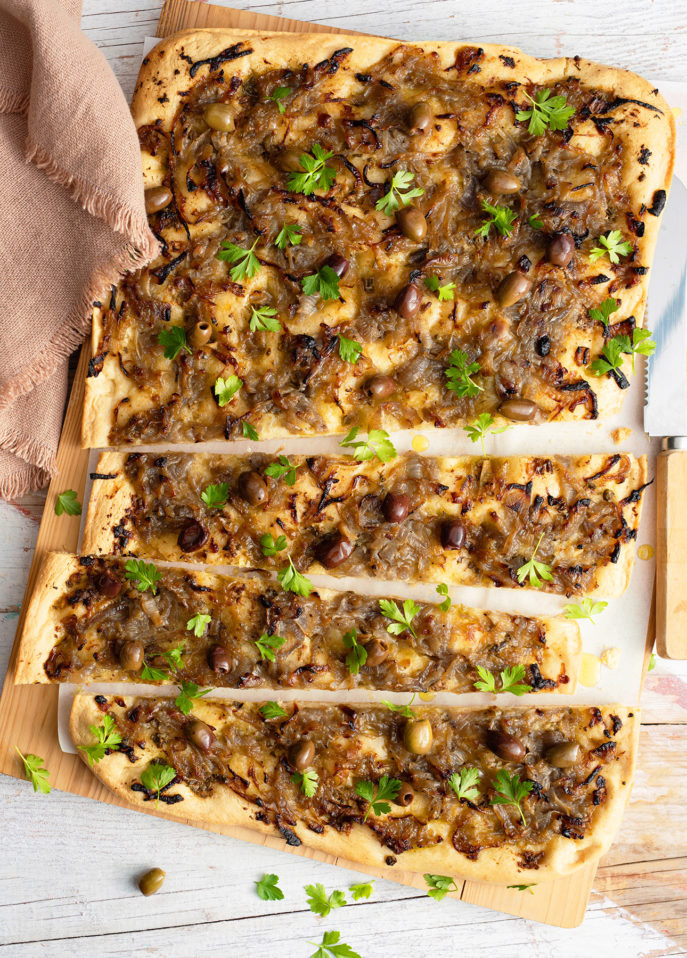
This pissaladière recipe layers melting caramelized onions, punchy anchoïade, Niçoise olives, and fresh herbs over a golden homemade dough. Serve this Provençal onion flatbread warm or at room temperature for l’apéro, lunch, or a picnic.
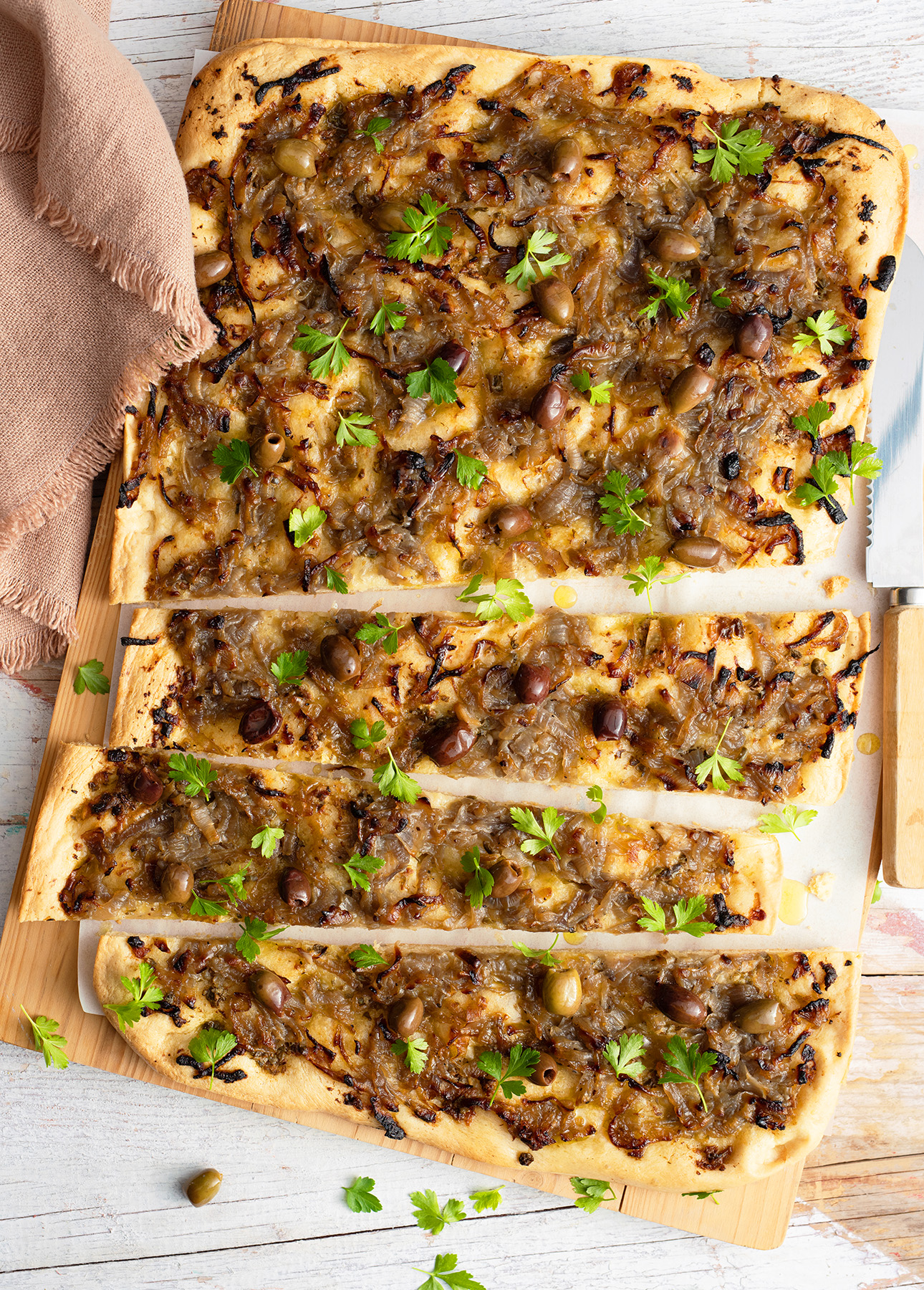
This pissaladière recipe—often typed as pissaladiere recipe without the French accent—is one of my favorite ways to turn l’apéro into dinner. Pissaladiere is a Provençal onion flatbread layered with melting caramelized onions, a punchy anchovy-and-caper anchoïade, black olives, and fresh herbs, and it tastes like the South of France in salty-sweet, golden-edged slices.
If you’ve been following me for a while, you know all about my love for l’apéro. “L’apéro” is short for l’apéritif, which is the name of a drink served in the early evening to whet your appetite. In French cities, people have l’apéro in restaurants and bars, where servers bring salty snacks to go with the drinks.
But this tradition of getting together after work to relax with a drink before dinner is also a full-blown ritual that is often hosted at home, accompanied by a variety of bites or appetizers that can become generous enough to act as dinner itself.
L’apéro is in my blood: all through my childhood, I watched my parents host it. Even when my mother hosted a sit-down dinner, she always first gathered guests in the living room for l’apéro. As an adult, I’ve kept this tradition going. To me, l’apéro is more than an after-work ritual: it’s how I keep connected with friends. All of the get-togethers I participate in with friends and family start with a drink and some nibbles—i.e., l’apéro.
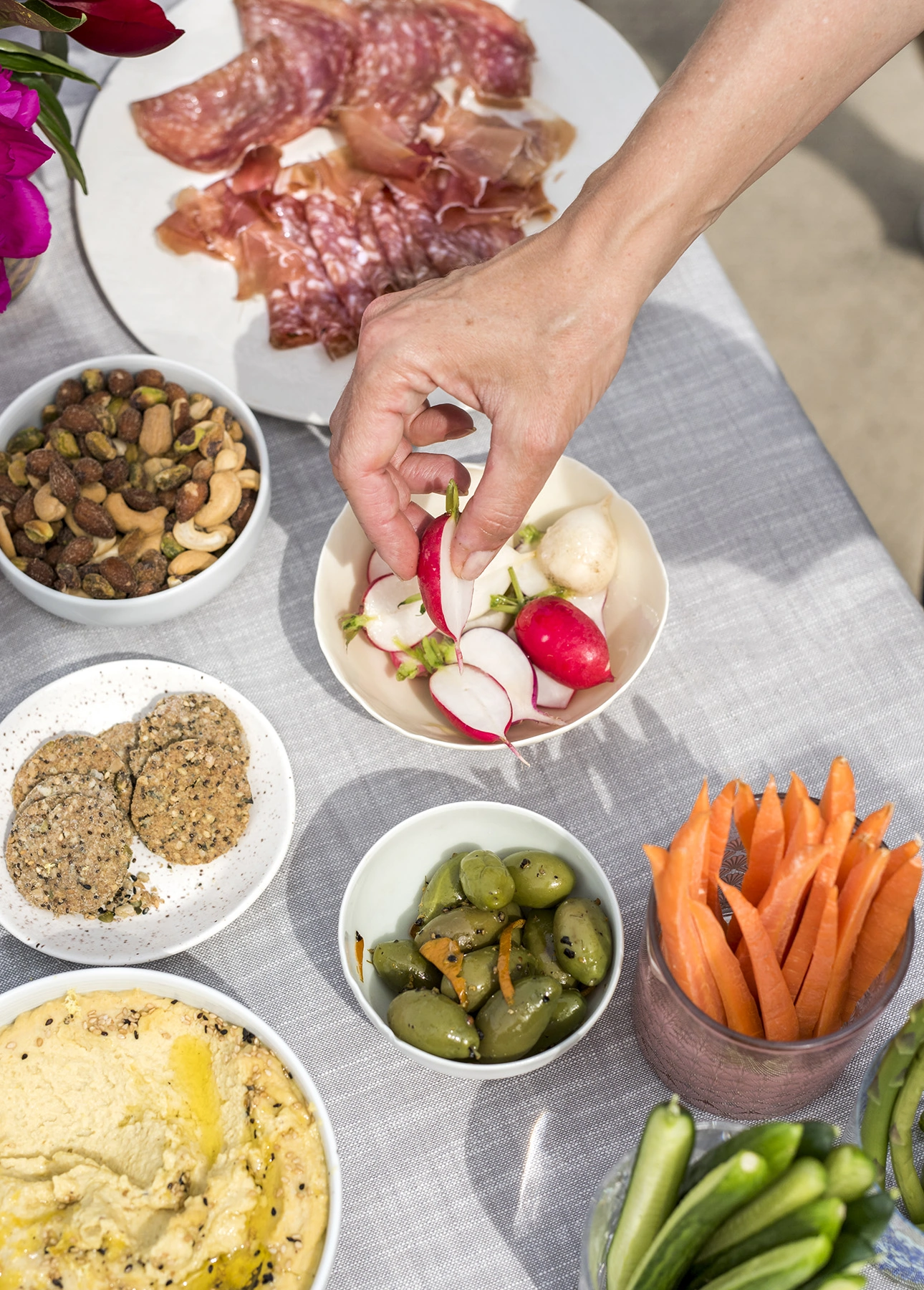
On most nights, l’apéro is a casual affair: I’ll simply serve olives, mixed nuts, sliced veggies, a dip (most often store-bought), and some chips.
On weekends when I have more time on my hands or on celebratory nights, I like to add special homemade bites that give the occasion a more festive feel. Savory madeleines, French savory cake, fried olives, and cheese straws are some of my go-to recipes—not only because they’re delicious, but because my friends keep requesting them!
Pissaladière has also become a favorite of mine—and of my guests, too. Everybody loves flatbread, especially one that’s golden, crisp-edged, and loaded with irresistible toppings. This classic French onion and anchovy tart checks all those boxes, and it’s not even hard to make. You need a bit of time to prepare the dough, caramelized onions, and anchoïade, but all three elements can be made ahead. Then, shortly before your guests arrive, you simply assemble the tart, bake it, slice it into squares, and serve it with a glass of rosé!
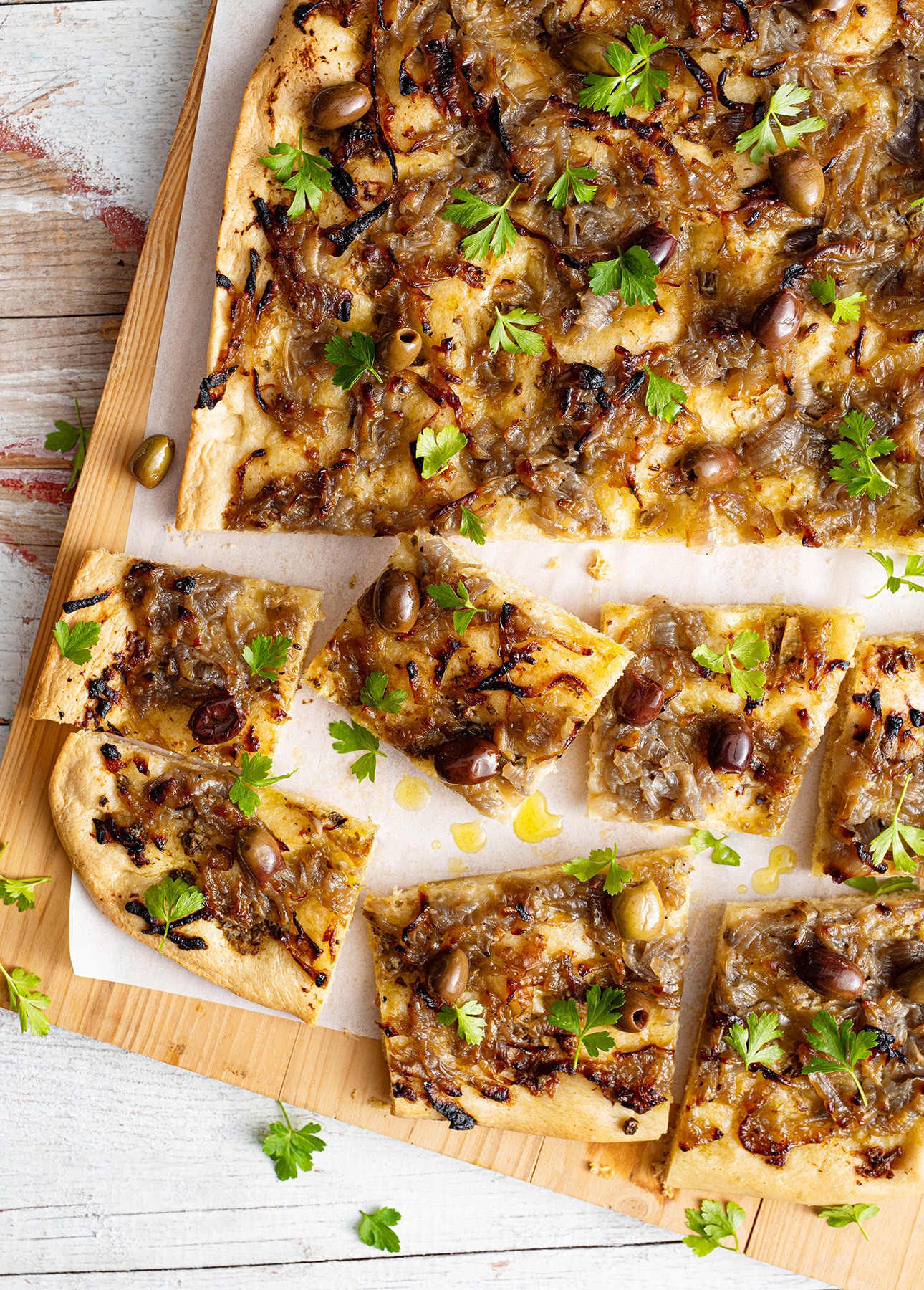
How to Make Pissaladière: RECIPE VIDEO
What is Pissaladière?
Pissaladière is a Provençal onion flatbread from Nice, in the South of France. It’s made with a bread-like dough topped with a generous layer of caramelized onions, anchovies, and small black Niçoise olives. You can think of it as a French onion tart with a pizza-like soul—except that classic pissaladière traditionally has no tomato sauce or cheese.
Although pissaladière is widely associated with Nice and Provence, its story crosses the nearby Italian border. An earlier version of the dish was made in Liguria, where it was known as pissalandrea and was considered a type of pizza garnished with onions, anchovies, and olive oil. The dish eventually made its way to France, where small black olives became a classic topping.
The name pissaladière comes from pissalat, a salty anchovy-based condiment that was traditionally spread over the dough. These days, whole anchovy fillets are more common, often arranged in a criss-cross pattern over the onions. In my version, I bring back the condiment idea by using anchoïade—a bold, garlicky anchovy sauce—so the flavor is evenly spread through every bite.
How Do You Pronounce Pissaladière?
Pissaladière is pronounced roughly pee-sa-la-dyair, with the last syllable sounding like “dyair” rather than “dee-air.”
Pissaladière can seem like quite the tongue-twister for English speakers, but it’s not that hard to say. The trickiest part of the word is the last syllable—“dière”—in which the “i” sounds like a “y.” Imagine saying “dyou,” with the “d” sliding into the “you.” It’s the same in pissaladière, but the syllable sounds more like “dyer,” which you shouldn’t pronounce “die-her” but “d-yer,” with the “e” open, as in the word “bet.”
Therefore, pissaladière is pronounced pi – sa – la – d-YER (remember to pronounce that “e” in “yer” as you would in “bet”). You can listen to a French person pronouncing the word—click on the red speaker icon to the left of the word to hear it—and practice saying it out loud. Soon enough, you’ll impress your friends while serving the dish with your perfect diction!
What’s on a Pissaladière?
Caramelized Onions
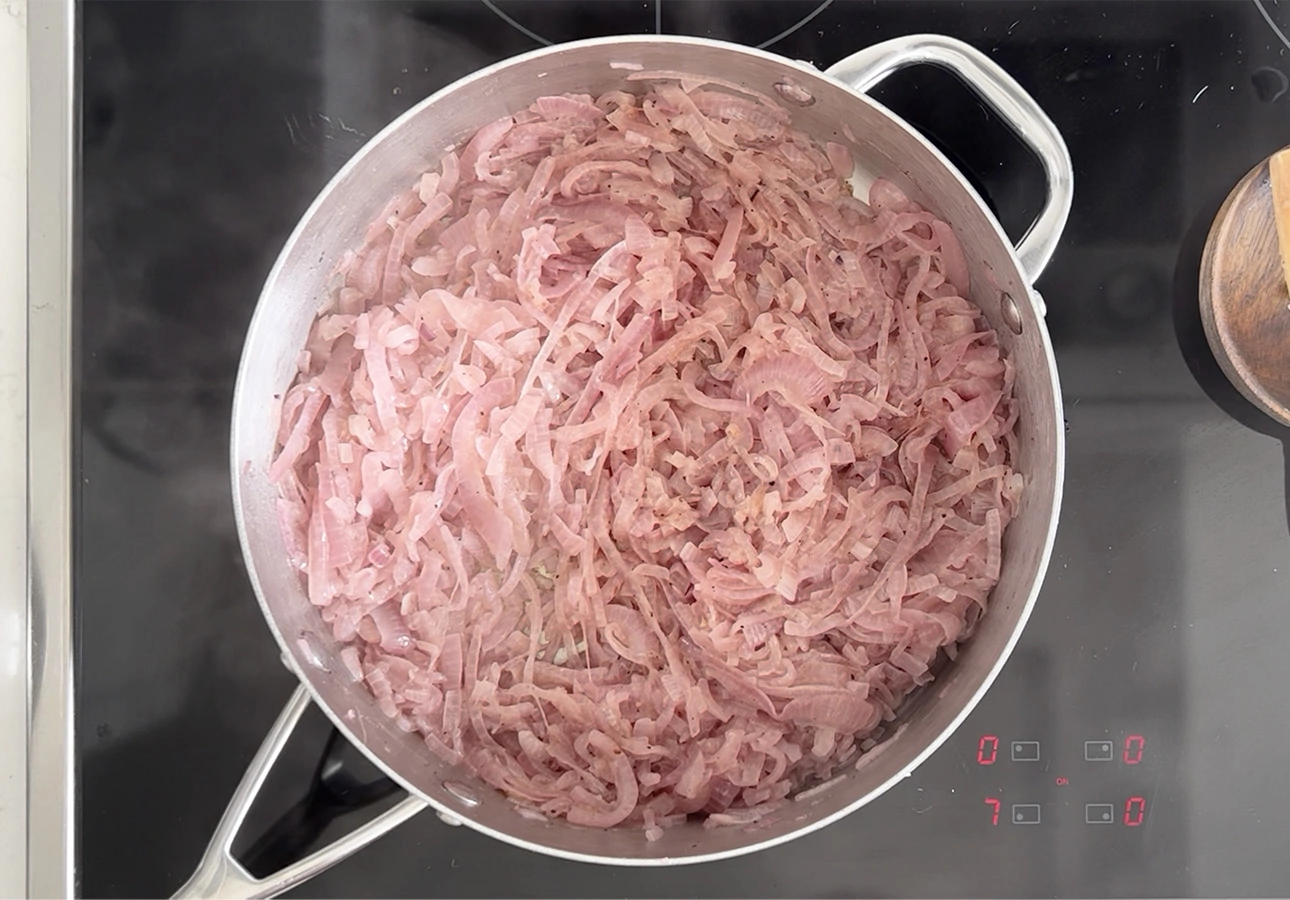
Caramelized onions are the heart of pissaladière. They should be soft, sweet, and silky—not deeply browned or jammy. Yellow onions are the classic, practical choice, but red onions work well too. I like their color when raw, even though it fades quite a bit once cooked. Use whichever variety you have on hand; the flavor will be delicious either way.
Anchoïade Instead of Whole Anchovy Fillets
Traditional pissaladière has an iconic look: anchovy fillets are often arranged in a criss-cross pattern over the onions, with Niçoise olives set where the lines meet. It’s beautiful, but whole anchovies can be intimidating if you’re serving people who think they don’t like them.
My modern take is actually closer to the original spirit of pissaladière because I use an anchovy condiment instead of whole fillets. I started doing that several years ago after noticing that whole anchovy fillets intimidated some of my guests. Many were quick to say, “I hate anchovies!” without even giving the tart a bite. I decided to make anchoïade and slather the dough with it instead.
Anchoïade is made with anchovies, olive oil, capers, and garlic, making it extremely rich in flavor, yet fresh and aromatic. This sauce, or dressing, is traditionally used as a dip for crudités in France, but I also use it to dress pasta—and top pissaladière too. Since I made this change to my recipe, I’ve never heard complaints about anchovies again, only “aahs” and “yums” as my guests devour the tart.

Niçoise Olives and Fresh Herbs
The classic olives for pissaladière are Niçoise olives: small, black, briny olives from the South of France. I prefer using pitted olives when I can find them because they make the flatbread much easier to eat. If you can’t find Niçoise olives, Taggiasche olives are a great substitute because they’re the same variety. Kalamata olives are easier to find and work too, though their flavor is a little different.
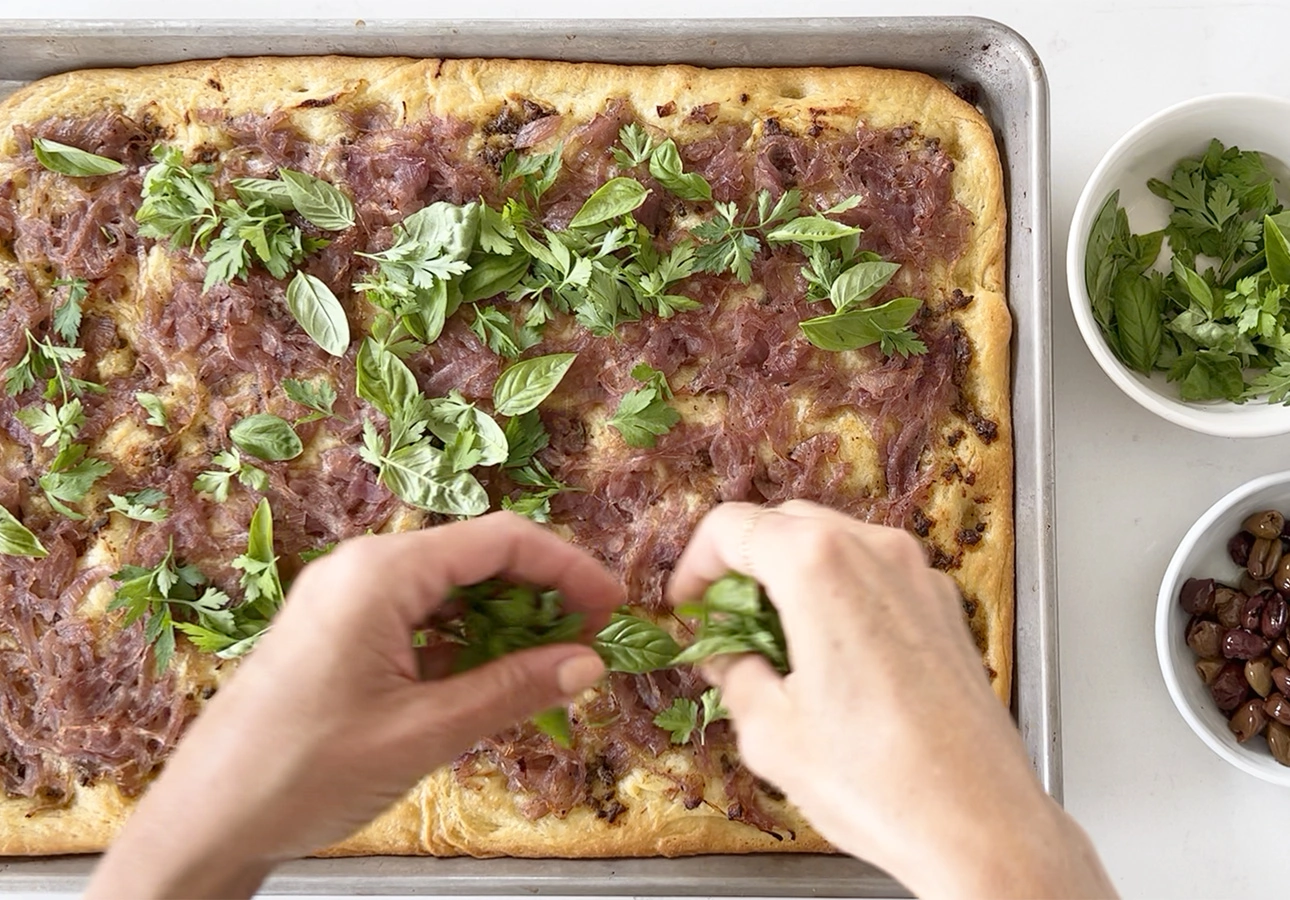
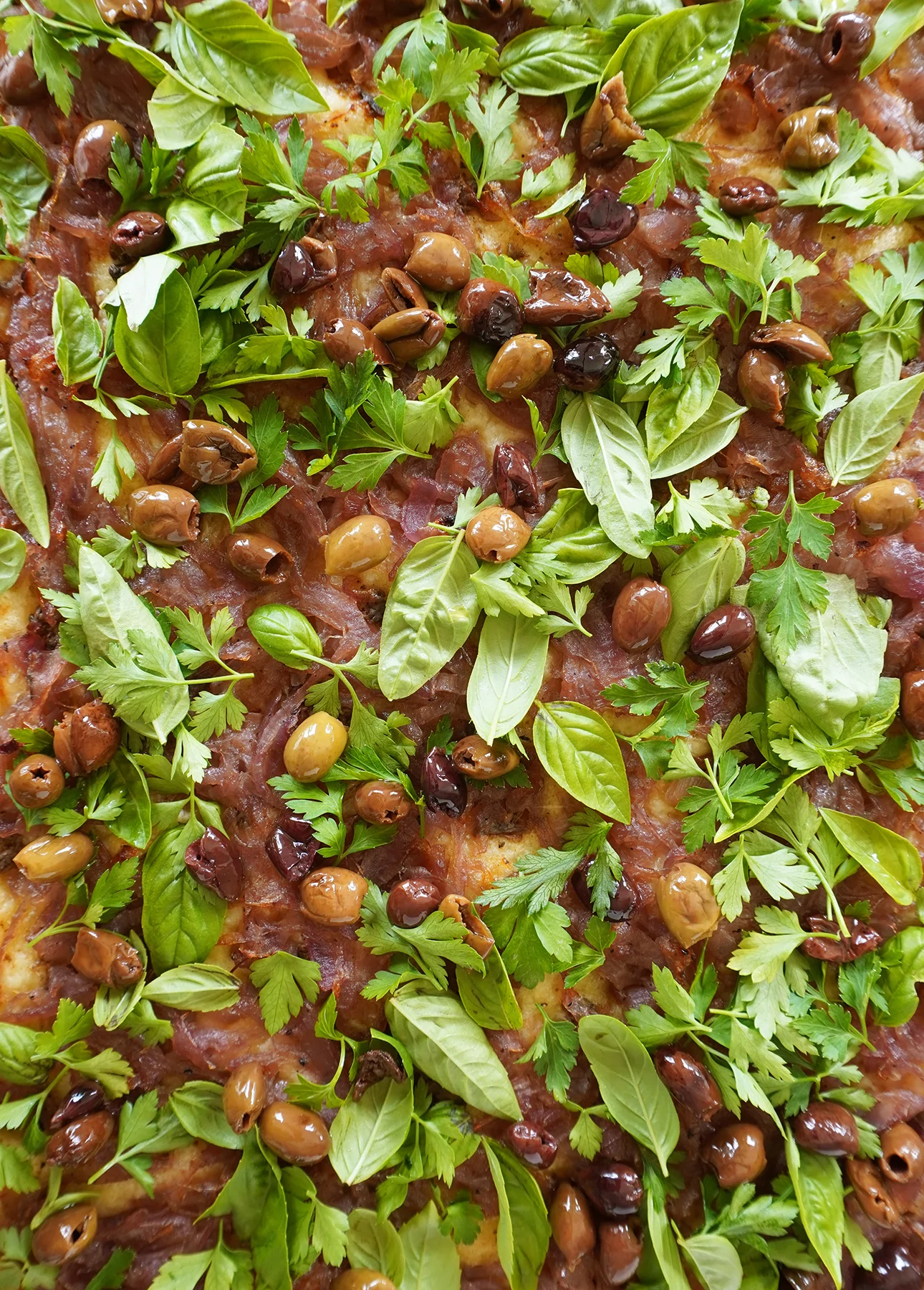
As a finishing touch, I like to add a generous handful of fresh herbs. Basil, oregano, marjoram, and flat-leaf parsley all work beautifully. They make the tart look brighter and bring a fresh, aromatic lift to all those rich, salty-sweet toppings.
For a full Provençal-inspired apéro spread, serve pissaladière with green olive tapenade, warm citrus olives, and something crisp to drink.
Helpful Tips for Making Pissaladière
Here are my best tips for how to make pissaladière that tastes deeply savory, balanced, and beautifully golden without turning the process into a whole-day project.
Know the three main components before you start
Pissaladière looks impressive, but it’s really just three simple components: a soft homemade dough, a generous layer of slow-cooked onions, and a bold anchovy-and-caper anchoïade. The dough needs time to rise, and the onions need time to soften, but none of the steps are difficult. Better yet, all three components can be made ahead, which makes this recipe much easier to pull off for l’apéro, lunch, or a casual picnic.
This is also why learning how to make pissaladière is more about timing than technique. Give yourself enough time for the dough to rise and the onions to cook properly, and the rest is simple assembly.
Use yellow or red onions
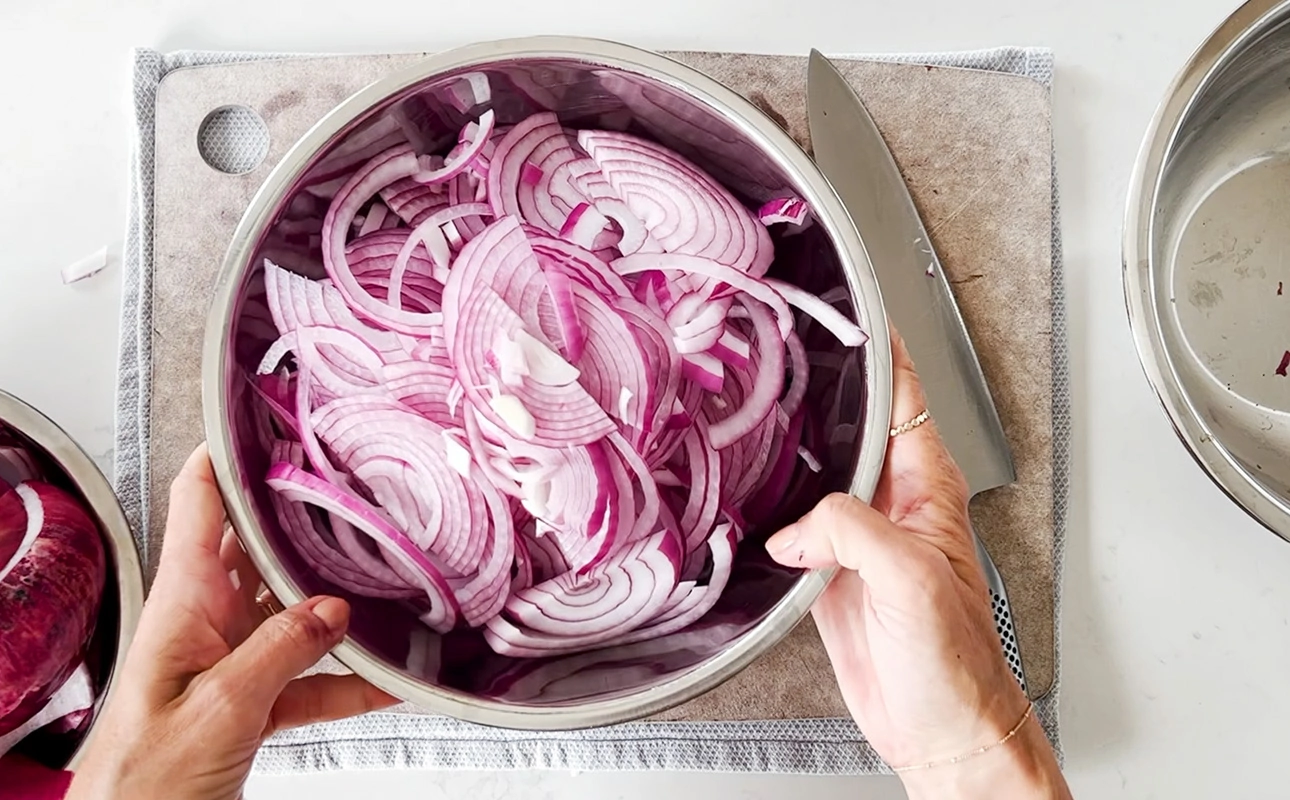
You can use good old yellow onions to caramelize and use as a topping on the Provençal flatbread. I like to use red onions for their color, but since the color fades quite a bit after cooking and the flavor is very similar to yellow onions, you can use whatever variety you have on hand.
Don’t rush the onions
The onions should be completely softened before they go on the dough. If they still have bite, they won’t melt into the flatbread the way they should. Cook them low and slow, stirring from time to time, until they’re silky and lightly caramelized. If there’s liquid left in the pot at the end, uncover and cook for a few extra minutes so the onions don’t make the dough soggy.
Choose good oil-packed anchovies
Use anchovy fillets that are packed in oil, and buy the best quality you can afford. I recommend buying anchovies in a glass jar rather than in a tin can. An open jar of anchovies keeps almost indefinitely at the back of the refrigerator. If you can only find tinned anchovies, transfer the leftovers, including their oil, into a small airtight jar and keep refrigerated until you need them again.
Use Niçoise olives—or the best substitute you can find
The classic olives used on the Provençal flatbread are Niçoise olives. Niçoise olives are tiny black olives that are sold in brine or olive oil. I recommend using those packed in olive oil because they’re slightly less salty.
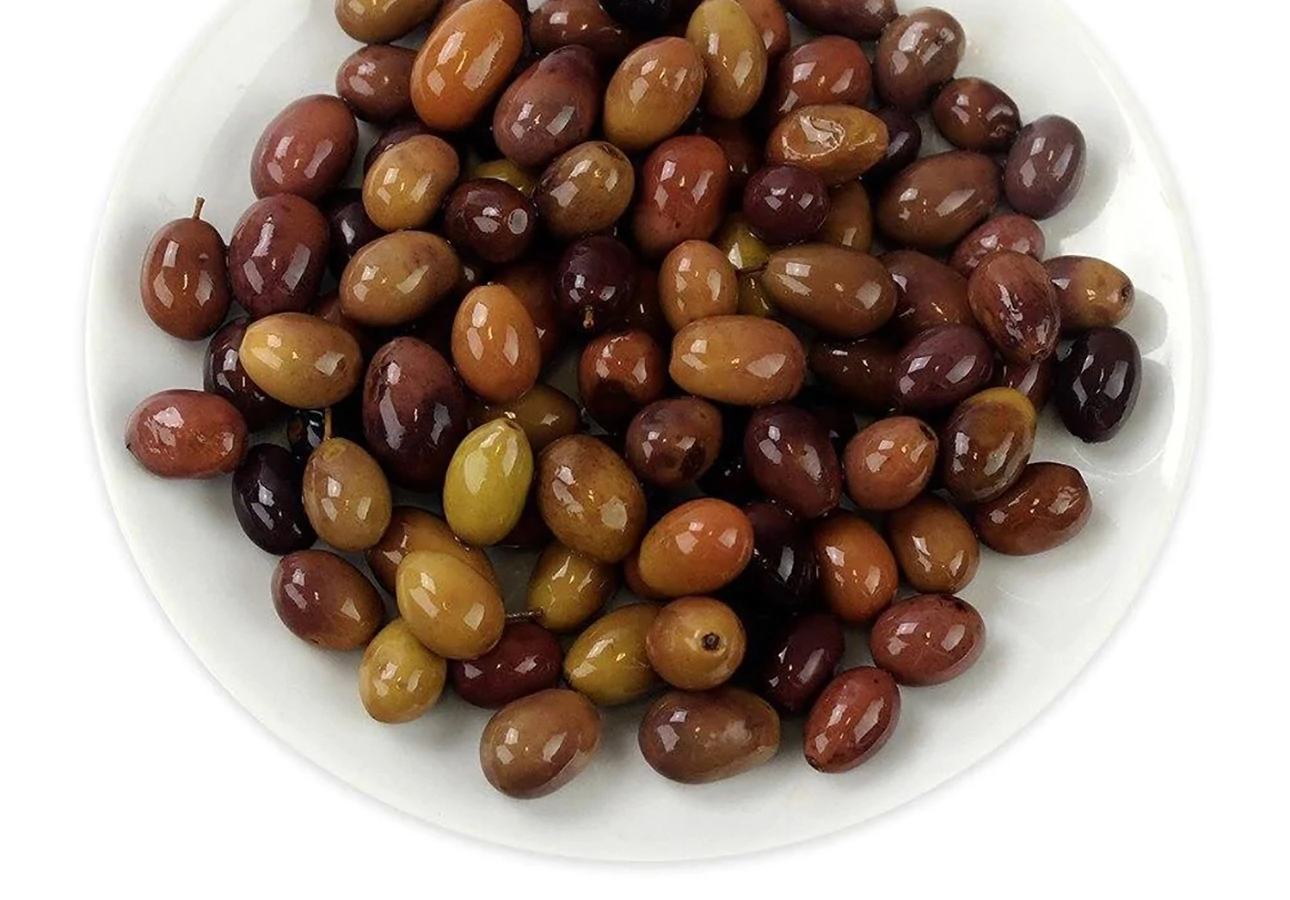
Olives are sometimes used whole on pissaladière, meaning the pit is still in. While this is traditional, I find it quite annoying to bite into a piece of flatbread and then have to wrestle with an olive pit instead of really enjoying the dish. If you can find them, I highly recommend using pitted Niçoise olives; otherwise, pit them yourself. Pitted olives make pissaladière much easier to eat.
If you can’t find Niçoise olives, you can look for Italian Taggiasche olives, which are the same variety as Niçoises, so the flavor is the same. If you can’t find either variety, you can substitute Kalamata olives, which have a slightly different flavor, but are easy to find in pitted form.
Keep the saltiness balanced
Anchovies, capers, and olives are all salty, so don’t season on autopilot. The onions and dough need enough salt to taste good, but once the anchoïade and olives are added, the whole pissaladière becomes boldly seasoned. Taste your olives and anchovies before adding extra salt anywhere else.
Stretch the dough gently
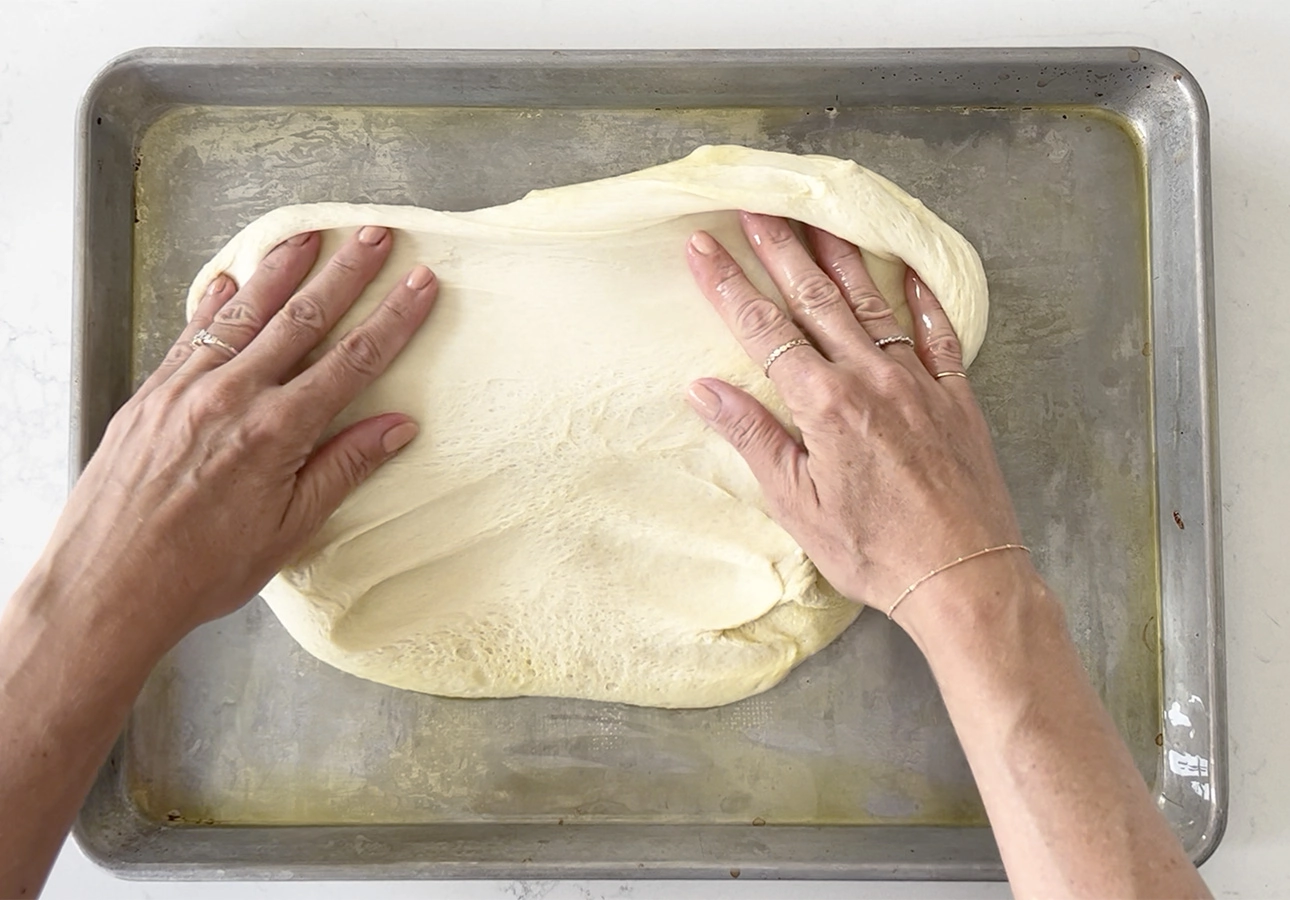
Pissaladière dough is soft and elastic, so don’t fight it. If it springs back while you’re stretching it into the baking sheet, let it rest for 5 to 10 minutes, then continue. That short pause relaxes the gluten, making the dough much easier to press into the corners.
If you love golden sheet-pan breads, you’ll also love my no-knead focaccia recipe.
Let the pissaladière cool before slicing
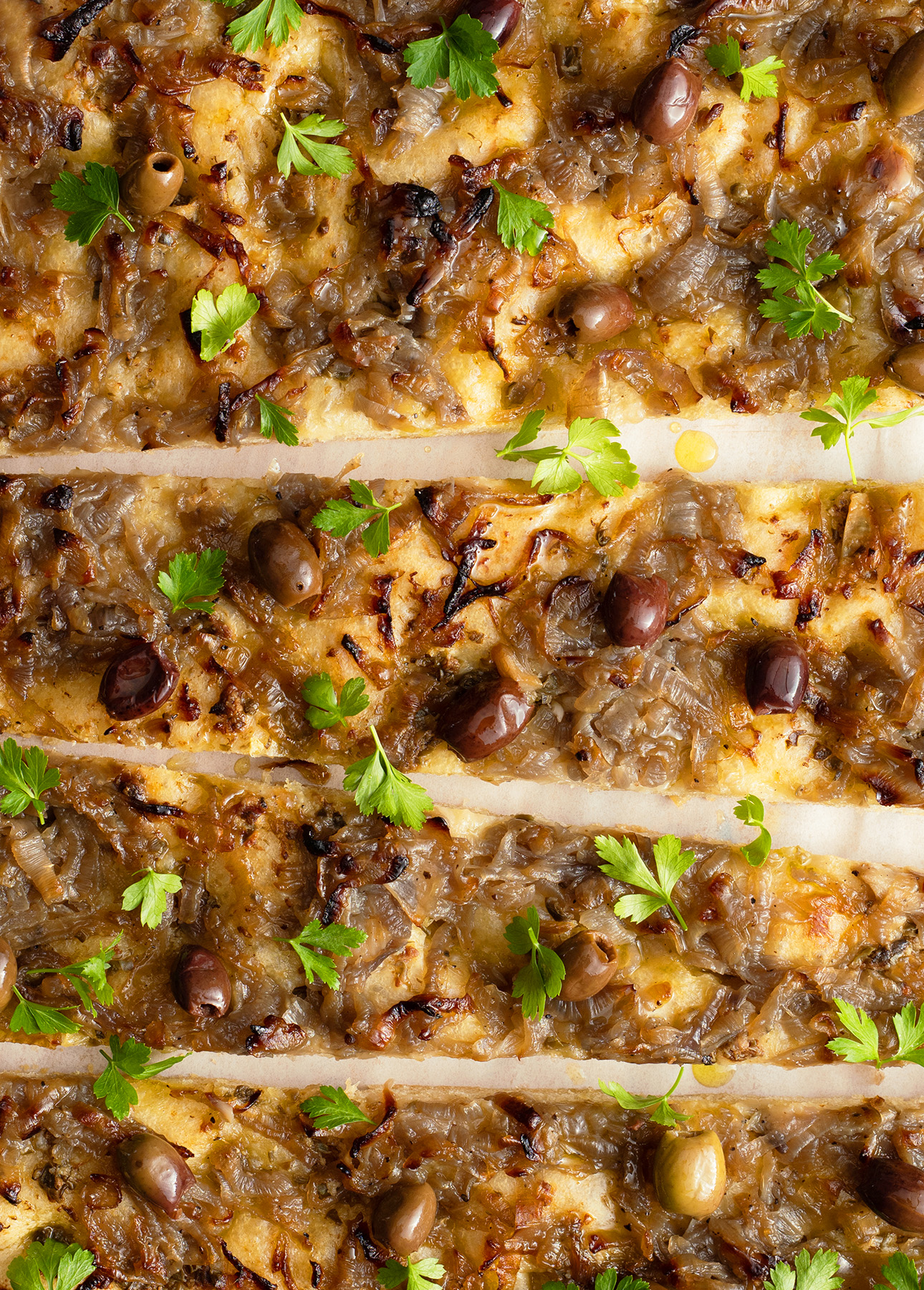
Pissaladière is delicious warm, but it slices better after a short rest. Let it rest for about 10 minutes out of the oven before cutting it into squares. The toppings will settle, the crust will firm up slightly, and you’ll get cleaner pieces for serving.
Can Pissaladière Be Made Ahead?
This pissaladière recipe is at its very best when freshly baked, or recently out of the oven—ideally within a couple of hours. You can do most of the work ahead of time, though: make the dough, the caramelized onions, and the anchoïade the day before, then assemble and bake the provençal flatbread shortly before serving.
If you don’t have time to bake pissaladière on the day you plan to serve it, you can bake it the day before, let it cool completely, cover with plastic wrap, and refrigerate. Return to a 325°F (160°C) oven for 10 minutes to give it that “fresh out of the oven” texture and flavor, then garnish with black olives and fresh herbs just before serving.
If savory baking is your thing, browse more savory bread recipes for your next apéro, brunch, or picnic.
Pissaladière FAQ
What does pissaladière mean?
Pissaladière gets its name from pissalat, a traditional anchovy-based condiment from Nice. The original condiment is much less common today, but anchovies remain one of the defining flavors of pissaladière.
What is pissaladière in English?
Pissaladière is often described in English as a Provençal onion flatbread, French onion tart, or onion and anchovy tart. None of these translations are perfect, but they all point to the same idea: a bread-like base topped with caramelized onions, anchovies, and black olives.
Is pissaladière served hot or cold?
Pissaladière is best served warm or at room temperature. I especially love it slightly cooled, cut into squares, and served as part of l’apéro, but it also makes a lovely lunch with a crisp green salad.
Does pissaladière have cheese or tomato sauce?
Traditional pissaladière does not have cheese or tomato sauce. The topping is all about caramelized onions, anchovies, black olives, olive oil, and herbs.
Can I make this pissaladière recipe without anchovies?
You can make an anchovy-free onion and olive tart, but it won’t have the same classic pissaladière flavor. Anchovies bring the salty, savory depth that balances the sweetness of the onions. If whole anchovies make you nervous, this recipe’s anchoïade is a gentler way to use them because the flavor is spread evenly over the dough.
Can I make pissaladière with puff pastry?
Some modern versions use puff pastry, but this recipe uses a homemade bread dough, which gives pissaladière its classic flatbread texture. Puff pastry will make a richer, flakier tart—not wrong, but definitely a different experience.
Pissaladière Recipe
Ingredients
For the Dough
- 1 tsp active dry yeast
- 1 tsp granulated sugar
- 1 ¼ cups water, warm (about 115°F / 45°C)
- ¼ cup extra-virgin olive oil
- 1 tsp kosher salt, or fine sea salt
- 3 ½ cups all-purpose flour, plus more as needed
For the Caramelized Onions
- 1 tbsp extra-virgin olive oil, plus more for drizzling
- 1 tbsp butter
- 2 lbs onions (red or yellow), peeled, halved, and thinly sliced
- 1 tsp kosher salt, or fine sea salt
- Freshly ground black pepper, to taste
For the Anchoïade
- 6 anchovy fillets, mashed with a fork or very finely chopped
- 1 tbsp capers, drained and finely chopped
- 1 clove garlic, grated with a Microplane or very finely chopped
- 1 tbsp red wine vinegar
- ¼ cup extra-virgin olive oil
To Serve
- ½ cup Niçoise olives, preferably packed in oil, pitted or not (see note)
- 1 handful of fresh herb leaves (a combination or basil, oregano, marjoram and/or flat-leaf parsley)
Instructions
- For the dough, STAND MIXER METHOD: In the bowl of a stand mixer, add the yeast, sugar, and water, and mix using a fork just to combine. Let sit until foamy, about 10 minutes. Mix in the oil and salt. Add half of the flour and use a fork just to combine. Add the remaining flour, attach the dough hook to the mixer, and knead at medium-low speed for 8 to 10 minutes. Stop the mixer from time to time to scrape down the hook and the bowl. If the dough is very sticky and keeps creeping up the hook, add a bit of flour, 1 tbsp (15 g) at a time, until the dough stops sticking so much. (You shouldn’t need to add more than ¼ cup / 30 g additional flour.)
- By the end of the kneading process, the dough should come together in a ball and feel smooth to the touch. Transfer to a large, lightly oiled bowl, cover with plastic wrap, and let sit in a warm, non-drafty place until doubled in size, about 1 ½ hours.
- For the dough, HAND METHOD: In a large bowl, stir together the yeast, sugar, and water. Let sit until foamy, about 10 minutes. Stir in the oil and salt. Add the flour and mix until the ingredients come together in a craggy ball of dough. Transfer to a lightly floured surface. Knead for 10 minutes, or until the dough feels smooth to the touch. If the dough is very sticky, add a bit of flour, 1 tbsp (15 g) at a time, until the dough stops sticking. (You shouldn’t need to add more than ¼ cup / 30 g additional flour.) Transfer to a large, lightly oiled bowl, cover with plastic wrap, and let sit in a warm, non-drafty place until doubled in size, about 1 ½ hours.
- For the caramelized onions: While the dough rises, set a large saute pan over medium heat, add the butter and oil, and stir until the butter is melted. Add the sliced onions, sprinkle with the salt and some black pepper; stir to coat the onions with the oil and butter mixture. Reduce the heat to low, cover, and cook, stirring from time to time, until the onions are very soft and starting to caramelize, about 25 minutes. Uncover and cook for 2–3 minutes more to evaporate any leftover liquids. Transfer to a bowl to cool.
- For the anchoïade: In a small bowl, add all the dressing ingredients. Stir to combine. Set aside.
- To bake: Generously grease an 18 x 13-in (45 x 33 cm) baking sheet (half sheet pan) with oil. Transfer the dough onto the sheet. Using your fingers, gently press the dough into the sheet, stretching it until it completely covers the baking sheet. Cover with plastic wrap and let the dough rise until almost doubled in size, about 1 hour more.
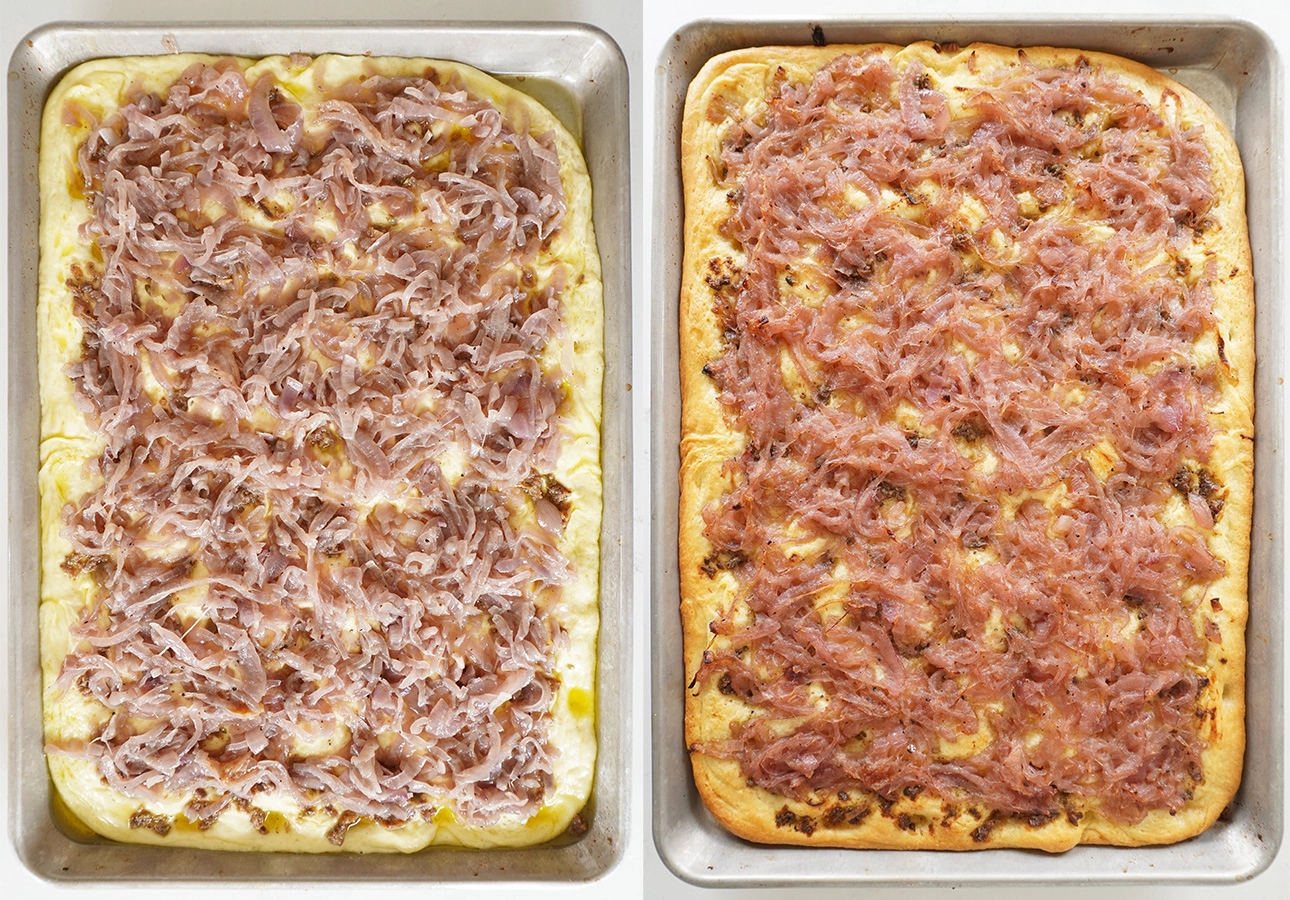
- Preheat the oven to 500°F (260°C) for at least 30 minutes (the oven needs to be very hot). Uncover the dough. Create indentations all over by pressing the tip of your fingers into the dough. Brush the whole surface (right up to the edges) with the dressing. Scatter the caramelized onions over the dough, leaving a 1-in (2 cm) border all around. Bake until the pissaladière is golden brown around the edges, 20 to 25 minutes.
- Remove from the oven and let cool slightly, about 10 minutes.
- SERVING: Scatter with the olives and some fresh herbs. Serve immediately.
- STORAGE: You can prepare the pissaladière up to a day in advance. Let it cool completely to room temperature, then cover with plastic wrap. Refrigerate. Warm up in a 350°F (175°C) oven for 8 to 10 minutes, then garnish with olives and herbs right before serving.
- NOTES: Pissaladière is traditionally garnished with whole olives, but I find it difficult to truly enjoy the dish when you need to manage olive pits. I prefer using pitted olives, and I strongly recommend using olives packed in olive oil because these have a smoother flavor than the ones packed in brine.If you can’t find Niçoise olives, you can use Italian Taggiasche or Greek Kalamata olives instead.
Did you make this?
Tell me how you liked it! Leave a comment or take a picture and tag it with @foodnouveau on Instagram.
Author: Marie Asselin
Thank you for the jump to the recipe button.
You’re welcome ☺️
This recipe was just amazing, we made it last night and so so yummy. Really easy to follow and make. Thanks!
Happy you enjoyed this irresistible flatbread, Laura!
This flatbread was awesome! I agree with the whole olives thing. It just makes no sense. I’m so glad I tried it! Will make again.
Who wants to break a tooth biting into an olive pit, right? Happy you enjoyed the pissaladière, Erin!
Apero is a lifestyle, and this pissaladiere is a real taste of France! Thank you for all the tips.
Thanks for writing Helene! Happy you enjoyed the post and this irresistible recipe.
I love the combo on the onions and anchovies. It’s that savoury, briny flavor and it’s so good! This looks delicious :D
Anchovies quite simply have no substitutes! The flavor is so rich, it adds a lot of interest to this recipe.
Super tasty. I was nervous about the anchovies but I wanted to make a unique flatbread and this was the recipe I wanted to try. We really enjoyed the flavors in this one.
Happy you loved this pissaladière Amanda! I think anchovies are worth a try. This recipe is making the most of their irresistible flavor!
This is such a great-looking bread with overloaded stuff with it! Totally looks so delicious and yummy! I’ll definitely make this at home!
You’re going to love it Jamie! It’s a crowd-pleaser, too.
This is the most savory snack I have had in some time. Would make a great appetizer as well, thanks!
Pissaladière is an easy way to feed a crowd for happy house! So delicious!
Love this pizza/flatbread. Simple but so tasty! We all loved it and I wish I had made more.
Thanks Megane!
Never tried but it looks delicious and looks so easy to make.
I will prepare this for everyone. Thank you!
I think pissaladière would make a fun appetizer for the holidays! It would for sure get conversations going 🤗