- V
- GF
- NS
- DF
- View Recipe Key
White Bolognese Sauce (Ragù Bianco)
White Bolognese Sauce (Ragù Bianco)

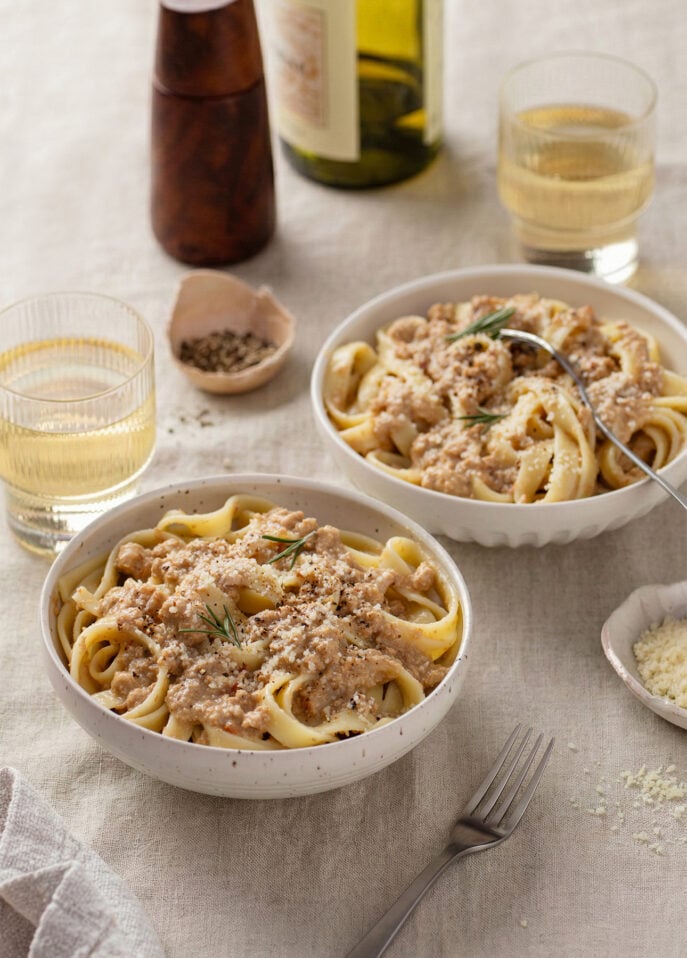
This white bolognese sauce combines veal, pork, pancetta, and mild Italian sausage with fennel, white wine, and milk. A gentle simmer and a final touch of lemon create a mellow, creamy ragù to toss with any pasta, plus plenty of Parmigiano-Reggiano.

This post contains affiliate links. Full disclosure is at the bottom of the article.
White bolognese is a mellow, creamy meat sauce with the satisfaction of a slowly simmered ragù and the fennel flavor I’ve come to associate with this tomato-free variation. My ragù bianco combines ground veal and pork with pancetta and mild Italian sausage, then finishes with a little lemon juice. Tossed with pasta and Parmigiano-Reggiano, it’s a sauce I love to have in my repertoire alongside my tomato-based Bolognese.
I first encountered white bolognese at my favorite restaurant in Québec City a few years ago. I loved its delicate flavor: meaty and satisfying, yet sophisticated. After enjoying it again at a restaurant in Rome serving Puglian cuisine, I became convinced I had to develop my own recipe, if only to enjoy it whenever the craving surfaced. White bolognese still feels like a niche dish compared with the familiar red sauce, which makes me all the happier when I find it on a menu.
My dish of Tonnarelli Ragu Bianco, in Rome:

When I wanted to make it at home, I searched through my extensive collection of Italian cookbooks, including The Silver Spoon, but couldn’t find a recipe for white bolognese. To develop my version, I built on the flavors I remembered, drawing on techniques from my reference books and the ones I use for my other meat sauces.
Like my Bolognese sauce, this recipe takes a couple of hours to make: start with careful browning, let it simmer gently, then toss it with the pasta in a skillet, and you’re in for an amazingly comforting treat.
What’s Ragù Bianco?
Ragù bianco is an Italian meat sauce made without tomatoes. “Bianco” means “white,” referring to the absence of tomato rather than a bright white color. You’ll often see this white version of ragù called white bolognese in English, with recipes that vary by cook and region across Italy.
Tomato-free meat sauces have a long history in Italian cooking. Pellegrino Artusi’s nineteenth-century recipe for maccheroni alla bolognese, reproduced by Casa Artusi, includes veal, cured pork, butter, vegetables, a little flour, and broth, with no tomato. Today, ragù bianco describes a style of sauce rather than one fixed recipe, with room for different combinations of meat and seasonings.

How this White Ragù Compares with my Bolognese Sauce
My Authentic Bolognese Sauce is a long-time favorite on this site: a slowly simmered, tomato-based meat sauce made with beef, veal, or a combination of the two. If you’ve made it, you’ll recognize some of the techniques in this white ragù.
Both recipes start with finely chopped vegetables and pancetta, then add the meat gradually so it can brown properly. Both use dry white wine and milk, and both simmer until the sauce is thick and creamy. White wine and dairy aren’t exclusive to white bolognese!
The differences go beyond leaving out the tomatoes. My Bolognese uses beef, veal, or a mix, plus carrots and beef broth. This white ragù uses veal, pork, and mild Italian sausage, plus onion, celery, and chicken stock, with no carrots. Crushed fennel seeds are part of the flavor I associate with white bolognese. I use them alongside either dried Italian seasoning or dried rosemary, then stir in lemon juice at the end.
Simmer the white sauce for about 1 hour after the initial cooking and browning. Give yourself time for those early stages, too: they’re essential, not something to rush through before the timer starts.

Helpful Tips for Making White Bolognese
Add the meats in stages
Start with the veal and break it up with a wooden spoon as it cooks. Let it brown before adding the pork, then cook the pork the same way before adding the sausage meat. Adding the meats gradually helps excess liquid evaporate so the meat browns instead of steaming.
Once all the meat is cooked, give it another 10 minutes, stirring occasionally. You’re looking for browning on the meat and golden bits sticking to the bottom of the pot. Keep an eye on it and lower the heat if needed so it doesn’t burn.
Keep the pieces small
Mince the onion and garlic, and finely dice the pancetta and celery. Break up the ground meats as you add them, rather than leaving large lumps. Crush the fennel seeds before adding them to the pot. Prepare all the ingredients before you begin cooking.
Remove the casings from the mild Italian sausages. The recipe uses both sausage meat and plain ground pork.

Keep the additions in order
Use dry white wine to deglaze the pot, scraping up the browned bits with your wooden spoon. Stir and scrape the bottom, then let the wine evaporate for about 2 to 3 minutes. Stir in the cornstarch, then the chicken stock, whole milk, dried seasoning, and remaining salt. My recipe adds the cornstarch directly at this stage; no separate slurry is needed.
Let the texture tell you when it’s ready
Simmer the ragù over very low heat with the pot half-covered, stirring every 20 minutes. At the end of the simmer, it should be creamy and thick, like oatmeal. Push the sauce to one side of the pot: no separate liquid should pool in the space you’ve cleared. That’s the useful visual check to make before moving on to the pasta.
Taste and adjust the seasoning, then stir in the lemon juice. Add the lemon at the end of the sauce’s cooking time, before finishing the pasta in the skillet.

Measure the sauce for the pasta you’re cooking
For each person, allow about 3 oz (85 g) dry pasta and ½ cup (125 ml) white bolognese sauce. Multiply those amounts by the number of people you’re serving. You don’t need to cook enough pasta for the whole batch of sauce just because you’ve made a full pot.
Use long pasta or chunky short shapes
White bolognese works with any long pasta, as well as chunky short shapes such as rigatoni. Whichever you choose, finish the pasta in the skillet with the sauce so it’s evenly coated with the creamy ragù.

Stir the Parmesan into the sauce
Warm the amount of sauce you need in a nonstick skillet. For each serving, stir in 1 tablespoon (15 ml) finely grated Parmigiano-Reggiano cheese and let it melt into the ragù. It makes the sauce even more savory and creamy.
Finish the pasta in the skillet
Cook the pasta in a large pot of salted water for 1 minute less than the package directions so they’re very al dente. Transfer the pasta directly to the skillet with tongs or a slotted spoon, keeping the cooking water in the pot. Add 2 tablespoons (30 ml) reserved pasta water per serving, then bring everything to a gentle simmer and toss to coat.
Pasta cooking water also plays an important role in my cacio e pepe, although the cooking method is different. Serve immediately in warm bowls, with more Parmigiano-Reggiano, fresh herbs such as rosemary or basil, and some freshly ground black pepper if you like.
For another creamy pasta with a more pronounced lemon flavor, try my spaghetti al limone. You’ll find more dinner ideas in my collection of Italian pasta dishes.
White Bolognese Sauce Recipe (Ragù Bianco)
Ingredients
- 2 tbsp extra-virgin olive oil
- 2 tbsp unsalted butter
- 1 small onion, minced
- 2 celery stalks, finely diced
- 2 garlic cloves, minced
- 1 tsp fennel seeds, crushed
- 1 tsp kosher salt, divided, or fine sea salt
- 4 oz pancetta, finely diced
- 1 lb ground veal
- 1 lb ground pork
- 2 mild Italian sausages, casings removed and discarded (about 7 oz/200 g)
- ½ cup dry white wine
- 1 tbsp cornstarch
- 2 cups chicken stock
- 1 cup milk
- 1 tsp dried Italian seasoning, or ½ tsp (2.5 ml) dried rosemary
- Juice of ½ lemon, about 2 tbsp (30 ml)
For Serving
- Dry pasta, about 3 oz (85 g) per serving
- Finely grated Parmigiano-Reggiano, 1 tbsp (15 ml) per serving, plus more for serving
- Fresh basil leaves, optional
Instructions
- In a large stainless steel pot over medium heat, heat the olive oil and butter until the butter is melted. Add the onion, celery, garlic, crushed fennel seeds, and ½ tsp (2.5 ml) of the salt. Cook, stirring often, until the vegetables are softened, about 5 minutes. Add the pancetta and cook until golden and crisp, about 10 minutes.
- Add the ground veal and cook, breaking it up with a wooden spoon, until well browned. Add the ground pork and cook the same way, breaking it up as it cooks. Add the sausage meat and cook, breaking it up, until no pink remains. Adding the meats gradually allows excess liquid to evaporate so the meat browns instead of steaming.
- Continue cooking all the meat for another 10 minutes, stirring occasionally, to allow it to caramelize and develop crisp, golden bits on the bottom of the pot. Watch carefully and reduce the heat as needed to prevent burning.
- Pour in the white wine and scrape the bottom of the pot with a wooden spoon to loosen the browned bits. Stir and scrape until the wine has evaporated, about 2 to 3 minutes.
- Stir in the cornstarch, then add the chicken stock, milk, dried Italian seasoning or rosemary, and remaining ½ tsp (2.5 ml) salt. Bring to a boil, then immediately lower the heat to its lowest setting.
- Half-cover the pot and simmer gently for 1 hour, stirring every 20 minutes. The ragù is ready when it is rich, creamy, and thick like oatmeal. No separate liquid should pool when you push the sauce to one side of the pot. Taste and adjust the seasoning, then stir in the lemon juice.
- SERVING: For each serving, allow about 3 oz (85 g) dry pasta and ½ cup (125 ml) ragù bianco.
- Warm the amount of sauce you need in a large saute pan or skillet. Stir in 1 tbsp (15 ml) finely grated Parmigiano-Reggiano per serving until the cheese melts and the sauce is creamy and silky.
- Cook the pasta in generously salted water for 1 minute less than the package directions. Transfer it directly to the pan with tongs or a slotted spoon; do not drain or rinse it. Add 2 tbsp (30 ml) pasta cooking water per serving and toss well. Bring to a gentle simmer, stirring to coat the pasta evenly.
- Serve immediately in warm bowls. Top with fresh basil leaves, if desired, and a final sprinkle of Parmigiano-Reggiano.
Did you make this?
Tell me how you liked it! Leave a comment or take a picture and tag it with @foodnouveau on Instagram.
This site participates in the Amazon Associates Program, an affiliate advertising program designed to provide a means for the site to earn fees by linking to Amazon and affiliated sites.
If you click on an affiliate link, I may earn advertising or referral fees if you make a purchase through such links, at no extra cost to you. This helps me create new content for the blog–so thank you! Learn more about advertising on this site by reading my Disclosure Policy.
Author: Marie Asselin
WHAT DID YOU THINK OF THIS RECIPE?
Rate + Review