- V
- GF
- NS
- DF
- View Recipe Key
Prosciutto and Cherry Tomato Pizza
Prosciutto and Cherry Tomato Pizza

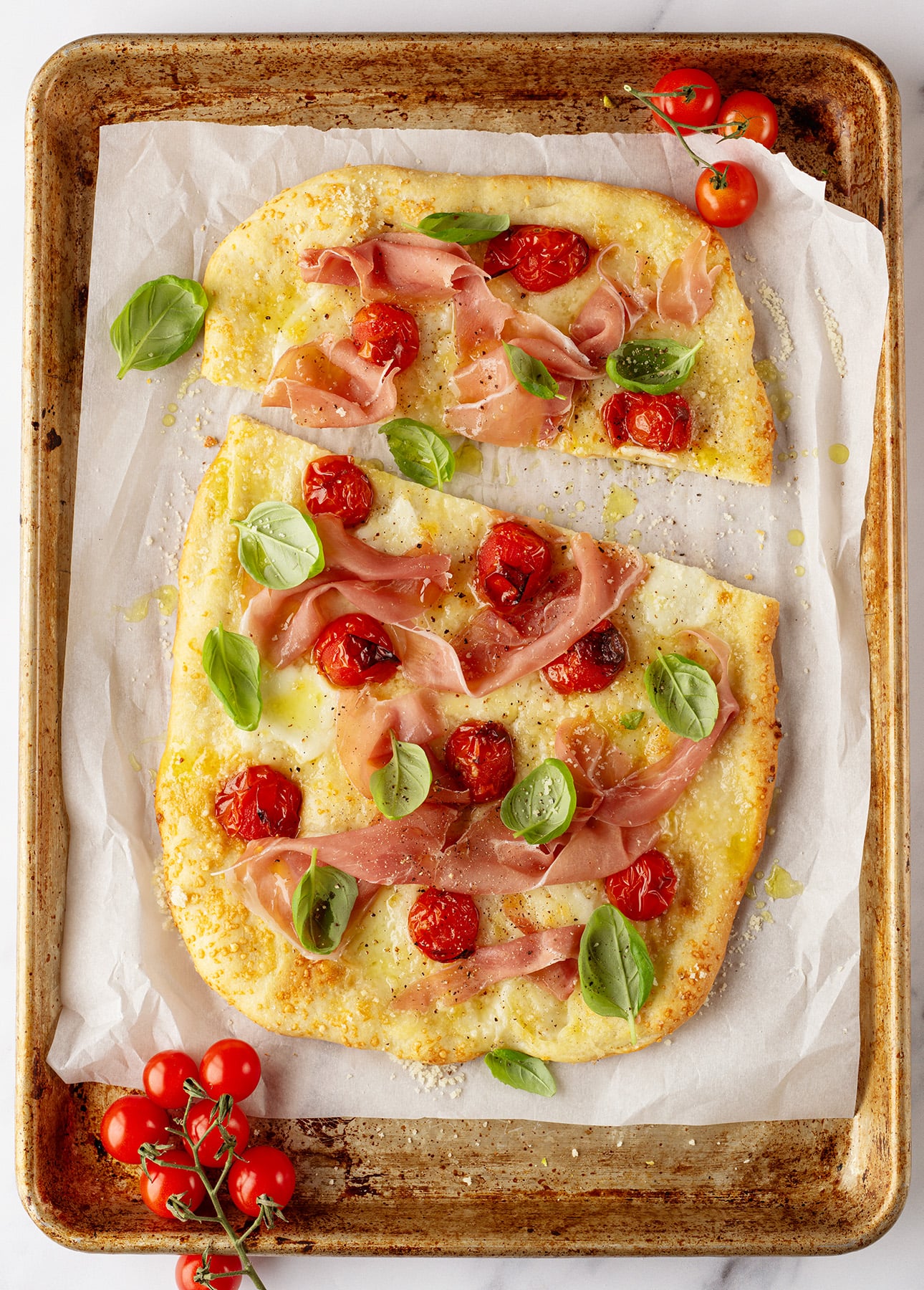
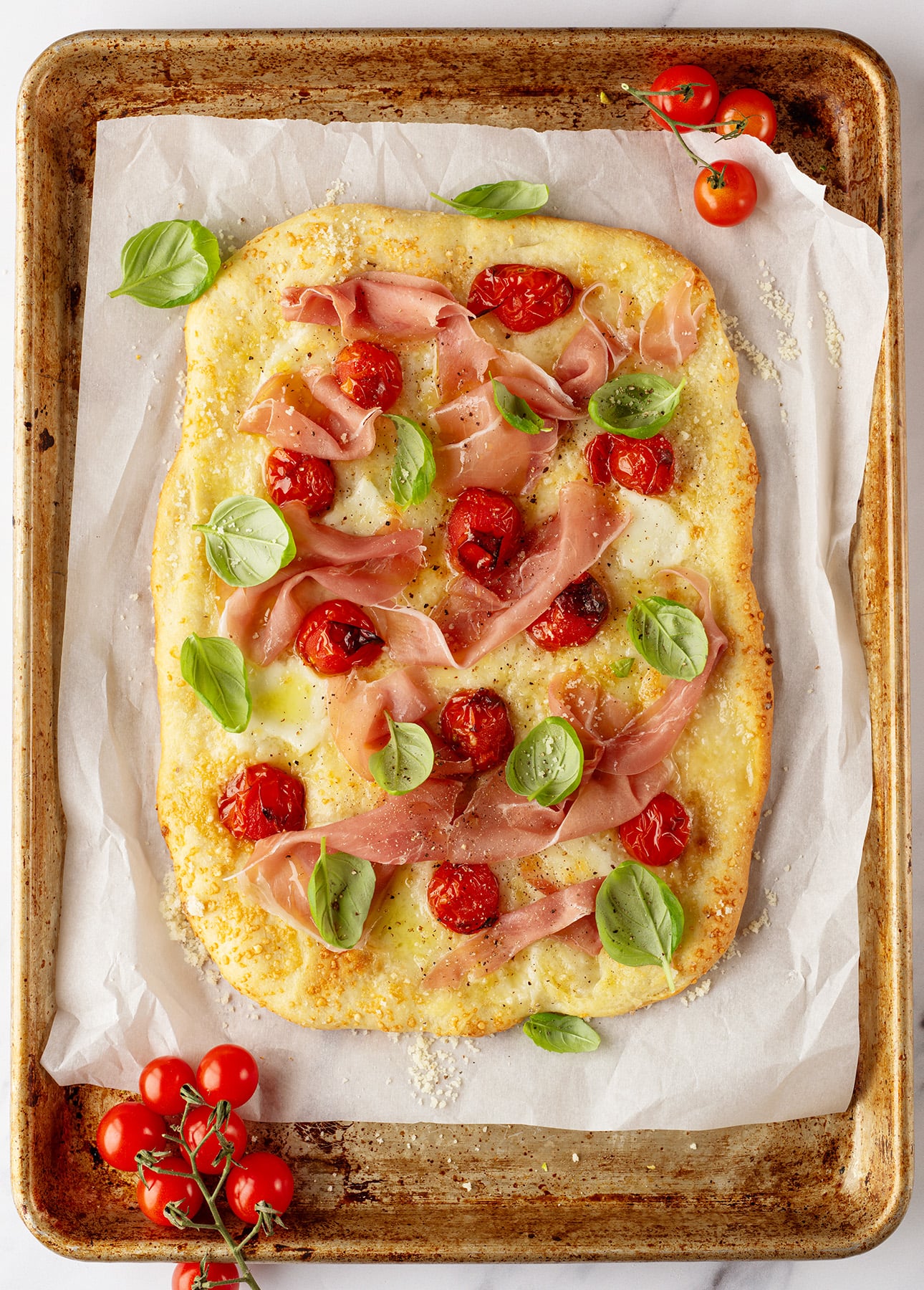
This prosciutto and cherry tomato Roman-style pizza combines a crisp, thin crust with sweet broiled tomatoes, silky prosciutto, and fresh mozzarella.
This post contains affiliate links. Full disclosure is at the bottom of the article.
This prosciutto and cherry tomato pizza is the Roman-style pizza I make most often at home because it gets so much from so little. The cherry tomatoes turn sweet and concentrated under the broiler, the prosciutto brings that silky, salty bite I never get tired of, and the fresh mozzarella melts into the crust instead of blanketing it. On a crisp Roman-style base, it’s simple, elegant, and just a little bit (ok, a lot!) addictive.
This is the kind of pizza I crave when I want something that feels special, but not fussy. It looks beautiful, tastes even better, and relies on only a handful of ingredients. That’s really the secret here: with Roman-style pizza, the crust is never just a vehicle. It’s a major part of the pleasure, and the toppings need to support it, not bury it.
That’s exactly why this flavor combination works so well. Sweet cherry tomatoes, salty prosciutto, creamy fresh mozzarella, and a crisp, golden crust are all strong personalities—but together, they feel balanced. Every bite has contrast, but it still feels harmonious.
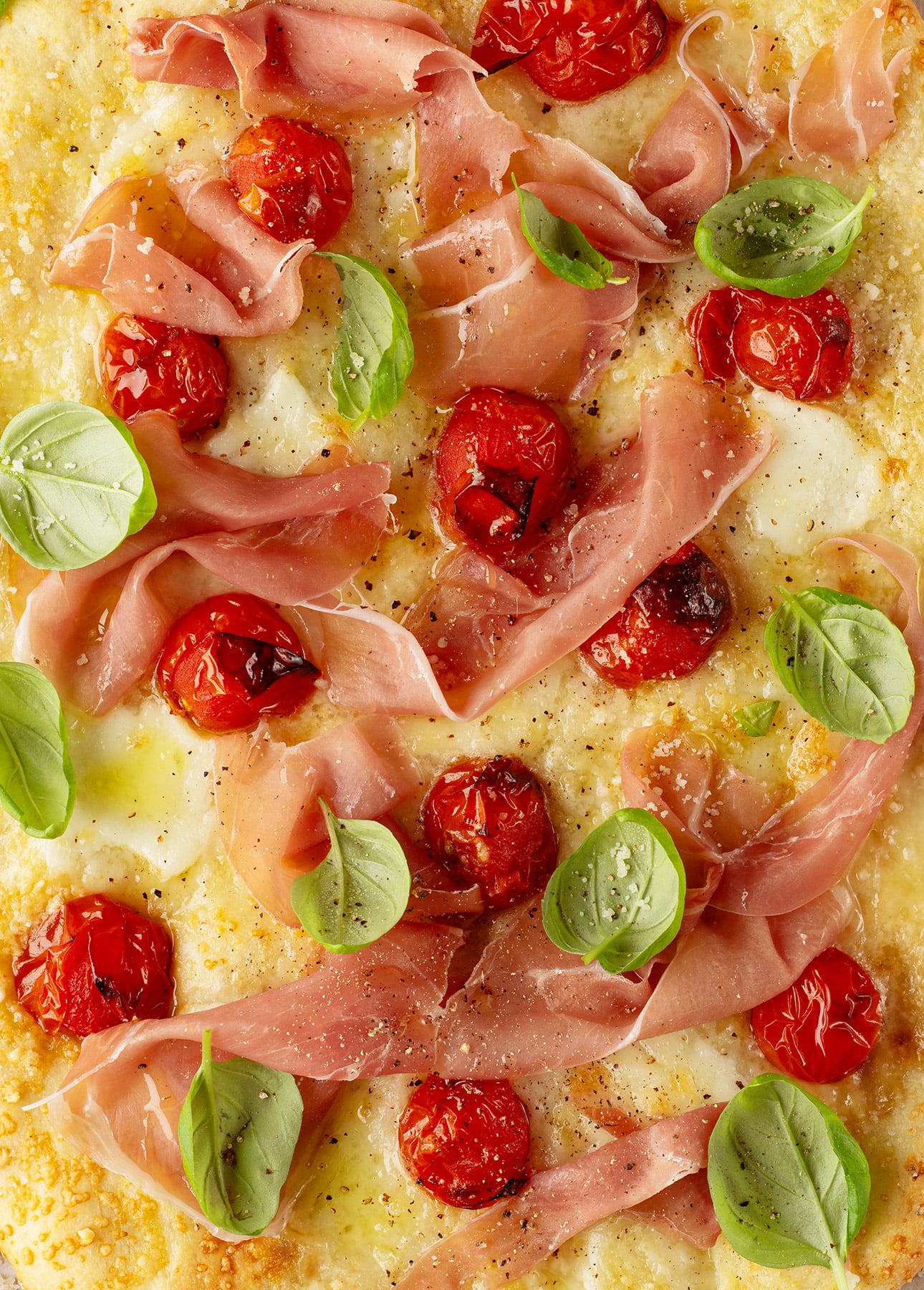
I also love that this pizza tastes elegant without being complicated. I’ll make it on a weeknight, but I’m also proud to serve it to friends and family over the weekend. It’s easy to make, too: there’s no elaborate pizza sauce to make, no mountain of toppings to prep, no heavy cheese layer to weigh everything down. Just a few good ingredients, treated with a bit of care. This is a very Roman idea, really: keep things simple, but make every choice count.
This stand-alone recipe is built on my Roman-style pizza dough, which I now use whenever I want that signature thin, crisp texture. If you’d like all my detailed tips for making, shaping, transferring, and baking the dough, head over to my Roman-Style Pizza from Scratch post. That’s my complete master guide. Here, I’m focusing on what makes this topping combination so good.
Why this prosciutto and cherry tomato combination works so well on a Roman-style crust
Roman-style pizza is at its best when the crust is thin and crisp and the toppings are used with restraint. This isn’t the place for a thick layer of sauce or a heavy blanket of cheese. The beauty of this style lies in contrast: a delicate crunch, a little chew, and toppings that you can still distinctly taste once the pizza is baked.
That’s one of the reasons prosciutto and cherry tomatoes work so well here. The tomatoes bring brightness and natural sweetness, the prosciutto adds salt and richness, and the mozzarella softens the whole thing with a milky, creamy note. When all that sits over a crisp Roman-style crust, the balance is just right.
This pizza also behaves more like a white pizza than a classic tomato pizza. There’s no red sauce to soften the crust or dominate the flavor. Instead, the tomatoes act almost like little bursts of concentrated garnish, bringing just enough acidity and sweetness to keep everything lively.
The toppings that make this pizza special
Why I broil the cherry tomatoes first
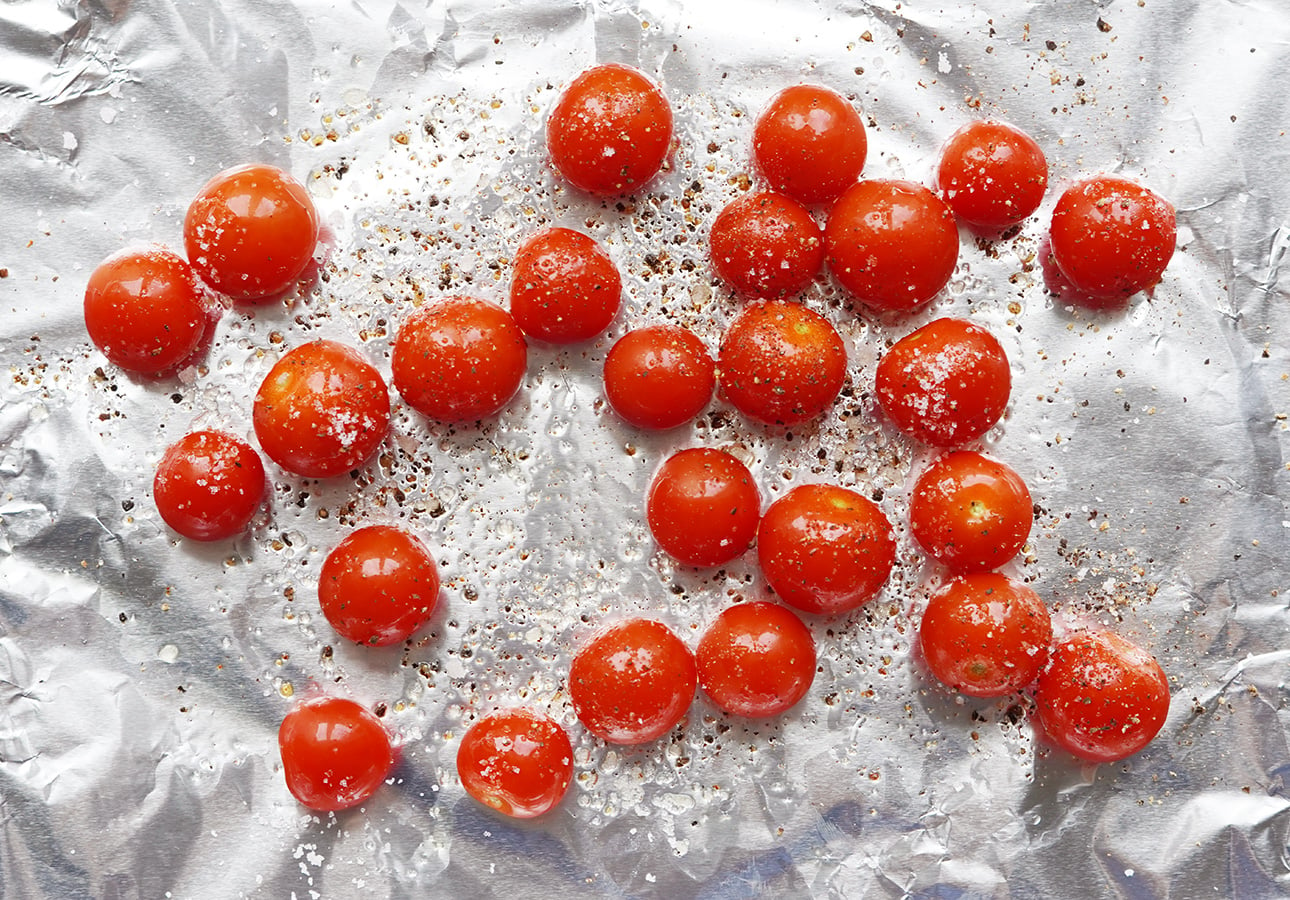
This is one of the little details that makes a big difference. Instead of scattering raw cherry tomatoes over the pizza and hoping for the best, I like to broil them in the preheated oven first. That quick blast of high heat helps them collapse slightly, caramelize around the edges, and concentrate in flavor.
It also solves one of the most common tomato-on-pizza problems: excess moisture. Raw tomatoes can release a lot of liquid as they bake, especially on a thin crust. By broiling them first, you drive off some of that moisture before they ever hit the dough. The result is a sweeter, more intense tomato flavor and a better chance of keeping the crust crisp.
Pro Tip: Broiling the cherry tomatoes in the preheated oven pulls double duty: it concentrates their flavor and helps protect the crust from excess moisture.
Why I use fresh mozzarella di bufala under the toppings
For this pizza, and for all Roman-style pizza, really, I prefer using fresh mozzarella di bufala over bagged grated mozzarella. Grated mozzarella tends to melt into a heavy, uniform layer, which works perfectly well on many North American pizzas, but it’s not what I want here. Roman-style pizza really benefits from a lighter touch.
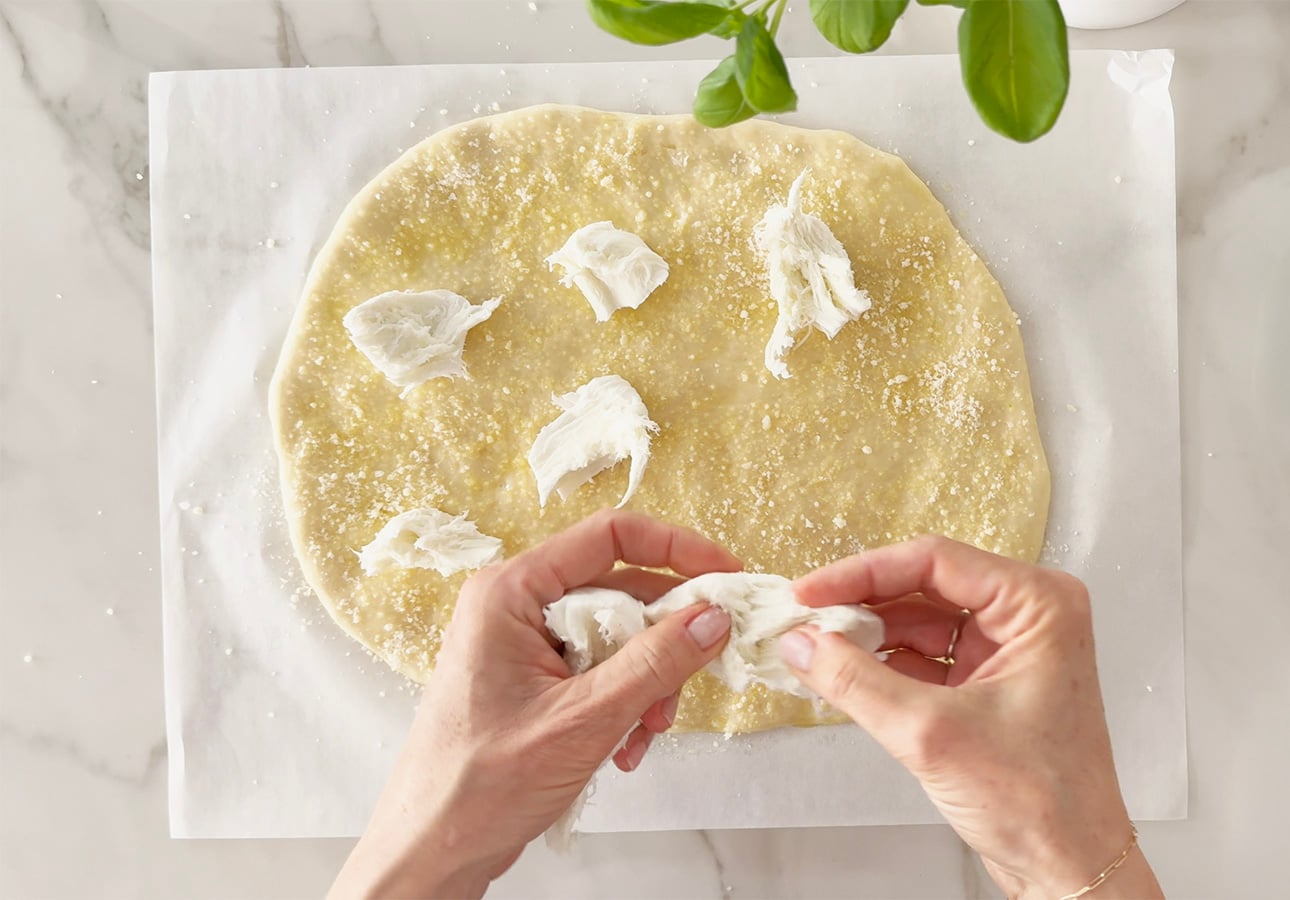
Fresh mozzarella di bufala melts differently. It creates creamy pockets rather than a blanket, allowing the crust and toppings to keep their own character. I place it directly over the oiled dough, then add the tomatoes on top. That way, the cheese melts into the crust and becomes part of the base, while the tomatoes can roast properly instead of being trapped under a layer of cheese.
It’s a small shift in habits, but it changes the whole experience and makes it more authentic to what Roman pizza really is.
When to add the prosciutto
Prosciutto can go on either before or after baking, but the result is different.
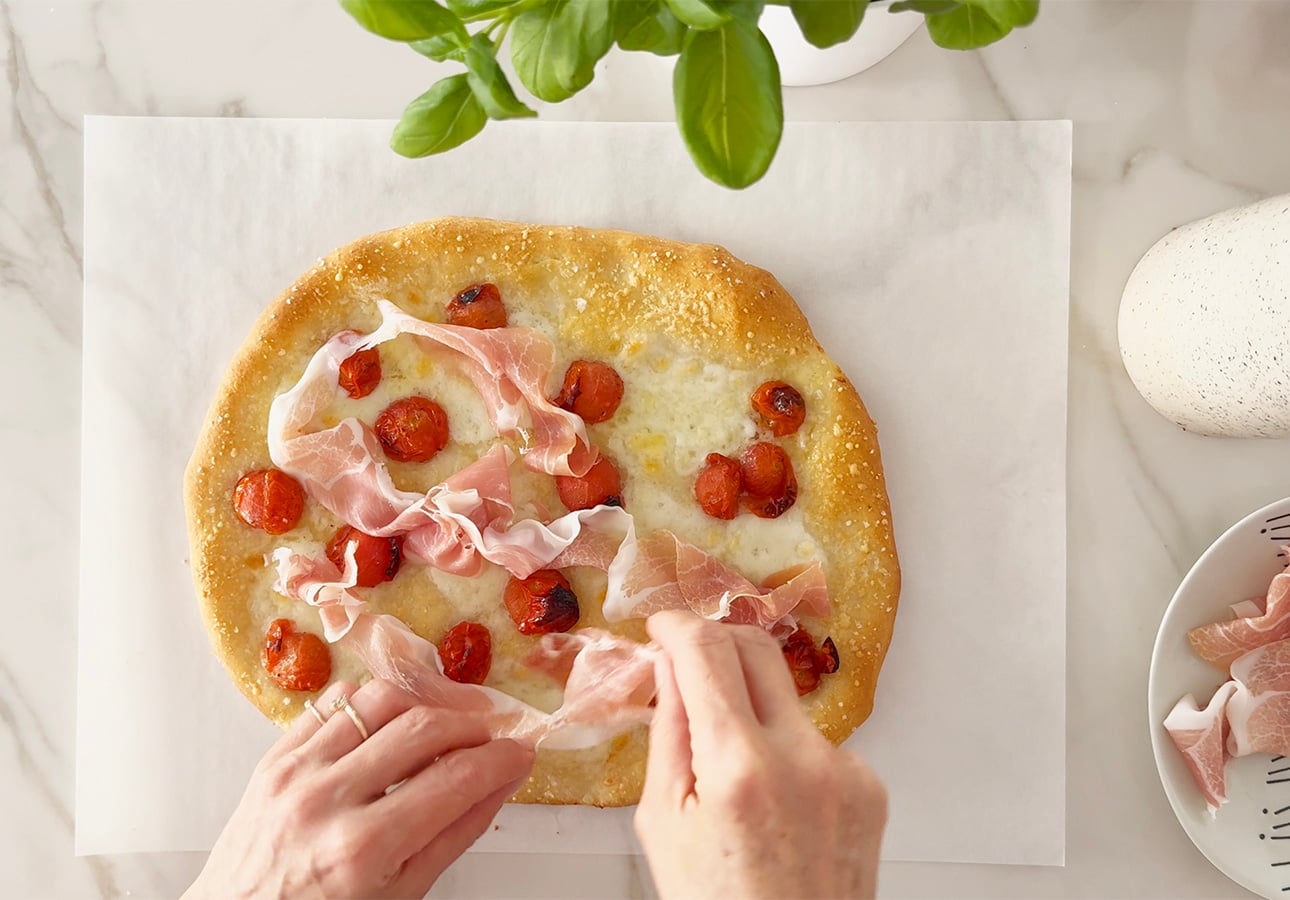
Adding the prosciutto just after the pizza comes out of the oven is best if you’re using the best-quality, melt-in-your-mouth, thinly sliced prosciutto from an Italian market. Adding the prosciutto after baking helps it retain its silky texture and delicate saltiness. It feels more luxurious, and it plays especially well with the sweet, slightly caramelized tomatoes.
If you have thicker-sliced supermarket prosciutto, it might be a good idea to add it before baking. That way, the prosciutto will firm up and become crisp around the edges, making it more enjoyable to eat. Tear it into pieces and spread it over the mozzarella cheese.
Ingredient notes for the best Roman-style pizza
The best cherry tomatoes to use
Use ripe, sweet cherry tomatoes for this recipe. Grape tomatoes work too, but cherry tomatoes tend to have a softer, juicier bite that suits this pizza especially well. If your tomatoes are very juicy, let them cool briefly after broiling so they don’t bring excess moisture straight onto the dough.
This is one of those recipes where tomato quality really matters. When the ingredient list is this short, every flavor shows.

The best prosciutto for pizza
Use thinly sliced prosciutto, and don’t overdo it. It should add little ribbons of salt and richness, not dominate the pizza. I like tearing the slices into smaller pieces rather than laying them on whole. It distributes the flavor more evenly and makes the pizza easier to eat, too.

Fresh mozzarella di bufala vs burrata
For this pizza, fresh mozzarella di bufala is the best choice before baking. It melts beautifully and creates that creamy base I’m after. Burrata is delicious too, but I treat it as a finishing cheese. If you want to use burrata, add it after baking, just before serving, so it stays cool, soft, and lush.
Wondering what the difference is between mozzarella di bufala and burrata? Get the answer in my FAQ section, below.
How to assemble this pizza for the best texture
Build the flavor base first
No matter what Roman-style pizza I’m making, I always start the same way. I brush the dough with olive oil—sometimes garlic-infused olive oil—then sprinkle over finely grated Parmigiano Reggiano and a little sea salt around the edges. That gives the crust a deeply savory flavor base and helps it turn beautifully golden and crisp.
It’s a small habit, but one I now consider essential.

Add the mozzarella first, then the toppings
This pizza works best when the fresh mozzarella goes directly over the oiled dough. Then come the broiled cherry tomatoes. Then the prosciutto, either before baking or just afterward. That order keeps everything in balance: the cheese melts into the crust, the tomatoes keep their shape and flavor, and the prosciutto stays supple.
Keep the toppings restrained
This is not a piled-high pizza. Roman-style crust really shines when it has room to breathe. A light hand with the toppings gives you the best texture and the clearest flavor. Resist the urge to add more “just because.” This pizza doesn’t need more; it needs balance.

VIDEO: How to Make Roman-Style Pizza Dough from Scratch
If you’d like to see exactly how I make my Roman-style pizza dough from scratch, this video will walk you through the full process step by step. It’s the easiest way to get a feel for the dough, see how thin I stretch it, and understand how I bake it to get that signature crisp Roman-style crust.
Helpful Tips to Make Prosciutto and Cherry Tomato Roman-Style Pizza
If your cherry tomatoes are very juicy
Broil them a little longer and don’t pile them on too heavily. You want them slightly collapsed and concentrated, not wet. If they still look very watery after broiling, let them sit for a few minutes before topping the pizza.
If you want to make it ahead
You can broil the tomatoes a few hours in advance and keep them aside until you’re ready to assemble the pizza. If you’re making the dough ahead, follow the full timing guidance in my Roman-Style Pizza from Scratch post.
If you want to use burrata instead
Use burrata as a finishing cheese, not a baking cheese. Tear it over the pizza after it comes out of the oven, just before serving. It’s especially good if you want a richer, more dramatic version of this recipe. If you don’t know what burrata cheese is, check out the FAQ section, below.
If you don’t have prosciutto
Another delicate cured ham can work, but prosciutto really is the best fit here. It brings clean saltiness without overpowering the rest of the pizza.
If you want extra freshness
A few basil leaves added after baking can be lovely here. A very small handful of peppery arugula works too. Just keep it restrained so the pizza still feels elegant and Roman in spirit.
How to reheat leftovers
Reheat leftover slices in a hot oven for a few minutes to bring the crust back to life. I don’t recommend the microwave unless you truly have no other option—it softens the crust and flattens all that wonderful texture.
Roman-Style Pizza FAQ
Should prosciutto go on pizza before or after baking?
Either works, but the result is quite different. If you bake prosciutto from the start, it becomes firmer and crisps up. If you add it after baking, it stays softer and silkier. For this pizza, I much prefer the second option.
Do I need sauce for prosciutto and cherry tomato pizza?
No. This pizza is better without a traditional tomato sauce. The broiled cherry tomatoes bring more than enough sweetness, brightness, and depth on their own. Skipping the sauce also helps the crust stay crisp.
How do I keep cherry tomatoes from making pizza soggy?
Broil them first, use them with a light hand, and make sure your fresh mozzarella is well drained. Those three small choices make a big difference.
What is the difference between mozzarella di bufala and burrata?
Mozzarella di bufala and burrata are both fresh Italian cheeses, but they behave very differently on pizza.
Mozzarella di bufala is a fresh stretched-curd cheese made from water buffalo’s milk, with a supple, milky texture that melts beautifully when baked.
Mozzarella di Bufala:

Burrata is a pouch of stretched cheese filled with a creamy center of stracciatella and cream, so it’s much richer and looser inside.
Burrata:

For pizza, that difference really matters. I use mozzarella di bufala before baking, so it melts into the crust and creates a savory base for the toppings. Burrata is best treated as a finishing cheese and added after baking, just before serving, so it stays cool, creamy, and luxurious instead of melting away in the oven.
More Pizza Recipes to Try
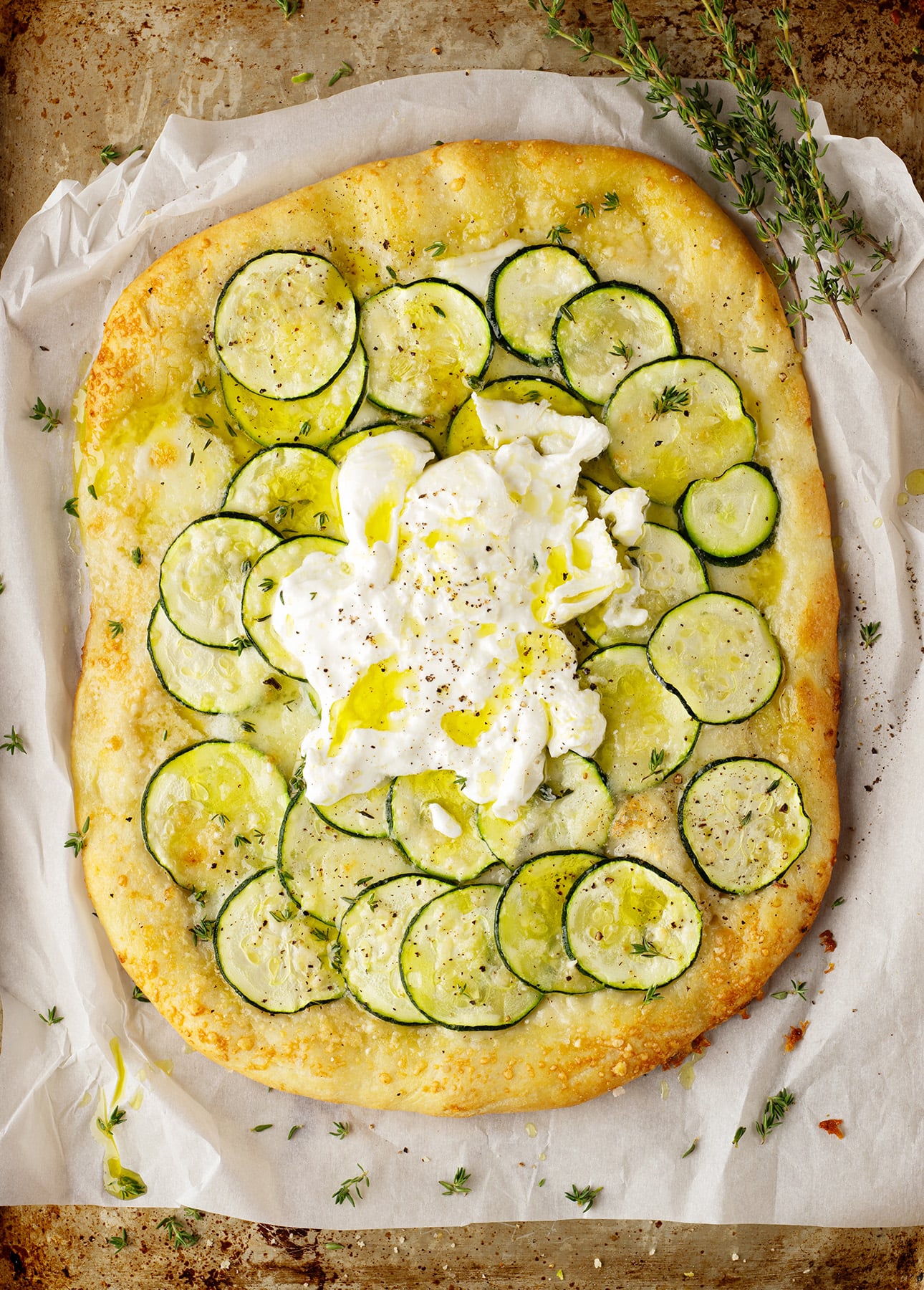
If you enjoy homemade pizza, you might also like my Roman-Style Pizza from Scratch master recipe, Zucchini and Thyme Pizza, or Feta, Chickpea, and Eggplant Pizza.
Prosciutto and Cherry Tomato Pizza Recipe
Ingredients
- 1 ball homemade Roman-style pizza dough (half a batch)
- ¾ lb cherry tomatoes
- 4 thin slices prosciutto (Italian dry-cured ham)
- Extra-virgin olive oil
- Fleur de sel, or flaky sea salt
- Freshly ground black pepper
- ¼ cup finely grated Parmigiano-Reggiano cheese
- 1 small ball mozzarella di bufala (about 5 oz / 140 g), sliced thinly or torn into pieces
- Fresh basil leaves, to taste
Instructions
Roast the Cherry Tomatoes
- Position a rack in the lower third of the oven. Place a pizza stone on the rack and preheat the oven to 475°F (245°C). Preheat for 45 to 60 minutes to allow the stone to absorb as much heat as possible.
- Cover a baking sheet with aluminum foil. Set the cherry tomatoes in a bowl, drizzle with 1 tbsp (15 ml) olive oil, then season with salt and pepper. Mix to coat. Spread the seasoned cherry tomatoes over the prepared baking sheet. Set the baking sheet over the pizza stone and roast the tomatoes until their skins split and becomes blackened in spots, 10 to 12 minutes. Remove and let cool slightly. Leave the oven on.
Shape the Roman Pizza Dough
- Cut out a sheet of parchment paper that is the same size as your pizza stone. (See note.) Place the ball of pizza dough over the parchment paper. Using your hands, spread out the dough in a very thin, large rectangle with rounded corners, sprinkling the dough with a bit of flour if it sticks. The thinner you spread out the dough, the crunchier the crust will be.
- Cover the crust with a clean kitchen towel and let rest for 15 minutes.
Garnish and Bake the Pizza
- Generously brush the pizza crust with extra-virgin olive oil. Sprinkle with the grated Parmigiano-Reggiano, then distribute the buffalo mozzarella over the crust. Nestle the roasted tomatoes in between the mozzarella.
- Using a large cutting board or the back of a large baking sheet, carefully transfer the pizza (with the parchment paper) onto the preheated pizza stone in the oven. Bake until the crust is browned and crisp and the cheese is bubbly, about 9 minutes.
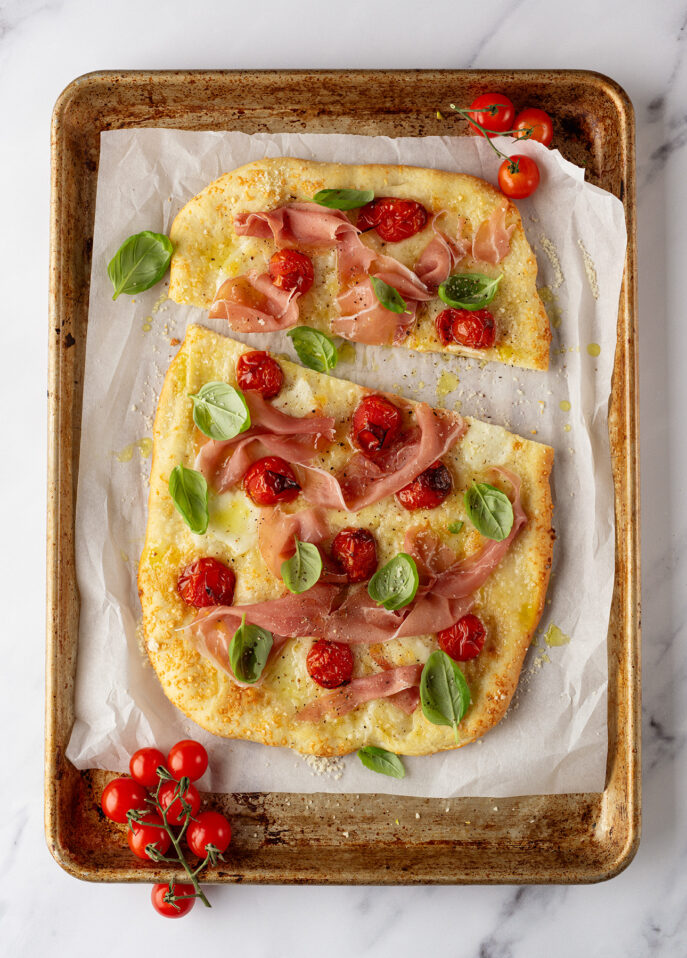
- SERVING: Pull the pizza out of the oven. With your hands, tear the prosciutto into pieces and scatter over the hot pizza. Garnish with fresh basil leaves and a drizzle of top-quality extra-virgin olive oil. Serve immediately.
Video
Notes
Did you make this?
Tell me how you liked it! Leave a comment or take a picture and tag it with @foodnouveau on Instagram.
This site is a participant in the Amazon Associates Program, an affiliate advertising program designed to provide a means for the site to earn fees by linking to Amazon and affiliated sites.
If you click on an affiliate link, I may earn advertising or referral fees if you make a purchase through such links, at no extra cost to you. This helps me create new content for the blog–so thank you! Learn more about advertising on this site by reading my Disclosure Policy.
Author: Marie Asselin
WHAT DID YOU THINK OF THIS RECIPE?
Rate + Review