- V
- GF
- NS
- DF
- View Recipe Key
Asparagus Quiche with Gruyère and Dijon
Asparagus Quiche with Gruyère and Dijon

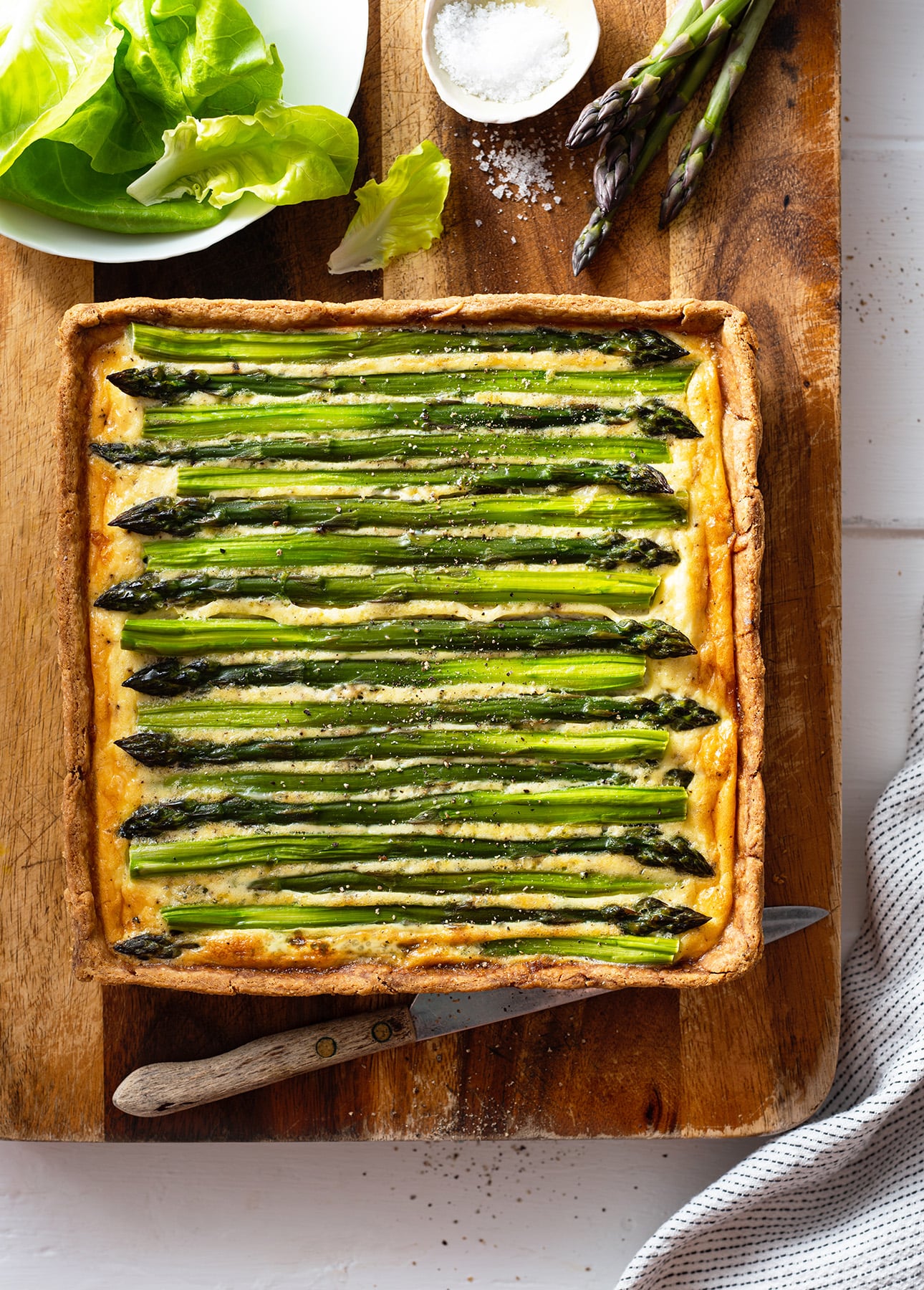
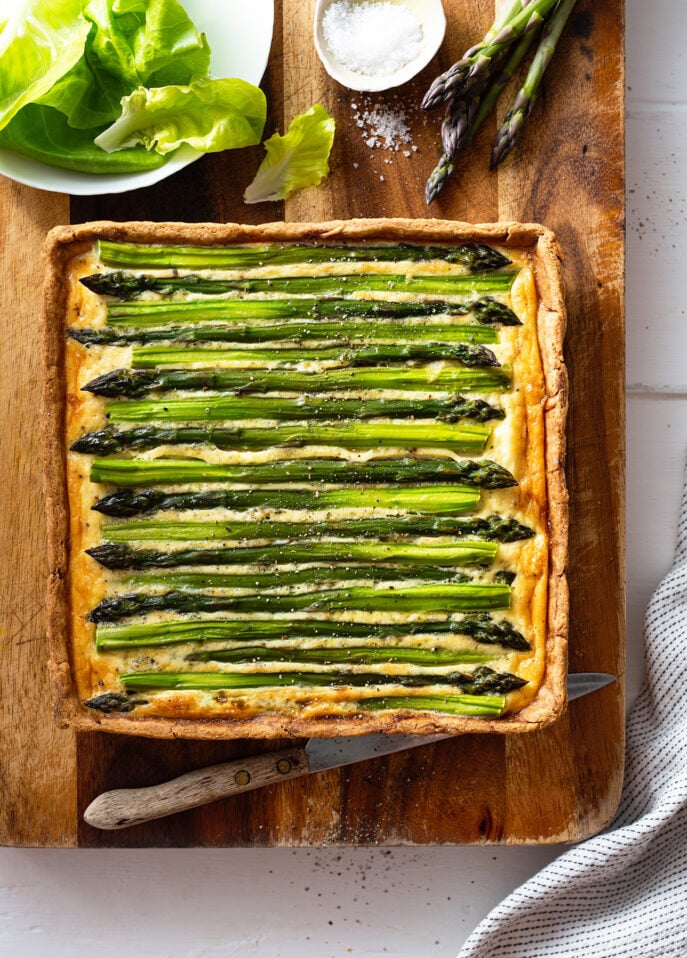
This asparagus quiche is a French-inspired spring dish that looks elegant but is surprisingly easy to pull off. Made with a crisp whole-wheat shortcrust, Gruyère, Dijon, onion, and tender asparagus, it’s perfect for brunch, lunch, or a light supper.
This post contains affiliate links. Full disclosure is at the bottom of the article.
For me, asparagus quiche marks the point when spring cooking starts to feel fresh and exciting again. After months of hearty soups, stews, and heavier desserts, I always reach a point where I want food that still feels comforting, but looks brighter and tastes cleaner. This is exactly that kind of recipe: a crisp shortcrust shell filled with silky custard, sweet onion, savory pancetta, sharp Dijon, nutty cheese, and tender asparagus.
Quiche has long been one of my favorite make-ahead brunch dishes, especially when I want to serve something that’s a little polished but still completely doable. I love recipes that can be fully made ahead of time, served warm or at room temperature, and pulled out when friends come over for brunch. This asparagus quiche recipe checks all of those boxes.

What I like most about this recipe is that it doesn’t rely on excess. The custard is rich enough to feel luxurious, but not so heavy that the asparagus disappears. The onion adds sweetness, the pancetta brings salt and depth, and the Dijon gives the whole filling a subtle edge that keeps it from tasting flat. Then there’s the cheese: use Comté if you want something especially nuanced and nutty, or Gruyère if you want that familiar, classic quiche flavor.
And because asparagus can be tricky in egg dishes if it isn’t handled properly, this recipe uses a few small techniques that make a big difference. The pie crust is blind-baked so it stays crisp. The asparagus is briefly blanched, then dried thoroughly, so it retains its color and doesn’t dilute the filling. I also like to arrange the spears neatly over the top—especially in a square pan, where they fit side by side beautifully—so the finished quiche looks every bit as elegant as it tastes.
Why this Asparagus Quiche Deserves a Spot in Your Spring Rotation
I make a lot of savory brunch recipes, but I keep coming back to quiche because it solves a very practical problem: it feels special without demanding you cook at the last minute. That matters when you’re hosting, but honestly, it matters just as much on a regular weekend.
This quiche with asparagus is also one of the best ways to make the most of asparagus season without turning the vegetable into a side dish. In this recipe, fresh spring asparagus is the whole point. The filling is built to support it, not bury it. The onion and pancetta bring savoriness, the cheese gives the custard body, and the Dijon sharpens everything just enough to make the asparagus taste brighter.
If you love the kind of brunch dishes that can wow guests and still leave you free to enjoy your coffee, this one deserves a place in your repertoire.

What Makes this Asparagus Quiche Recipe Work
A blind-baked crust keeps the bottom crisp
Blind-baking is key to keeping the crust crisp under the silky custard filling. Since quiche is naturally rich and fairly wet, giving the pastry a head start helps it bake through properly and keeps the bottom from turning soft.
This is also one of the reasons I love using my shortcrust pastry here. It comes together so quickly in the food processor that it almost feels too easy to be true—you really do have to try it to believe it.
For this asparagus quiche, I especially like the whole-wheat variation because it adds a subtle nuttiness that complements the asparagus, Dijon, and cheese. That said, a regular all-butter shortcrust works just as well, so use whichever version you prefer.
Briefly blanching the asparagus keeps the filling from turning watery
This is one of the most important details in the entire recipe. Asparagus contains a lot of moisture, and if it goes into the quiche raw, that moisture can release during baking and dilute the custard. Brief blanching solves two problems at once: it gives the asparagus a head start so it cooks evenly, and it helps you control its final texture.
The second part is just as important: once the asparagus is blanched, it needs to be drained and dried really well. That extra minute of care is what keeps the filling silky instead of loose.
Pro Tip: If you have thicker stalks on hand, peel the lower part of the stalks before blanching.

Dijon, onion, lardons, and cheese build a deeper flavor than asparagus alone
A lot of asparagus quiche recipes stop at asparagus, eggs, milk, and cheese. That works, but it can taste one-note. Here, the filling is layered more thoughtfully, in a flavor combination inspired by classic Quiche Lorraine.
The onion adds sweetness, making the asparagus taste greener. The lardons (pancetta, or bacon) add salt and savory depth. The Dijon cuts through the richness of the dairy and eggs. And the cheese ties everything together with a nutty finish. None of these ingredients dominates, but together they make the quiche taste sophisticated and complete.
Why I like using a square pan for this asparagus quiche
I like making this asparagus quiche in a square tart pan because it makes arranging the asparagus so easy. The spears fit side by side neatly, giving the finished quiche a very clean, elegant look and making the whole assembly feel simple rather than fiddly. It’s one of those small details that really suits the recipe.
That said, a round tart pan works very well, too. If that’s what you have, you can trim the asparagus to fit and arrange the spears in a circular pattern, or simply cut the stalks into pieces and scatter them more evenly over the filling. Both options work beautifully. The square pan just makes it especially easy to create those neat rows of asparagus on top.

The Ingredients You Need to Make Asparagus Quiche
The best asparagus to use
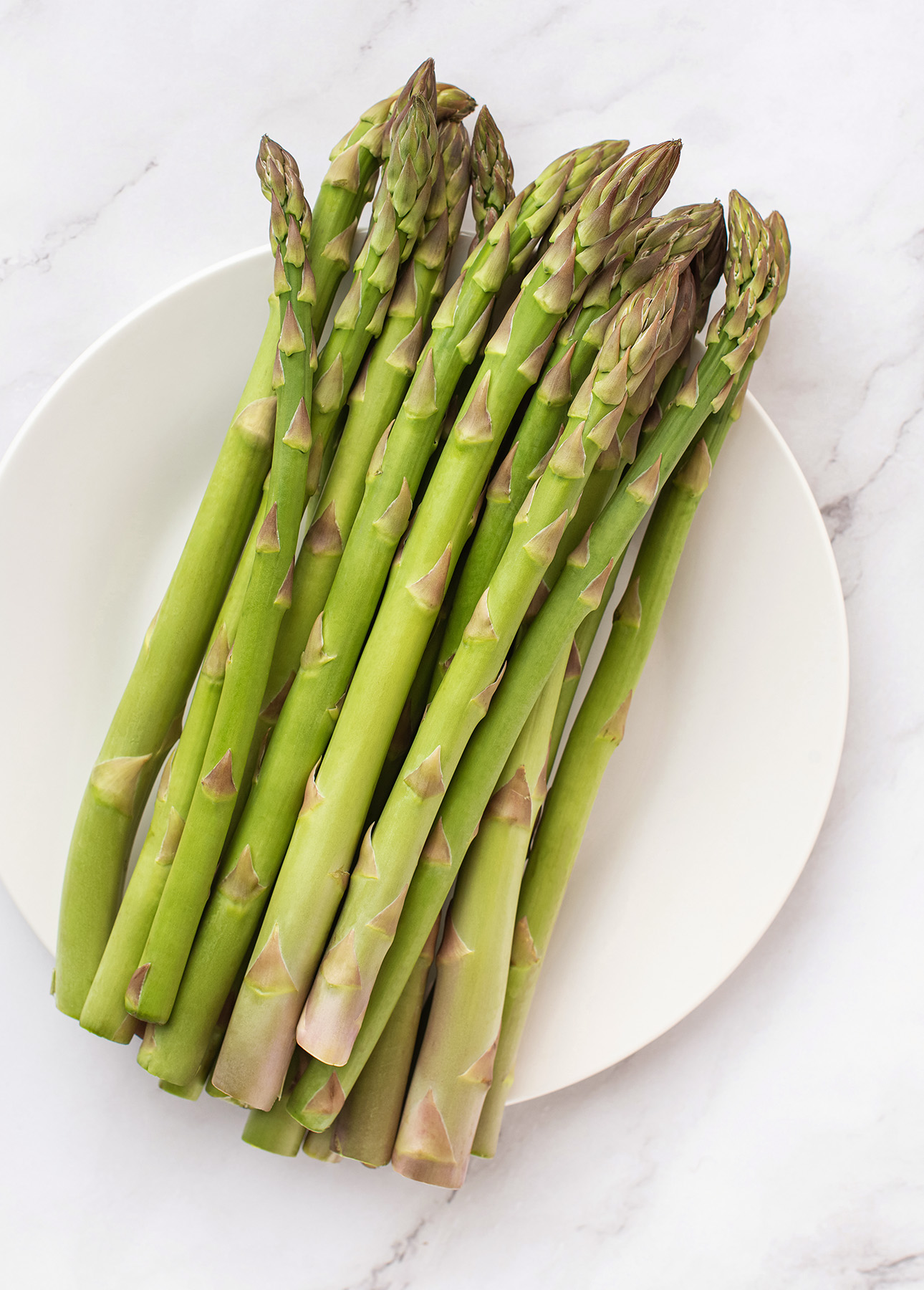
Fresh asparagus is the best choice here, full stop. Buy the freshest stalks you can find, either from your local farmers market, or a grocery store that carries local produce. Thin to medium spears are ideal because they cook quickly and stay tender, but thicker asparagus works well too, as long as you trim the tough ends and blanch it properly.
For this quiche, I like to keep the asparagus spears mostly whole and arrange them right over the top of the filling. In a square pan, they fit especially neatly side by side, which gives the quiche a very clean, elegant look. If you’re using a round pan, you can trim the spears to fit and arrange them in a circular pattern instead. It’s a simple detail, but it makes the finished quiche look especially polished.
Comté vs. Gruyère
Both are excellent here. Gruyère gives you that classic savory, melty quiche character you might expect. Comté is a little more distinctive: nuttier, slightly fruitier, and, to my taste, more elegant.
If you want the most classic “asparagus and cheese” quiche, use Gruyère. If you want the version that tastes a little more special, go with Comté.
Lardons, pancetta, or bacon?
For this quiche, I like to use fresh lardons if I can find them. Lardons are small strips or cubes of unsmoked pork belly, and they add savory richness without overpowering the delicate flavor of the asparagus. Depending on where you shop, you may find them at the butcher counter, in the refrigerated meat section of specialty grocers, or at French and European shops.
If fresh lardons aren’t available, diced pancetta is the best substitute. Unsmoked bacon also works, though its flavor is usually a little more assertive. Do not use smoked bacon in this quiche recipe, as it will easily dominate the filling’s flavor. Lardons and pancetta both give the quiche a rounder, smoother, more balanced flavor.
For a vegetarian asparagus quiche, simply leave the meat out and increase the olive oil to 2 tbsp (30 ml) for cooking the onions instead.

Why I use a whole-wheat shortcrust pastry
My whole-wheat shortcrust pastry recipe uses a third whole-wheat flour to two-thirds all-purpose flour. This combination gives the crust extra nuttiness without sacrificing any of the delicious flakiness. The whole-wheat part of it isn’t meant to make the quiche seem “healthy” all of a sudden (it’s an eggs, cream, and cheese dish, after all); it just makes the crust taste better. It adds a little more depth and character, and in this asparagus quiche, that subtle nuttiness plays especially well with the Dijon, the cheese, and the savory filling. But if you prefer to use a regular shortcrust pastry, that works beautifully too.
How to Make Asparagus Quiche Successfully
Blind-bake the whole wheat crust first
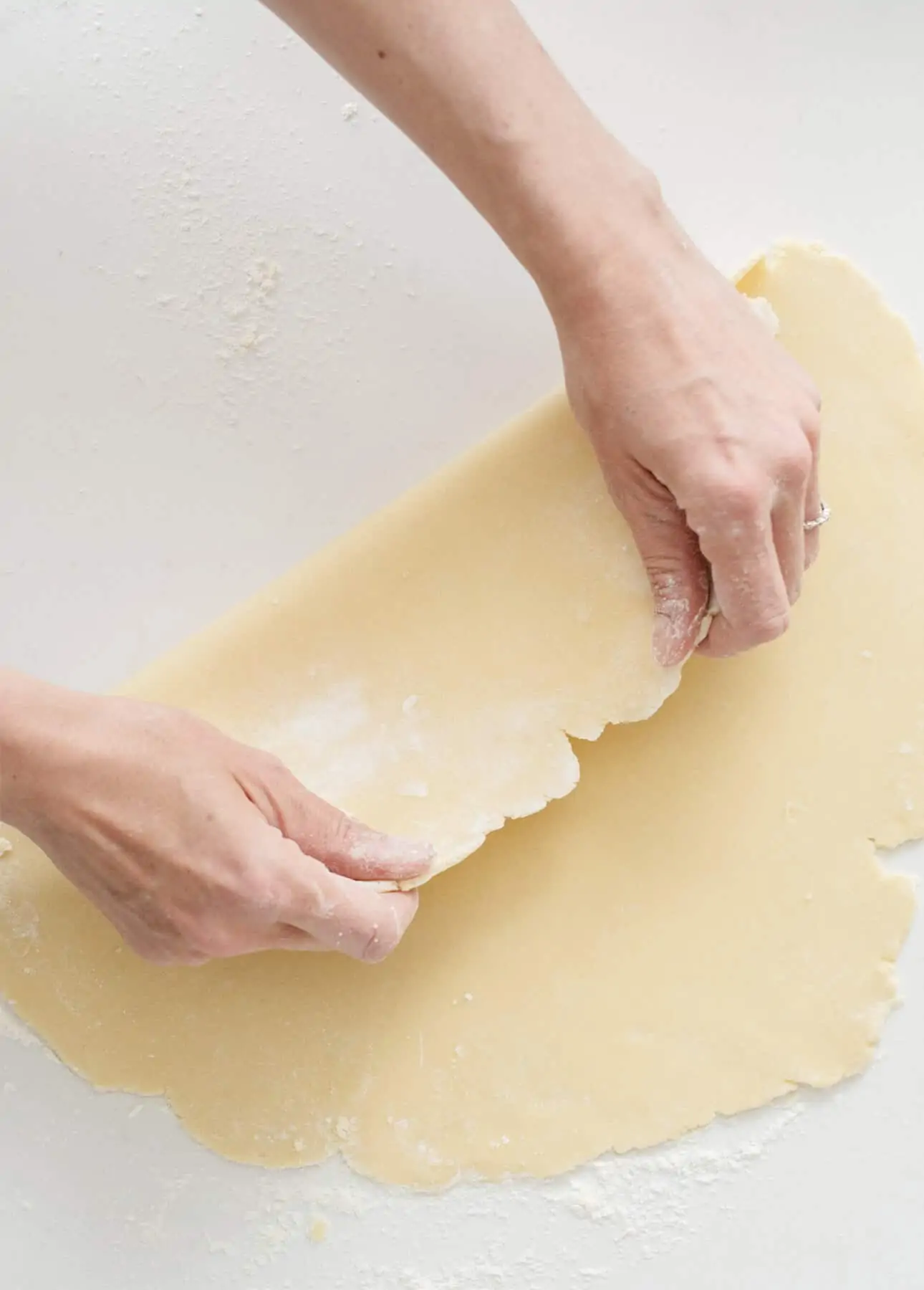
Roll the dough, line the tart pan, chill it if needed, then blind-bake it until the shell looks dry and lightly set. That foundation matters: it gives the quiche structure and keeps the bottom from turning soft once the custard goes in.
Cook the lardons and onion before assembling
Rendering the lardons (or pancetta, or bacon) first gives you the fat and flavor to cook the onion in, which keeps the prep simple and adds a lovely depth of flavor to the filling. The onion should be softened and lightly golden, not rushed. This is what gives the quiche part of its sweetness and depth.
Arrange the asparagus to suit your pan
If I’m using a square tart pan, I like leaving the asparagus in longer lengths so I can line the spears up neatly across the top. It makes the quiche look especially striking and beautifully showcases the asparagus.
In a round pan, you can either trim the spears and arrange them in a circular pattern or cut some of the stalks into smaller pieces for a more relaxed look. Either way, I recommend keeping the prettiest tips visible on top.

Bake until just set, not dry
The center should still have the slightest wobble when the quiche comes out of the oven. It will keep setting as it rests. If you bake until the middle is completely firm, the custard usually ends up too dry by the time it reaches the table.
If you’ve made any of my quiche recipes before, this is the same cue I always rely on: set edges, lightly puffed surface, and a center that still looks a touch soft.
Helpful Tips for Making Asparagus Quiche
If you want to make it ahead
This is a very good make-ahead asparagus quiche. You can blind-bake the crust, cook the filling components, and blanch the asparagus earlier in the day, then assemble and bake later. You can also bake the entire quiche ahead and gently rewarm it before serving.
For brunch, I often prefer making it the day before. The flavor settles beautifully, and all you need to do is bring it back to warm room temperature or reheat it lightly.
If you prefer a vegetarian asparagus quiche
Leave out the pancetta or bacon and add extra onions instead. You could also add fresh herbs, such as chives or tarragon, but keep them restrained so the asparagus still shines.
If your asparagus is thick or very thin
If your asparagus is thick, lightly peel the lower stalks and blanch the spears a little longer so they turn tender by the time the quiche is baked.
If it’s very thin, shorten the blanching time significantly, or skip it altogether if the spears are truly pencil-thin—they’ll cook through easily in the oven.
If you want to swap the cheese
Gruyère and Comté are the best fits for this recipe, but good Swiss cheese will also work. I would avoid very watery fresh cheeses here. Goat cheese is delicious with asparagus, but it changes the balance quite a bit, making the quiche tangier and more assertive.

What to serve with asparagus quiche
For brunch
Fresh fruit or a simple green salad on the side both work beautifully here. This quiche already brings richness, so the rest of the meal doesn’t need to do too much. If you want to end brunch with something sweet, Lemon Mascarpone Macarons make a lovely project-style dessert for when you have time on your hands, while Easy Dairy-Free Lemon Bars are a lighter, easier option.

For lunch
A mustardy salad is especially good here. The acidity echoes the Dijon in the filling and keeps the whole meal feeling bright. For a more elaborate spring lunch, Asparagus with Gribiche Dressing makes an especially elegant pairing.
For a light spring dinner
Serve the quiche slices with a crisp salad and begin the meal with a light, French-inspired soup such as Soupe au Pistou. If you want to keep the menu centered around the season, my Fresh Asparagus Recipes roundup is also a great source of inspiration for spring sides and vegetable dishes.
More Spring Asparagus Recipes to Try
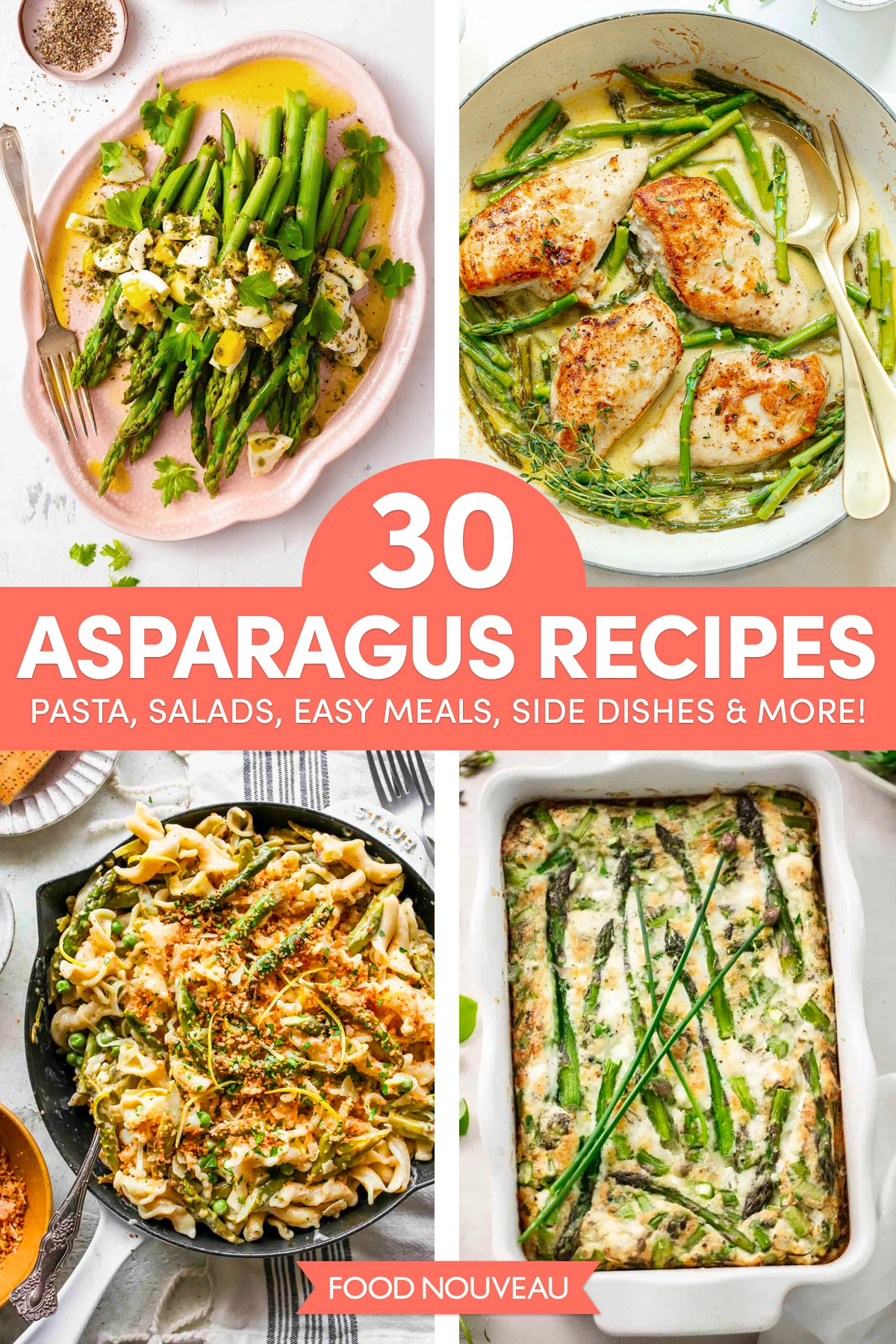
If you’re looking for more ways to cook with asparagus this spring, this quiche is only the beginning. It’s one of those recipes that captures everything I love about the season, and it pairs beautifully with a whole range of fresh, asparagus-forward dishes. In my Fresh Asparagus Recipes roundup, you’ll find plenty more inspiration, from pasta and risotto to brunch dishes, soups, salads, easy dinners, and spring side dishes.
FAQ
Should asparagus be cooked before adding it to quiche?
Yes. For this recipe, I briefly blanch the asparagus before adding it to the filling. That gives it a head start, keeps the texture tender, and helps prevent excess moisture from watering down the custard. If the asparagus are very thin, you can shorten the blanching time significantly or skip it altogether—they’ll cook through easily in the oven.
How do you keep asparagus quiche from getting watery?
Three things help most: blind-bake the crust, briefly blanch the asparagus, and dry it thoroughly before adding it to the quiche. Cooking the onion beforehand also helps, since it prevents excess moisture from releasing during baking.
Can asparagus quiche be made ahead?
Absolutely! You can prepare components ahead, or bake the full quiche in advance and reheat it gently. It also tastes excellent at room temperature, which makes it ideal for brunches and spring lunches.
Asparagus Quiche Recipe
Ingredients
For the Crust
- 1 batch Basic Shortcrust Pastry, whole wheat version,gathered into a disk, wrapped in plastic wrap, and refrigerated for at least 1 hour, or up to 2 days before using
For the Filling
- 1 lb fresh asparagus, tough ends trimmed (see note)
- 1 tbsp extra-virgin olive oil
- 4 oz fresh lardons, diced pancetta, or unsmoked bacon (see note)
- 1 large onion, peeled and thinly sliced
- 4 large eggs
- ½ cup heavy cream (35% m.f.)
- ½ cup milk
- 2 tbsp Dijon mustard
- ½ tsp kosher salt, or fine sea salt
- Freshly ground black pepper
- Pinch freshly grated nutmeg
- 1¼ cups grated Comté or Gruyère cheese
Instructions
- Lightly grease an 8-inch (20-cm) square tart pan with a removable bottom. Using a square pan for this quiche makes it easy to line up the asparagus spears neatly side by side over the filling. If you only have a 9-inch (23-cm) round tart pan, that works very well too—you'll simply need to trim the asparagus as needed and arrange it in a circular pattern over the top.
- Take the shortcrust pastry out of the refrigerator 15 minutes before using. Preheat the oven to 350°F (175°C).
- On a lightly floured work surface, roll out the pastry into a shape large enough to fit your tart pan. Transfer the dough to the pan and gently ease it into the bottom and sides. Trim any excess dough, then prick the bottom all over with a fork.
- Ease a large sheet of parchment paper into the crust, letting the sides come up and out of the pan. Fill the pan with pie weights or dry peas. Bake for 15 minutes. Remove the parchment and weights, then return the crust to the oven for 5 minutes more, or until it looks dry and lightly set.
- Remove the blind baked crust from the oven, leaving the oven on. Set aside until the filling is ready.
- Meanwhile, bring a large pot of salted water to a boil and prepare a bowl of ice water. Blanch the asparagus for 1 minute, then transfer it to the ice water to stop the cooking. Drain very well and pat dry thoroughly.
- In a large skillet set over medium heat, warm the olive oil. Add the lardons, pancetta, or bacon and cook until lightly browned and starting to crisp. Using a slotted spoon, transfer it to a plate, leaving the fat in the skillet.
- Add the onion to the skillet and cook over medium heat until softened and lightly golden, about 15 minutes. Remove from the heat and let cool slightly.
- In a large bowl, whisk together the eggs, heavy cream, milk, Dijon mustard, salt, black pepper, and the nutmeg until smooth.
- Spread the cooked onion and pancetta, lardons, or bacon over the bottom of the blind-baked crust. Sprinkle the grated cheese evenly over the top. Pour the egg mixture into the crust. Arrange the asparagus spears over the filling. In a square pan, line them up side by side in neat rows. In a round pan, arrange them in a circular pattern, trimming as needed to fit nicely.
- Bake the quiche for 35 to 40 minutes, or until the filling is set around the edges and the center still slightly wobbly. If the crust starts browning too quickly, loosely cover the quiche with foil for the last part of baking.
- Transfer the quiche to a wire rack and let rest for at least 15 minutes before unmolding and slicing. Serve warm or at room temperature.
- MAKE IT VEGETARIAN: Omit the lardons and increase the olive oil to 2 tbsp (30 ml) for cooking the onions instead.
Notes
- If your asparagus is thick, lightly peel the lower stalks and blanch the spears a little longer so they turn tender by the time the quiche is baked. If it’s very thin, shorten the blanching time significantly, or skip it altogether if the spears are truly pencil-thin—they’ll cook through easily in the oven.
- Lardons are small strips or cubes of unsmoked pork belly, and they add savory richness without overpowering the delicate flavor of the asparagus. Depending on where you shop, you may find them at the butcher counter, in the refrigerated meat section of specialty grocers, or at French and European shops. If fresh lardons aren’t available, diced pancetta is the best substitute. Unsmoked bacon also works, though its flavor is usually a little more assertive. Avoid using smoked bacon, since it can easily dominate the filling.
Did you make this?
Tell me how you liked it! Leave a comment or take a picture and tag it with @foodnouveau on Instagram.
This site participates in the Amazon Associates Program, an affiliate advertising program designed to provide a means for the site to earn fees by linking to Amazon and affiliated sites.
If you click on an affiliate link, I may earn advertising or referral fees if you make a purchase through such links, at no extra cost to you. This helps me create new content for the blog, so thank you! Learn more about advertising on this site by reading my Disclosure Policy.
Author: Marie Asselin
WHAT DID YOU THINK OF THIS RECIPE?
Rate + Review