- V
- GF
- NS
- DF
- View Recipe Key
Lemon Asparagus Risotto
Lemon Asparagus Risotto

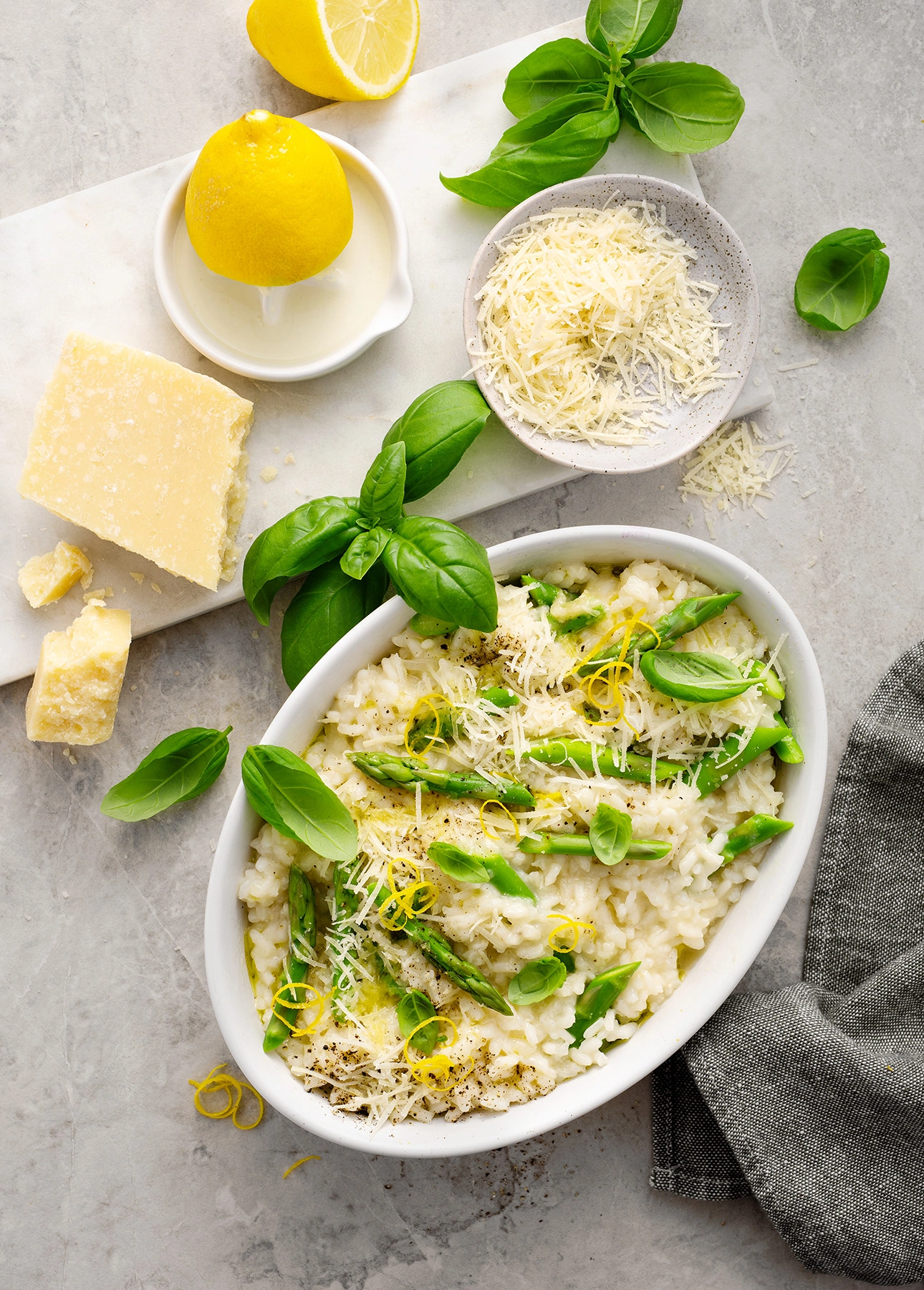
Master elegant lemon asparagus risotto step-by-step! Get tips for perfect rice, vibrant asparagus flavor, and delicious results. Easy enough for weeknights but impressive enough for special occasions, too.
This post contains affiliate links. Full disclosure is at the bottom of the article.
When spring finally shows up, I start dreaming about brighter meals. First on my list? Almost always, this lemon asparagus risotto is especially good when I spot those first gorgeous green stalks at the market. I adore asparagus–in the spring, I put it in and on everything, from pizza to pasta to stir-fries and brunch dishes–and it’s just so good with anything cheesy and creamy. That’s precisely why this risotto works so well.
If the word risotto makes you think of a complicated restaurant dish, don’t worry—this version is surprisingly easy to make at home.
Indeed, risotto has a reputation for requiring constant attention, but once you understand the basics, it becomes one of the most relaxing dishes to cook. I routinely make it on weeknights! The process is simple: warm broth, Arborio or Carnaroli rice, a bit of stirring, and patience. About 30 minutes later, you have a creamy, vibrant risotto ready to serve.
My easy lemon asparagus risotto is a bright, creamy spring dish full of fresh seasonal flavors: tender asparagus, fragrant lemon zest, and plenty of Parmigiano-Reggiano come together in a comforting Italian dish that feels elegant but is simple enough for a weeknight dinner. I hope you’ll make it tonight!
The Secret to Creamy Risotto (Without Adding Cream)
One of the things people often misunderstand about risotto is that its creaminess does not come from cream. Instead, it comes from the rice itself.
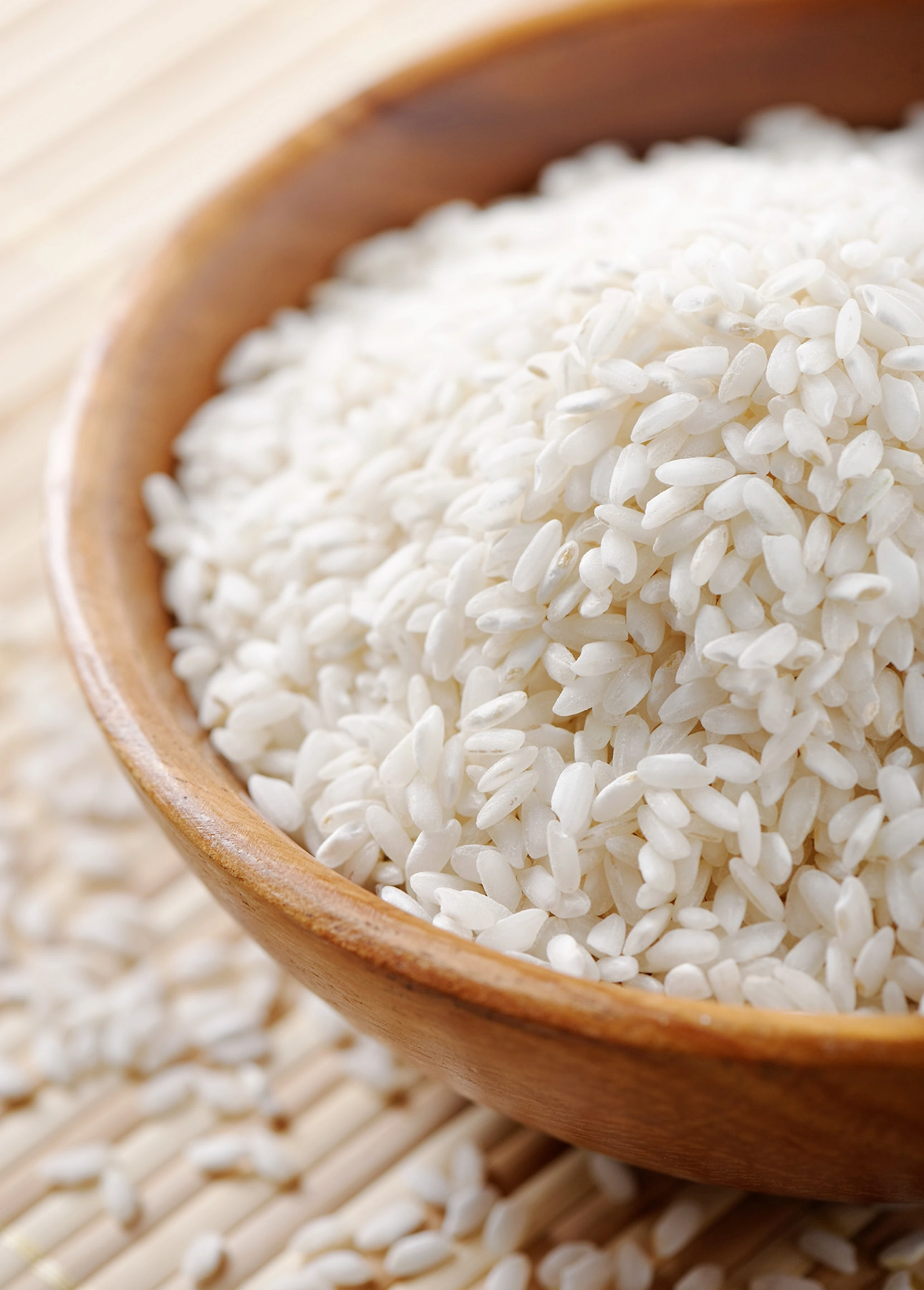
Traditional risotto is made with short-grain rice varieties such as Arborio, Carnaroli, or Vialone Nano. These rice varieties contain more starch, which slowly releases as the grains cook and are stirred with warm broth. This natural starch is what gives risotto its signature silky texture.
Here are the key elements that help create perfectly creamy risotto:
Use the Right Rice for Risotto
Short-grain Italian rice is essential. Arborio is the easiest variety to find, but Carnaroli is often considered the gold standard because it holds its shape beautifully while releasing plenty of starch. My personal favorite is Vialone Nano, because it can absorb a lot of liquid seemingly without ever losing its shape.
These three types of rice soak up the broth beautifully but stay as distinct grains. Your everyday long-grain rice just won’t cut it for making risotto, sorry!
Keep the Broth Warm
Always, always keep your broth warm in a separate pot. Just a gentle simmer is perfect. If you add cold broth to hot rice, it instantly cools it down and disrupts the beautiful creaminess you’re working towards.
Add the Broth Gradually
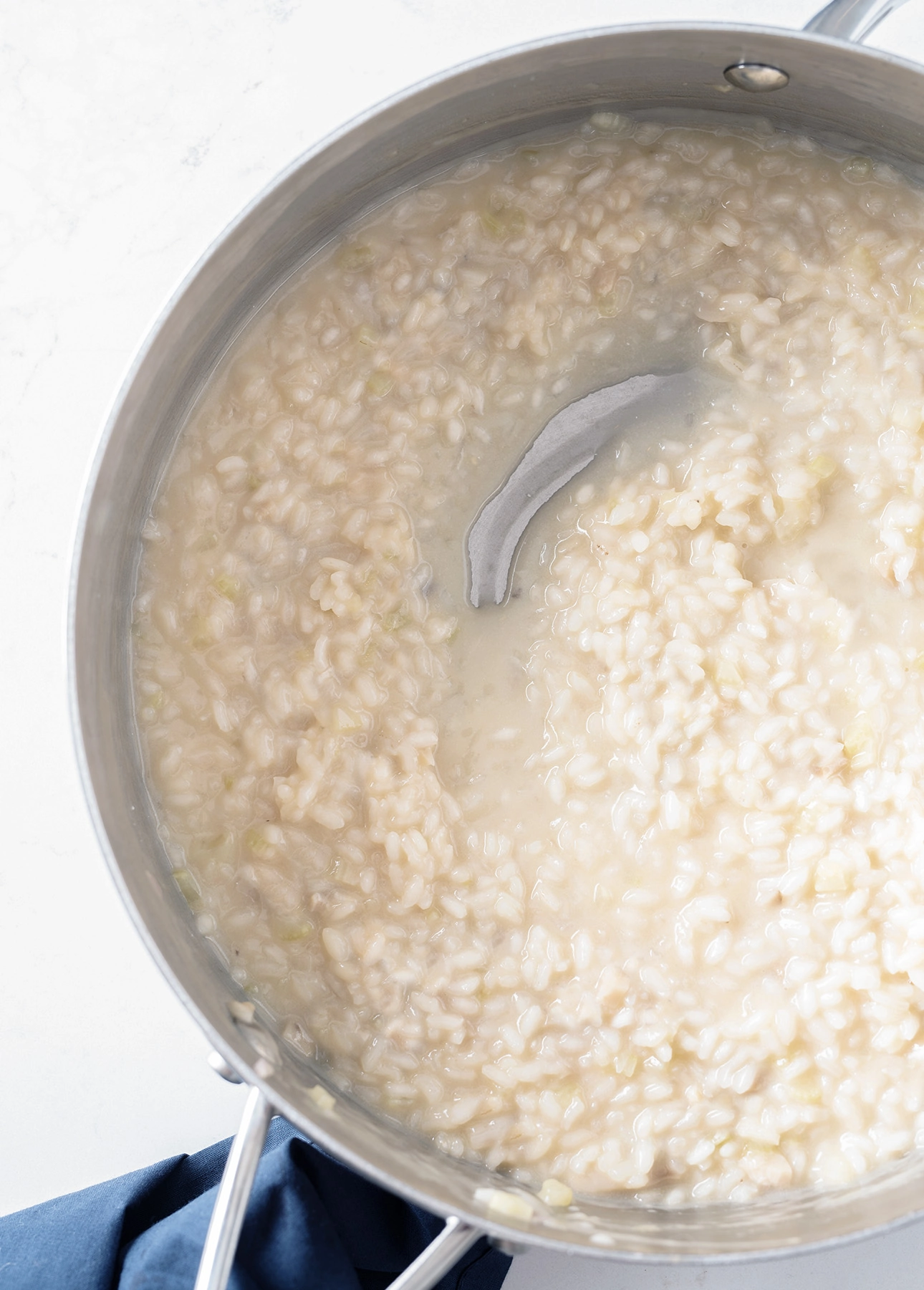
Risotto is cooked by adding broth a little at a time and stirring often. Pour in the warm broth bit by bit, a ladleful at a time. Let the rice soak up the liquid before adding the next splash. You’ll need to stir it pretty often–not constantly, no need to handcuff yourself to the stove!–but regular stirring helps release the starch out of the rice grains. That’s what naturally builds the creaminess.
Use Real Parmigiano-Reggiano
Finishing risotto with freshly grated Parmigiano-Reggiano adds richness and depth of flavor. That nutty, salty flavor and the amazing way it melts into the risotto make such a difference. If you use real Parmigiano-Reggiano and Italian rice, you won’t need to add extra butter or cream at the end.
Authentic Parmigiano-Reggiano is protected under a Denominazione d’Origine Protetta (protected designation of origin), which means it must be produced in specific ways in specific regions of Italy to bear the name. Authentic Parmigiano-Reggiano has a stamped rind, is aged at least 12 months, and is usually labeled with its original Italian name (as opposed to just “parmesan.”)
Yes, real Parmigiano-Reggiano costs a bit more, but for a dish like risotto, where the cheese’s aroma, flavor, and texture really come through, I think it’s a required investment.

How to Get the Perfect Risotto Texture
When making risotto, getting that perfect creamy texture is key. Perfect risotto checks two criteria:
First, the rice grains need that ‘al dente’ finish: soft enough to be creamy, but with a little resistance, a slight bite, still left inside. You want to see and distinguish each and every grain of rice, and they should still hold their beautiful and neat oblong shape. Mushy rice is a definite no-no!
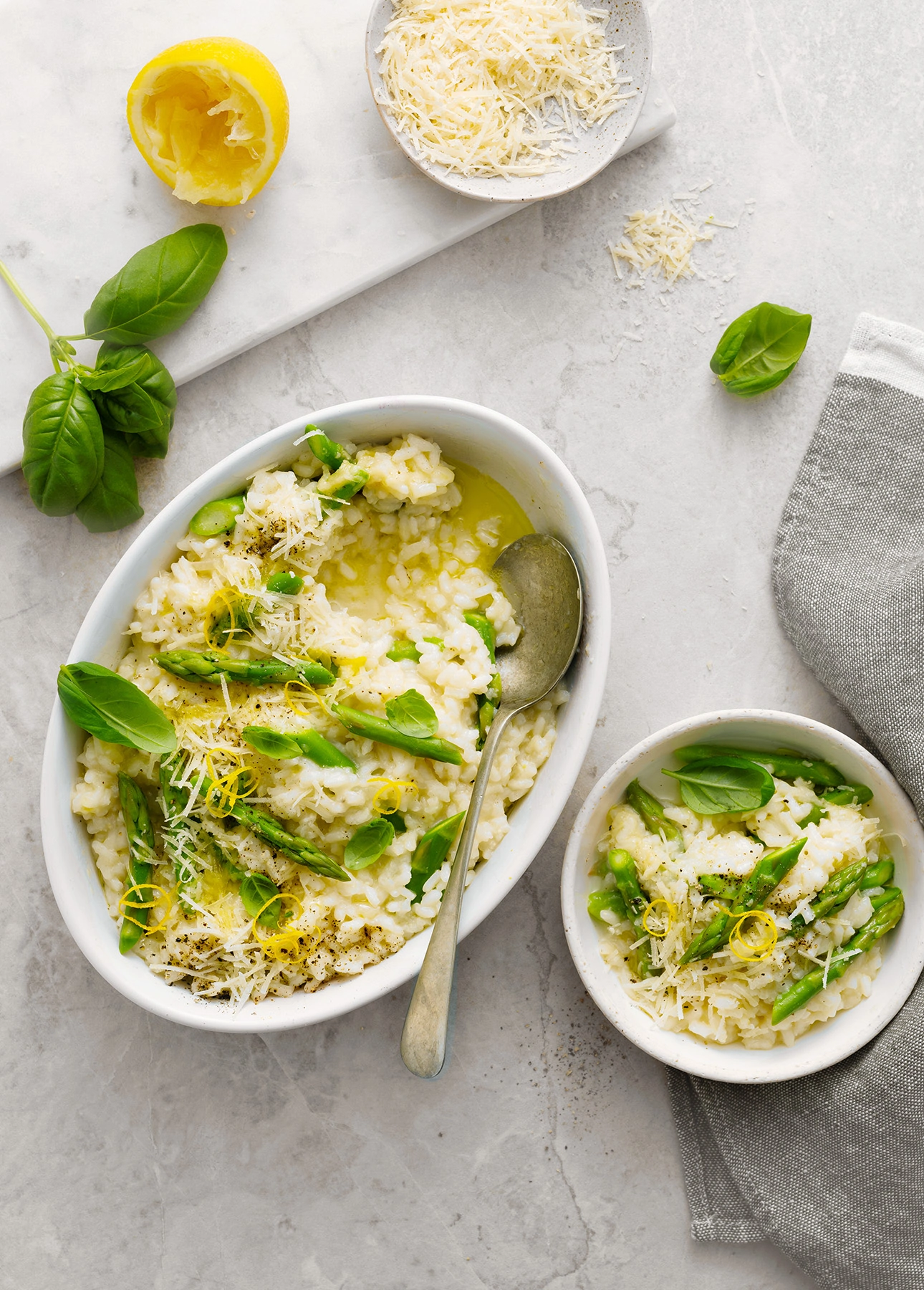
Second, risotto needs to be served ‘all’onda,’ or ‘like a wave’. In other words, when you gently shake the pan or spoon the risotto onto a plate, it should spread softly and move like a wave—not sit stiffly like a mound of rice. That lovely, languid movement is your sign that the starches have created the perfect creamy sauce coating every grain. Using the right rice and adding warm broth slowly while stirring is how you get there.
If your risotto is too thick, add a small splash of warm broth and stir to loosen it. Properly cooked risotto should be creamy and fluid, with the rice grains remaining tender with a slight bite.
Helpful Tips for Making Perfect Lemon Asparagus Risotto
Risotto has a reputation for being fussy, but once you understand the basics, it’s actually one of the easiest Italian comfort foods to cook at home. My lemon asparagus risotto recipe follows the classic stovetop method, using Arborio or Carnaroli rice, which is slowly cooked in broth until the grains become tender and creamy.
Skip Blanching the Asparagus
Great news here! Many recipes tell you to blanch asparagus first (that quick-boil, then ice-bath technique). Honestly, when adding fresh spring asparagus to a hot dish like this risotto? You can skip the blanching step entirely. Fresh spring asparagus is sweet and crunchy, and it’s ready to use as is in any dish. The heat from the lemon asparagus risotto itself will cook those stalks to that perfect crisp-tender point without the need for that fussy blanching step.
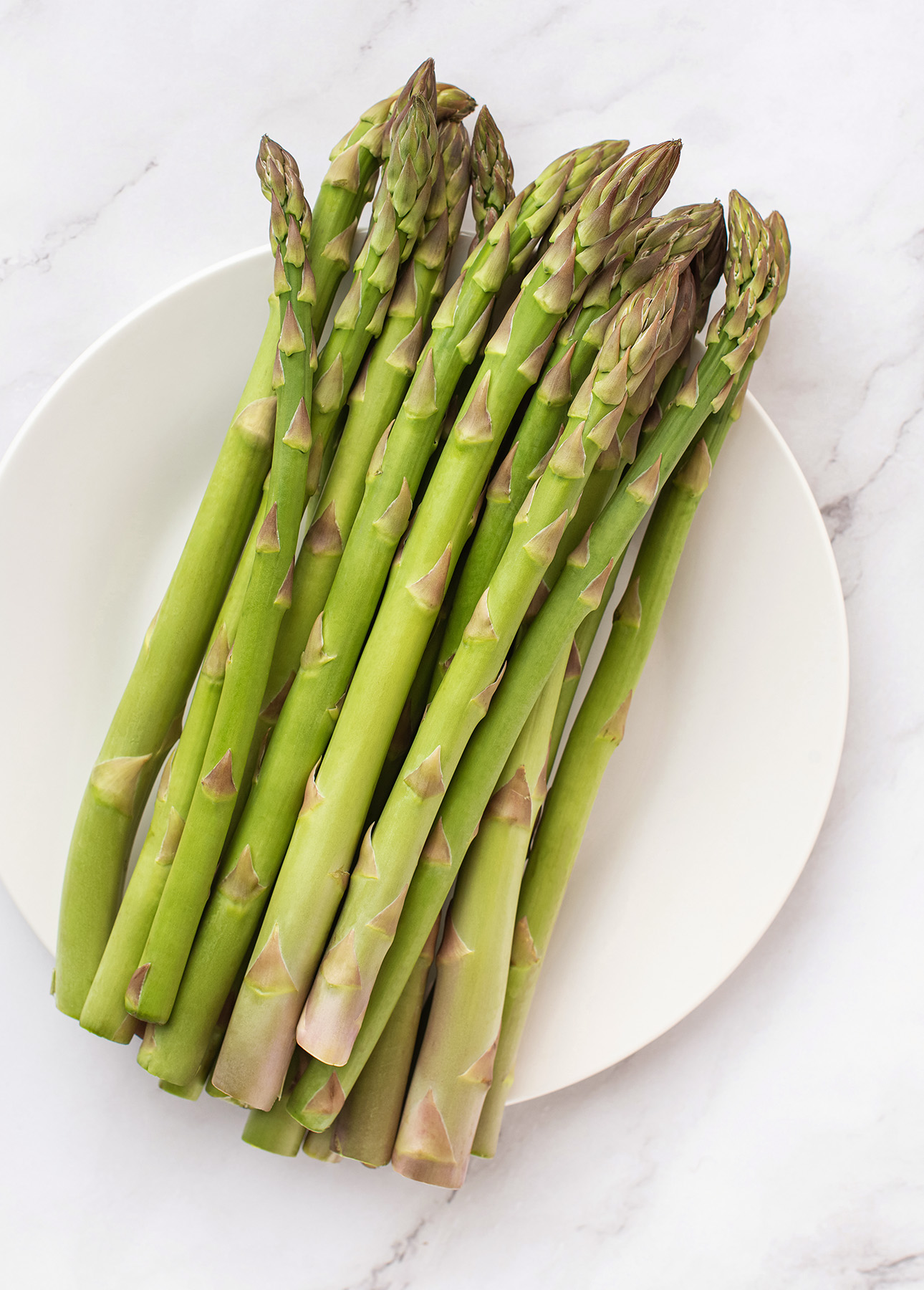
Add the Asparagus Near the End
Asparagus tastes best when it still has a little crunch–nobody wants mushy, sad green stalks! That’s why in this spring risotto recipe, you toss in the chopped asparagus right near the very end of the cooking time.
Fresh spring asparagus have stalks that average 1/2 inch (1 cm) in diameter at the base. For this risotto, I like to cut them into 2-inch (5 cm) lengths. Adding the asparagus right at the end might seem like it won’t be enough time, but trust me on this! Asparagus cooks fast, and it’ll even continue to soften a tiny bit from the residual heat after you pull the lemon asparagus risotto off the stove.
Quick note: If your asparagus spears are really thick, maybe slice them into slightly shorter pieces. If they’re super skinny, wait even longer and add them just a minute or two before you’re done.
Adjust the Consistency Before Serving
Risotto thickens as it sits. If needed, stir in a splash of warm broth just before serving to restore the creamy, all’onda texture.
Serve Risotto Like a Chef Would
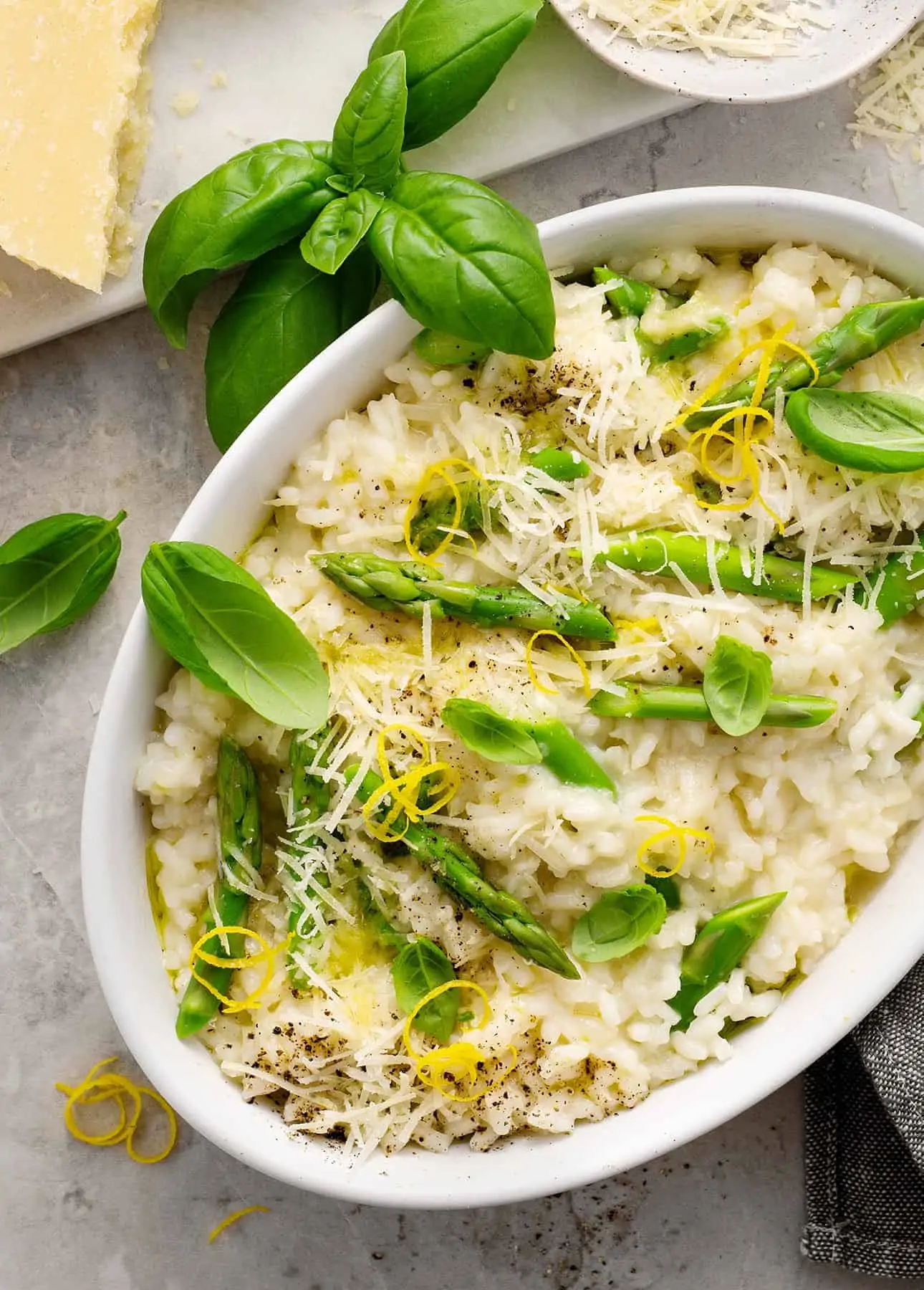
This lemon asparagus risotto tastes fantastic straight out of the pan, but if you want to make it look and taste extra special, take one extra minute to garnish before serving. Sprinkling some fresh basil leaves, adding a little lemon zest, pouring a quick swirl of good olive oil, and a crack of fresh black pepper bumps up the flavor and makes each serving look restaurant-level gorgeous.
Easily Scale Up the Recipe to Treat More Guests
I created this lemon risotto recipe to feed 2 people generously. Why? Because it makes the math way easier if you want to double it for 4 people or triple it for 6. No awkward half-shallots! Remember, it’s a pretty hearty serving for two–you could probably stretch it to feed three if you’re serving it along with other dishes like appetizers or a big salad.
Why Lemon Asparagus Risotto Is the Perfect Spring Dish
Asparagus is one of the first vegetables to appear at farmers’ markets each spring, and truly the one that makes me believe winter is finally over. This is why asparagus is such a classic ingredient in spring risottos. The fresh, slightly sweet flavor of asparagus pairs beautifully with lemon and Parmesan, creating a dish that feels bright and light while still being comforting.
In Italy, spring risottos often highlight just one or two seasonal ingredients so their flavor really shines. In this recipe, tender asparagus and lemon zest do exactly that, turning a simple pot of risotto into a vibrant seasonal dish.
Lemon Asparagus Risotto FAQ
Can I make asparagus risotto without wine?
Yes, simply replace the white wine with an equal amount of warm broth. The wine adds acidity and depth of flavor, but the lemon in this recipe already provides plenty of brightness.
What rice is best for asparagus risotto?
Traditional risotto is made with Arborio, Carnaroli, or Vialone Nano rice. These short-grain varieties contain more starch, which creates risotto’s signature creamy texture.
Can lemon asparagus risotto be made ahead?
Risotto is best served immediately while it’s loose and creamy. If you have leftovers, refrigerate them for up to two days and reheat gently in a skillet with a splash of broth or water to loosen the texture.
Other Spring Recipes to Try
If you enjoy cooking dishes that highlight fresh spring veggies, you’re bound to also like these recipes:
More Fresh Asparagus Recipes for Spring
That lovely bunch of asparagus sitting in your fridge–brimming with potential, right? If you’re like me, sometimes you just need a little nudge to move beyond your go-to preparation. That’s exactly why I’ve pulled together this delightful collection of asparagus recipes, packed with fresh ideas for everything from irresistible appetizers to truly memorable main courses and sides. Discover 30 irresistible asparagus recipes you should be making right now!

Lemon Asparagus Risotto Recipe
Ingredients
For the risotto
- ½ lb fresh asparagus shoots
- 3 cups low-sodium chicken broth, or vegetable broth
- 2 tbsp butter
- 2 tbsp extra-virgin olive oil
- 1 shallot, minced, or substitute ¼ cup (60 ml) minced onion
- 5 oz risotto rice (Arborio, Carnaroli, or Vialone Nano)
- ½ cup dry white wine, such as Pinot Grigio
- 2 oz finely grated Parmigiano-Reggiano cheese
- Finely grated zest and juice from ½ lemon (about 1 tbsp/15 ml zest and 2 tbsp/30 ml juice)
To serve (optional, to taste)
- Fresh basil leaves
- Lemon zest
- Extra-virgin olive oil
- Freshly ground black pepper
Instructions
- Snap off the tougher ends of the asparagus and discard. Slice the stalks cut into 2-inch (5 cm) lengths and set aside.
- To prepare the risotto: Pour the broth in a medium saucepan. Bring to a slow simmer, then lower the heat, cover and gently simmer for 5 minutes. Lower the heat to the minimum, then keep warm.
- In a large saute pan or a cast-iron braiser set over medium-low heat, melt the butter in the olive oil. Add the shallot and cook, stirring, until soft, 3 to 4 minutes. Add the risotto rice and stir for 2 minutes, until the grains are translucent around the edges.
- Add the wine and stir vigorously while the wine is bubbling up, scraping down the bottom of the pan to loosen the caramelized bits. Simmer until the wine is fully absorbed.
- Add 1 ladleful of the broth and simmer, stirring from time to time, until the broth is almost completely absorbed. Continue adding broth, one ladleful at a time, allowing each ladle to be absorbed before adding more.
- When there's about 1 cup of broth left, add the asparagus stalks to the risotto and stir to incorporate. Add ½ cup (125 ml) broth, stir and keep cooking until the broth is almost fully absorbed.
- Stir in the grated Parmigiano-Reggiano cheese. Stir until the cheese is fully melted and incorporated. Stir in the lemon zest and juice. Taste the risotto and adjust the seasoning if needed. Stir in the remaining broth. The risotto should now be loose and super creamy. Cover and take off the heat. The risotto can stand for about 5 minutes but should be served as soon as possible for the best texture.
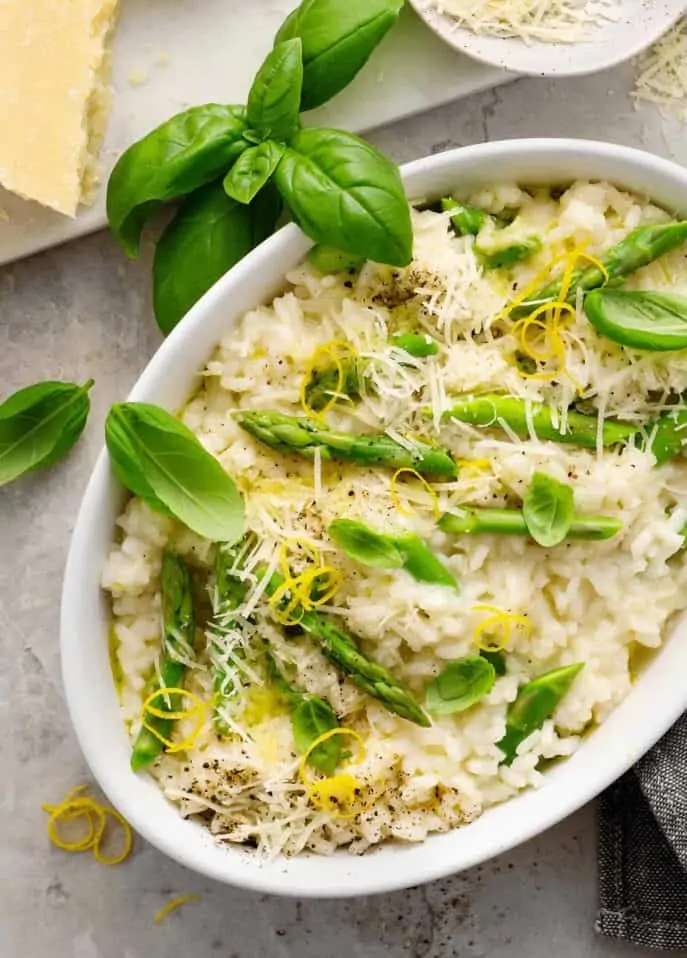
- SERVING: Serve the risotto in warm bowls, then garnish each serving with fresh basil leaves, lemon zest, a drizzle of flavorful extra-virgin olive oil, and some freshly ground black pepper. Serve immediately.
- STORAGE: This lemon asparagus risotto is best enjoyed within minutes of being made. If you do have leftovers, refrigerate in an airtight container for up to 2 days. To reheat, transfer to a nonstick skillet, add a couple tablespoonfuls of broth or water and warm up over medium-low until the risotto is loose and hot. Serve immediately.
- MAKE IT VEGETARIAN: Make sure to use vegetable broth.
Did you make this?
Tell me how you liked it! Leave a comment or take a picture and tag it with @foodnouveau on Instagram.
Disclosure Notice: This site participates in the Amazon Associates Program, an affiliate advertising program designed to provide a means for the site to earn fees by linking to Amazon and affiliated sites. If you click on an affiliate link, I may earn advertising or referral fees if you make a purchase through such links, at no extra cost to you. This helps me create new content for the blog–so thank you! Learn more about advertising on this site by reading my Disclosure Policy.
Author: Marie Asselin
WHAT DID YOU THINK OF THIS RECIPE?
Rate + Review