- V
- GF
- NS
- DF
- View Recipe Key
Zucchini and Thyme Roman-Style Pizza
Zucchini and Thyme Roman-Style Pizza

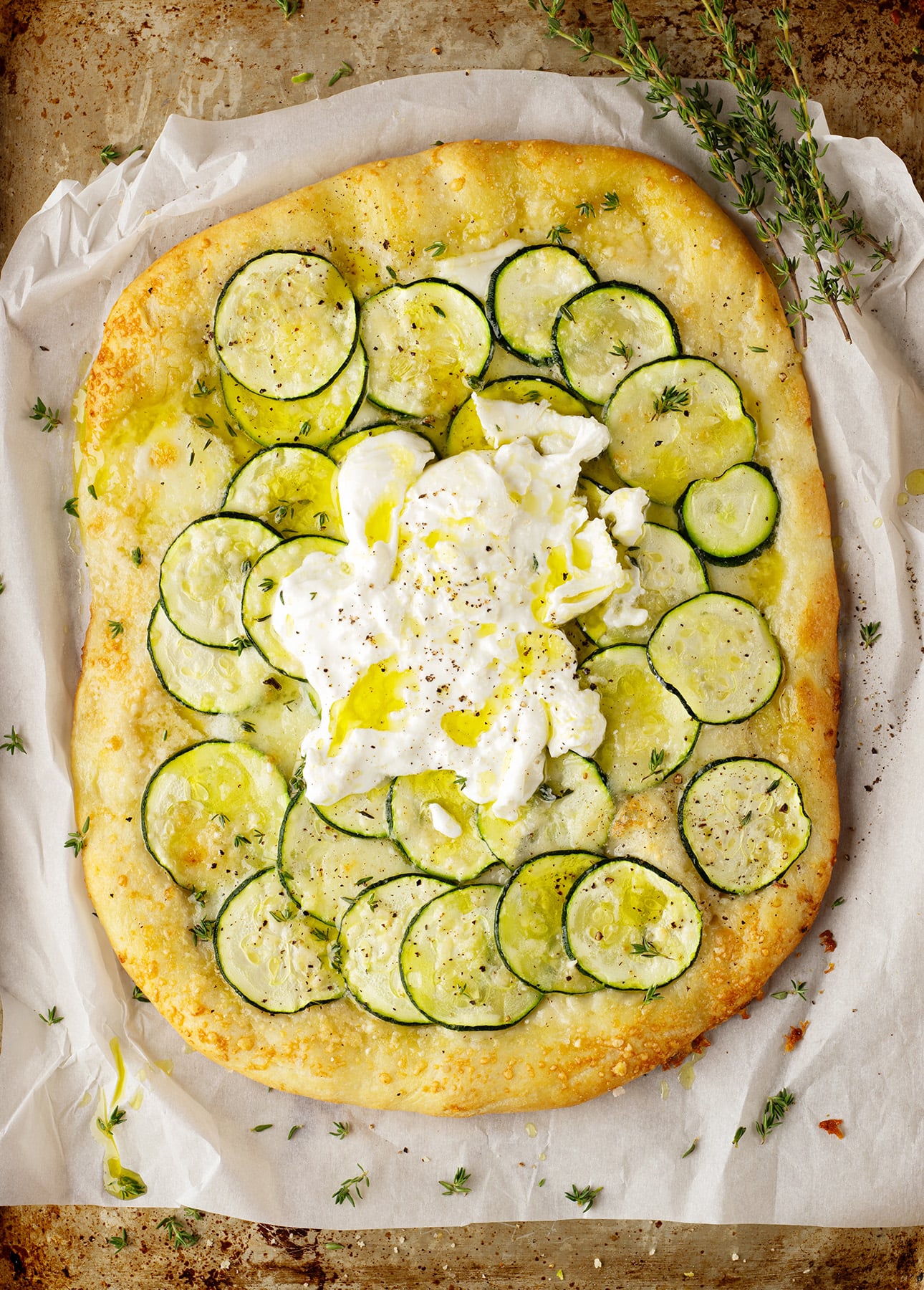
This zucchini and thyme Roman-style pizza is inspired by Rome, with a crisp crust, tender zucchini, fresh thyme, and creamy mozzarella.
This post contains affiliate links. Full disclosure is at the bottom of the article.
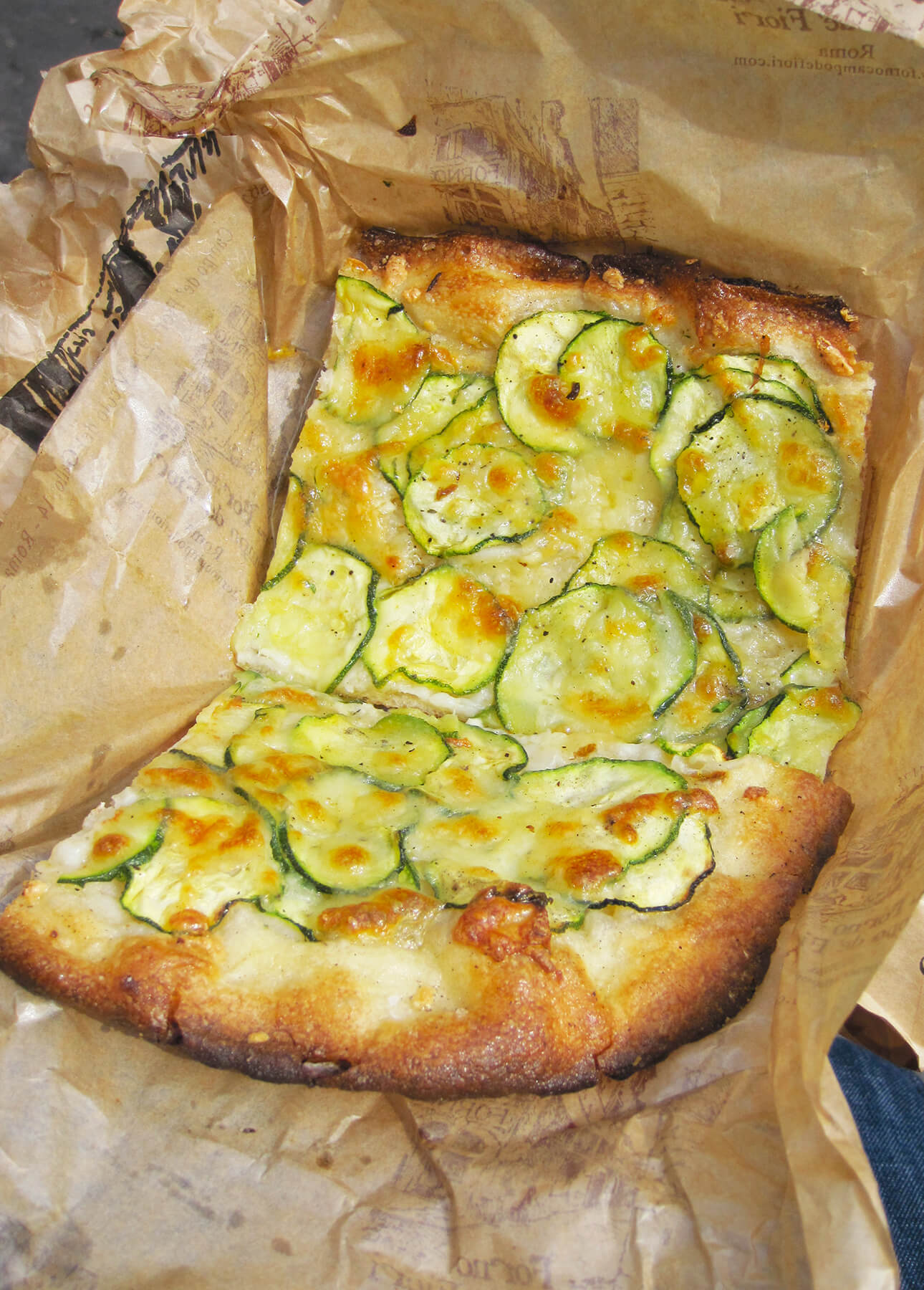
This zucchini and thyme Roman-style pizza is one of the pizzas closest to my heart because it’s inspired by the unforgettable zucchini pizza I had at Forno Campo de’ Fiori in Rome. It’s the kind of pizza that doesn’t look flashy at first glance—just thin slices of zucchini, a little cheese, a few herbs—but one bite is enough to understand why it lingers in the memory. The zucchini turns soft and sweet in the oven, the thyme adds a gentle herbal note, and the crisp Roman-style crust ties everything together.
Campo de’ Fiori in Rome:

I’ve eaten many memorable things in Rome over the years, but this particular pizza is one I’ve found myself thinking about again and again. It captures something I love deeply about Italian cooking: the ability to make a handful of simple ingredients feel elegant, balanced, and completely satisfying. Nothing is trying too hard; every element has a purpose.
That’s also why this pizza works so beautifully at home. It doesn’t require a long ingredient list or a complicated sauce. It simply asks for good zucchini, good cheese, good olive oil, and a crust that’s thin and crisp enough to let those ingredients shine.
This is one of the Roman-style pizzas I make most often because it shines in its simplicity. It’s lovely enough to serve to friends, but simple enough to make on an ordinary weeknight once the dough is ready.
This stand-alone recipe is built on my Roman-style pizza dough, which I use whenever I want that signature thin, crisp texture. If you want all my detailed tips for making the dough, fermenting it, shaping it, and baking it, head over to my Roman-Style Pizza from Scratch post. That’s my full master guide. Here, I’m focusing on what makes this zucchini and thyme version so special.
Why this Roman-Style Zucchini Pizza Is Worth Making
Roman-style pizza is especially good with restrained toppings, and zucchini is one of the best examples of why. When it’s sliced thinly and baked on a crisp crust, zucchini softens, sweetens, and takes on a slightly nutty character that feels much more flavorful than its raw self suggests. It doesn’t overwhelm the pizza; it complements it.
That’s what makes this combination so satisfying. The zucchini brings tenderness and a subtle sweetness, the thyme adds a delicate aromatic note, and the cheese adds creaminess without taking over. It’s a pizza that tastes balanced from the very first bite.

This also happens to be a wonderful example of how Roman-style pizza differs from heavier, more heavily topped pizzas. The crust is not just there to support the toppings—it’s a central part of the experience. The goal is not abundance; it’s harmony between all the flavors and textures.
Ingredient Notes for the Best Zucchini Pizza
The best zucchini to use
Use small to medium zucchini if you can find them. They tend to have fewer seeds and a firmer texture, which makes them especially good for pizza. Very large zucchini can work too, but they’re often more watery and a bit less refined in texture.

Thin slices are the key here. Thick rounds can stay watery and bulky, which is not what you want on a thin Roman-style crust. Thinly sliced zucchini softens quickly in the oven and melds into the pizza much more gracefully. It also lets you cover the surface lightly and evenly, which helps the pizza bake beautifully. I highly recommend using a mandoline to cut beautifully thin, even slices of zucchini.

Fresh thyme vs dried thyme
Fresh thyme is the best choice here. Since this pizza uses so few ingredients, the flavor of each one really comes through, and fresh thyme brings a softer, more fragrant note than dried. Dried thyme will do if that’s what you have, but this is one of those cases where fresh makes a noticeable difference.
I like thyme on this pizza because it complements the zucchini without taking over. It adds a subtle herbal note that makes the whole pizza taste a little more polished, while still letting the sweetness of the zucchini come through.
Mozzarella di bufala vs burrata
Fresh mozzarella di bufala is the best choice if you want a cheese that melts into the pizza during baking. It creates creamy pockets and a savory base without overwhelming the zucchini.
For this pizza, I use mozzarella di bufala as the base cheese. I place it directly over the oiled dough, then layer the zucchini on top. That way, the cheese melts into the crust, creating a creamy foundation, while the zucchini roasts properly rather than sitting under a blanket of cheese. This is quite different from the classic North American pizza approach, where cheese often goes on top and covers everything.
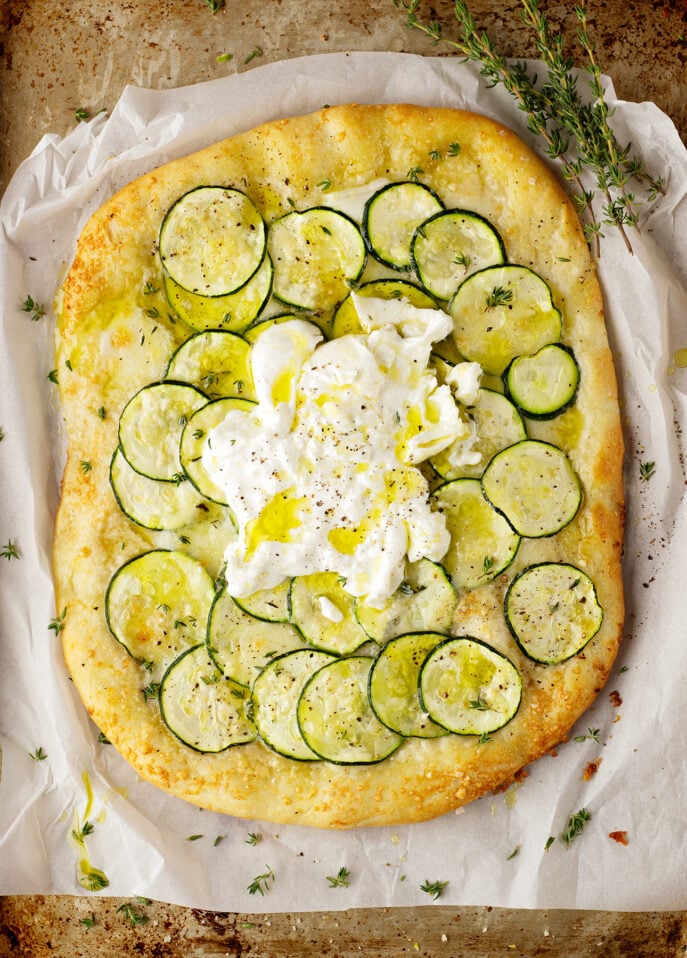
Burrata, on the other hand, is best treated as a finishing cheese. If you want to be a little extra—and I fully support that—you can absolutely do both. Bake the pizza with fresh mozzarella di bufala as the base cheese, then finish the hot pizza with torn burrata just before serving. That’s what I did for the photos in this post, and what I do most times I make zucchini pizza. It’s every bit as luxurious as it sounds!
Why this pizza should stay lightly topped
This is not the pizza to overload. The beauty of Roman-style pizza is that the crust stays crisp and every topping still feels distinct. A light hand with the zucchini and cheese will give you a better result than trying to pack more on.
VIDEO: How to Make Roman-Style Pizza Dough from Scratch
If you’d like to see exactly how I make my Roman-style pizza dough from scratch, this video will walk you through the full process step by step. It’s the easiest way to get a feel for the dough, see how thin I stretch it, and understand how I bake it to get that signature crisp Roman-style crust.
How to assemble zucchini and thyme Roman-style pizza
Start with the olive oil, parmesan, and sea salt base
No matter what Roman-style pizza I’m making, I always start the same way. I brush the dough with olive oil—sometimes garlic-infused olive oil—then sprinkle over finely grated Parmigiano Reggiano and a little sea salt around the edges. It gives the crust a deeply savory flavor base and helps it turn beautifully golden and crisp.

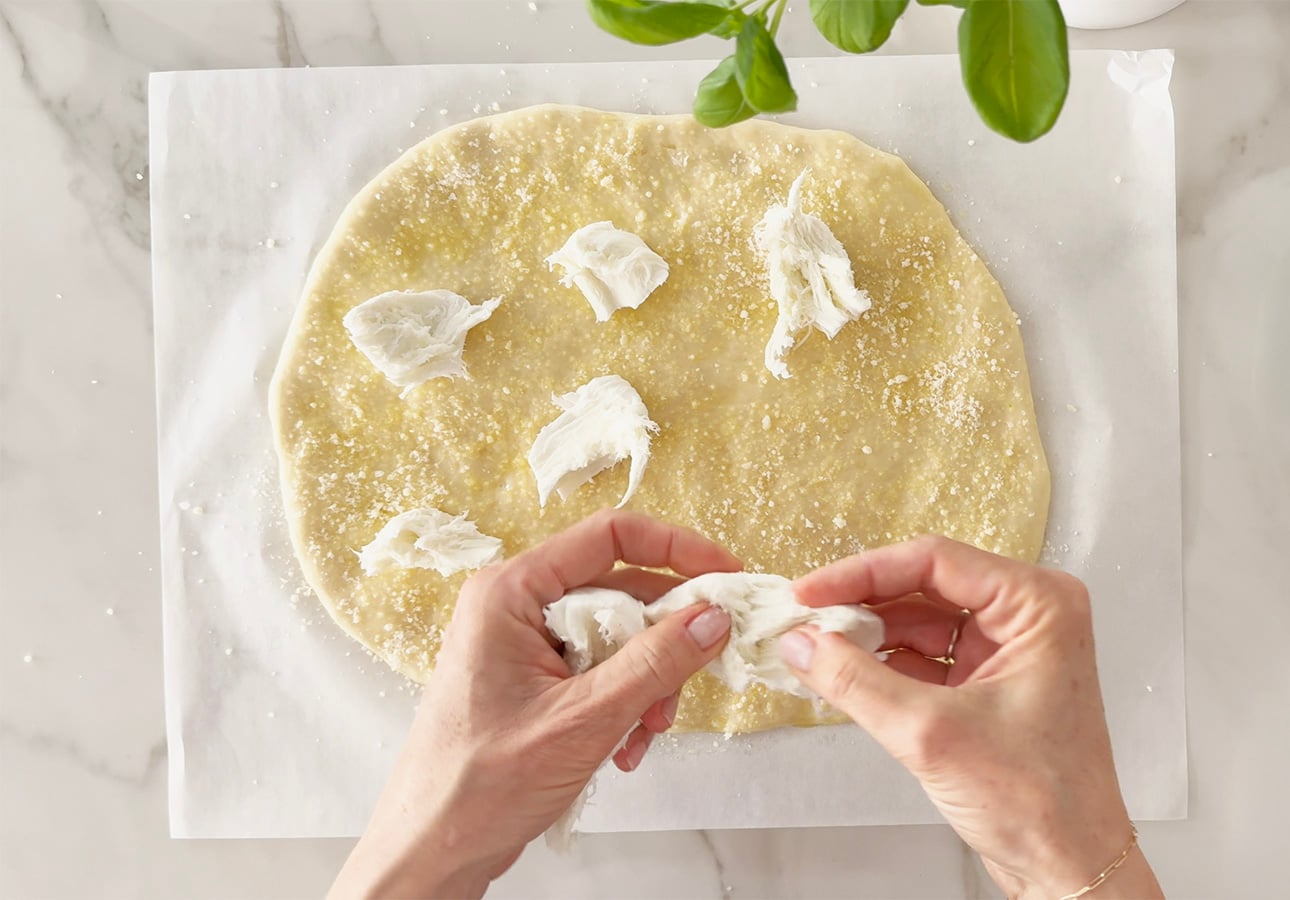
Add the mozzarella first
Fresh mozzarella di bufala goes directly over the oiled dough. That way, it melts into the crust and supports the toppings instead of covering them. It’s a small detail, but it changes the texture and the look of the finished pizza in a very good way.
Layer the zucchini lightly
Place zucchini rounds in a thin, even layer on top of the cheese. It’s fine if they overlap slightly, but don’t pile them on too thickly. They need a bit of space to roast and sweeten rather than steam.
Finish with thyme and olive oil
Scatter the thyme over the zucchini, then drizzle lightly with olive oil before baking. If you’re using burrata, wait until the pizza is out of the oven, then tear it over the top just before serving.

Helpful Tips to Make Zucchini and Thyme Roman-Style Pizza
If your zucchini is very watery
If your zucchini seems especially watery, slice it thinly and let it sit briefly on paper towels before using. This will eliminate excess moisture, which could transfer to your crust. You don’t necessarily need to salt it in advance, but you do want to avoid adding unnecessary moisture to the pizza. Thin slices and a light hand go a long way.
If you want the zucchini more caramelized
You can brush the zucchini lightly with olive oil before arranging it over the pizza, or bake the pizza a touch longer, until the edges of the slices start to color. That gives the zucchini a slightly more roasted flavor while still keeping the overall feel of the pizza delicate.
If you want to make it ahead
You can prep the zucchini and thyme ahead of time, and of course, the dough can be made in advance by following the full timing and fermentation guidance in my Roman-Style Pizza from Scratch post. I don’t recommend assembling the whole pizza too far in advance, though, as the zucchini can start releasing moisture as it sits.
If you want to use burrata instead
Burrata is wonderful here, but think of it as a finishing cheese, not a baking cheese. Tear it over the hot pizza after baking so it stays cool, soft, and creamy. And yes, if the mood strikes, you can absolutely use mozzarella di bufala under the toppings and burrata on top. You can’t go wrong with a double dose of cheese!

How to reheat leftovers
Reheat leftover slices in a hot oven for a few minutes to revive the crust. The microwave will soften the base and flatten the texture, so I’d avoid it if you can.
Roman-Style Pizza FAQ
Do I need to salt zucchini before putting it on pizza?
Not necessarily. If the zucchini is sliced thinly and used with a light hand, you can usually skip that step. If your zucchini is especially watery, you can pat the slices dry or let them rest briefly to drain on paper towels before topping the pizza.
Should zucchini be cooked before it goes on pizza?
Not for this recipe. Thinly sliced zucchini cooks beautifully right on the pizza and keeps a fresher, more delicate texture that suits Roman-style crust very well. Pre-cooking it would push it in a softer, heavier direction.
What cheese is best for zucchini pizza?
Fresh mozzarella di bufala is my first choice because it melts into the crust without creating a heavy cheese blanket. Burrata is also delicious, but I recommend adding it after baking rather than before.
More Pizza Recipes to Try
If you enjoy homemade pizza, you might also like my Roman-Style Pizza from Scratch master recipe, Prosciutto and Cherry Tomato Pizza, Breakfast Pizza, or Feta, Chickpea, and Eggplant Pizza.
Zucchini and Thyme Roman-Style Pizza Recipe
Ingredients
- 1 ball homemade Roman-style pizza dough (half a batch)
- ¼ cup extra-virgin olive oil
- 1 clove garlic
- ⅓ cup finely grated Parmigiano-Reggiano cheese
- 2 small zucchini (about 7 oz / 200 g)
- Fleur de sel, or flaky sea salt
- Freshly ground black pepper
- 1 ball mozzarella di bufala (about 5 oz / 140 g), sliced thinly or torn into pieces
- 1 tbsp fresh thyme leaves
- 1 ball burrata cheese (optional)
Instructions
Prepare the Ingredients
- Pour the olive oil in a small bowl. Very finely mince or grate the garlic clove using a Microplane, then mix it into the oil. Set aside to infuse. (You can prepare the garlic oil ahead of time; refrigerate until needed.)
- Slice both zucchini in extra-thin slices (a mandoline slicer is the best tool to do this).
Preheat the Pizza Stone
- Position a rack in the lower third of the oven. Place a pizza stone on the rack and preheat the oven to 475°F (245°C). Preheat for 45 to 60 minutes to allow the stone to absorb as much heat as possible.
Shape the Roman Pizza Dough
- Cut out a sheet of parchment paper that is the same size as your pizza stone. (See note.) Place the ball of pizza dough over the parchment paper. Using your hands, spread out the dough in a very thin, large rectangle with rounded corners, sprinkling the dough with a bit of flour if it sticks. The thinner you spread out the dough, the crunchier the crust will be.
- Cover the crust with a clean kitchen towel and let rest for 15 minutes.
Garnish and Bake the Zucchini Pizza
- Generously brush the pizza crust with garlic-infused olive oil.
- Sprinkle with the grated Parmigiano-Reggiano, then distribute the buffalo mozzarella over the crust. Set the thin zucchini slices over the cheese in an overlapping pattern.
- Season the zucchini with a generous pinch of fleur de sel (zucchini needs to be seasoned properly to be flavorful) and some black pepper. Sprinkle with the remaining Parmigiano-Reggiano and drizzle with the remaining garlic-infused olive oil.
- Using a large cutting board or the back of a large baking sheet, carefully transfer the pizza (with the parchment paper) onto the preheated pizza stone in the oven. Bake until the crust is browned and crisp and the cheese is bubbly, about 9 minutes.
- SERVING: Pull the pizza out of the oven. Set the burrata over the hot pizza, breaking it up to open it. Drizzle the burrata with olive oil and sprinkle with flaky sea salt and black pepper. Garnish with fresh thyme leaves and serve immediately.
Video
Notes
Did you make this?
Tell me how you liked it! Leave a comment or take a picture and tag it with @foodnouveau on Instagram.
This site is a participant in the Amazon Associates Program, an affiliate advertising program designed to provide a means for the site to earn fees by linking to Amazon and affiliated sites.
If you click on an affiliate link, I may earn advertising or referral fees if you make a purchase through such links, at no extra cost to you. This helps me create new content for the blog–so thank you! Learn more about advertising on this site by reading my Disclosure Policy.
Author: Marie Asselin
WHAT DID YOU THINK OF THIS RECIPE?
Rate + Review