- V
- GF
- NS
- DF
- View Recipe Key
Vegan Carrot Cupcakes with Fluffy Orange Frosting
Vegan Carrot Cupcakes with Fluffy Orange Frosting

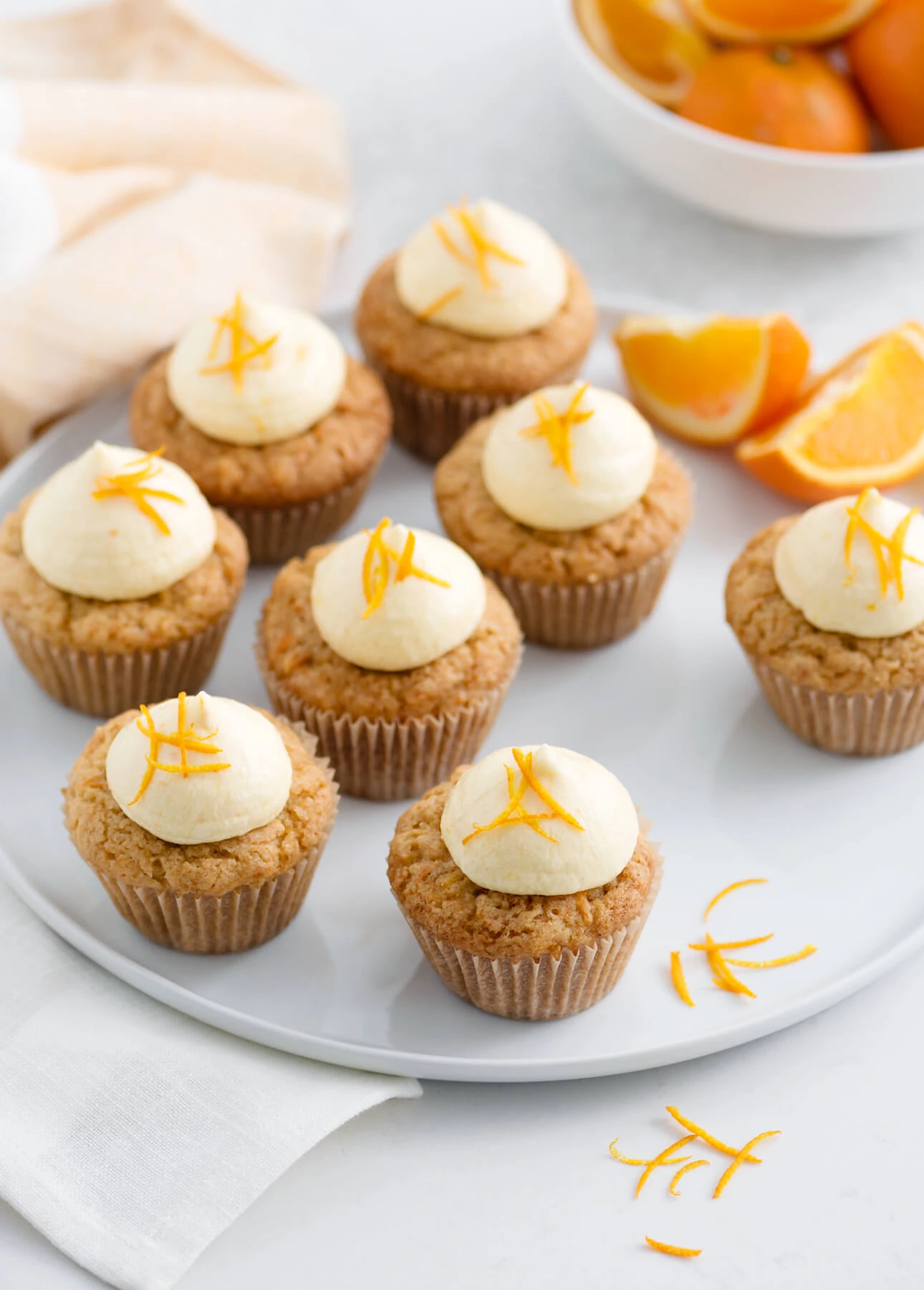
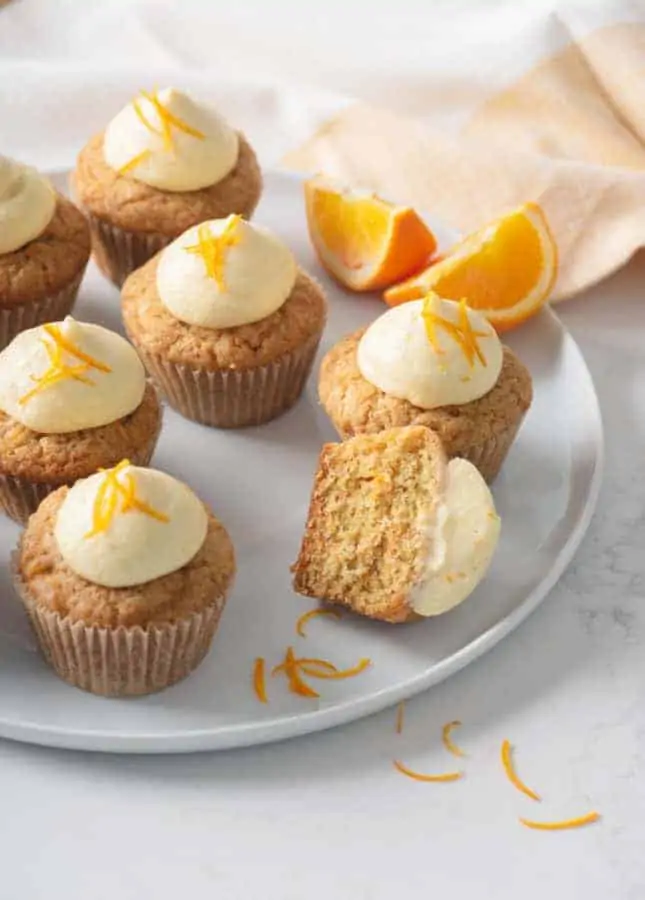
These Vegan Carrot Cupcakes are soft, tender, and warmly spiced, with a fluffy orange-scented frosting that makes them taste extra special. Your guests won’t believe they’re vegan!
This post contains affiliate links. Full disclosure is at the bottom of the article.
I first made these vegan carrot cupcakes a few years ago, when I had a niece over who had recently adopted a vegan diet. I wanted to make a vegan dessert that she would thoroughly enjoy, but that everyone else would gladly share with her, too. I didn’t want to impose a failed vegan experiment on everyone—and I didn’t want to offer a short-order option to my niece, either. I know how disappointing it is when you’re offered a fruit salad while everyone else is eating cake! I had to find that perfect vegan treat—or rather, one that is covertly vegan.
While I’m not vegan, I’m lactose intolerant, so I’ve been experimenting with vegan desserts and dairy-free baking for years. I believe you can turn many classic desserts vegan without sacrificing taste, texture, or flavor. One of my favorite desserts is carrot cake, so when I spotted a recipe for vegan carrot cake cupcakes, I knew I had to tweak it to perfection. On the day I served these vegan carrot cupcakes, my niece was the only one who was in on the vegan secret.
I let everyone else enjoy their dessert and asked them to guess what was different about the cupcakes afterward. You guessed it: nobody could tell the cupcakes were vegan.

In vegan baking, it’s easy to find ways to replace milk and butter by using plant-based products, but eggs are much more difficult to substitute. Not only are eggs a quintessential ingredient in baking, but they play a key role in the structure, stability, texture, and moisture of baked goods. I’ve tried many egg substitutes over the years, and I believe there is no one-size-fits-all solution.
Flax or chia eggs, unsweetened applesauce, mashed silken tofu, or banana can all work in specific recipes, but none has leavening power, so you can’t simply swap in one of these for an egg and expect a fluffy cake to come out of the oven. Increasing the amounts of baking powder and baking soda can help, but using too much can alter the cake’s flavor. That’s why these are not just eggless carrot cupcakes for the sake of being egg-free—this recipe is designed to bake up as moist vegan carrot cupcakes with a truly tender, fluffy crumb.
Cakes require the leavening, emulsifying, moistening, and binding powers of eggs. Without eggs, a cake will turn out dense and dry. So, what’s the best egg substitute to make beautifully fluffy vegan carrot cupcakes?
Today I’m letting you in on the secret ingredient that makes these vegan carrot cupcakes so incredibly close in texture and flavor to classic carrot cupcakes: egg replacer.

Helpful Tips for Making Vegan Carrot Cupcakes
What Is Egg Replacer?
Egg replacer is a commercial powdered product designed to replace eggs in baked goods. It’s designed to replicate the many roles eggs play in baking: helping cakes rise, emulsifying the batter, adding moisture, and binding everything together. Several brands make egg replacers, including Ener-G, Bob’s Red Mill, Orgran, and others.
The exact formula varies by brand, but most egg replacers are made with a combination of starches for binding, gums for emulsifying, and leavening agents to help baked goods rise. The powder needs to be mixed with liquid before being added to a recipe. In many cases, that liquid is simply water, but in this recipe, I use orange juice and plant-based milk so that step also adds flavor.

Photo: GoodEggs.com
Egg replacer has several practical advantages. Of course, it makes vegan baking possible, but it can also be useful for people with egg allergies, those who are lactose intolerant, and anyone following a reduced-cholesterol diet, since egg replacers contain no cholesterol. Many products are also kosher and gluten-free, although it’s always worth checking the label. Bob’s Red Mill, for example, makes two versions: one with soy and wheat and one that is gluten-free.
You can usually find egg replacer online, in natural food stores, or in the natural foods section of larger grocery stores.
Use egg replacer here for lift, not just binding
This is really the key to the whole recipe. A lot of vegan cupcake recipes rely on flax eggs, unsweetened applesauce, or banana, and those ingredients can absolutely work in the right context—but they don’t all do the same job. In this recipe, the egg replacer is what helps create that light, cake-like texture that makes these vegan carrot cupcakes feel like the real thing, not like a “good for vegan” compromise.
That’s why, in this recipe, I wouldn’t treat egg replacer as an optional ingredient or casually swap it for another egg substitute. If you do, the cupcakes may still taste good, but they won’t have the same airy structure. If your goal is moist vegan carrot cupcakes that still feel delicate and fluffy, egg replacer really is the better choice here.
Mix the egg replacer with flavorful liquids
I think one of the smartest things about this recipe is that the liquid used to activate the egg replacer also adds flavor. Instead of using only plain water, this version includes orange juice and plant milk, which gives the cupcakes a brighter, fresher profile from the very start.
That citrus note is subtle, but it matters. It enhances the flavor of the carrots and spices and keeps the cupcakes from tasting flat or overly sweet. It’s one of the details that sets these vegan carrot cake cupcakes apart from the usual version, especially once they’re topped with frosting.
Grate the carrots very finely
This is not the place for thick, coarse shreds. Finely grated carrots melt more evenly into the batter as the cupcakes bake, giving you a softer crumb and a more even texture throughout. You still get all the moisture and flavor of carrot cake, but without obvious strands running through the cupcakes. To prepare the carrots for this recipe, use a Microplane or the smallest holes on a regular grater.
It’s one of those small details that really affects the final result. If the carrot pieces are too thick, the cupcakes can feel rougher and a bit heavier. Fine grating helps these stay tender and is part of what makes them such successful eggless carrot cupcakes.
Because grated carrots are naturally fluffy and airy, they can be tricky to measure accurately by volume. For the best results, I recommend weighing them instead; I’ve included the exact amount to use in the recipe card below.
This is how finely I like to grate carrots for these vegan carrot cupcakes: short strands are even better!

Use finely grated orange zest, too
One of the details that makes my vegan carrot cupcakes a little more special is the orange zest. I use it in both the cupcakes and the frosting, which gives the whole recipe a brighter, fresher flavor and pairs beautifully with the carrot and warm spices. It’s not an overpowering citrus flavor at all—it just lifts everything and makes the finished cupcakes taste a bit more vibrant.
For the best texture, use a Microplane to zest the orange. It creates a very fine zest that blends easily into both the batter and the frosting, without leaving behind larger chewy bits of peel. That’s especially important in the frosting, where you want the citrus flavor to come through cleanly without affecting the smooth texture.
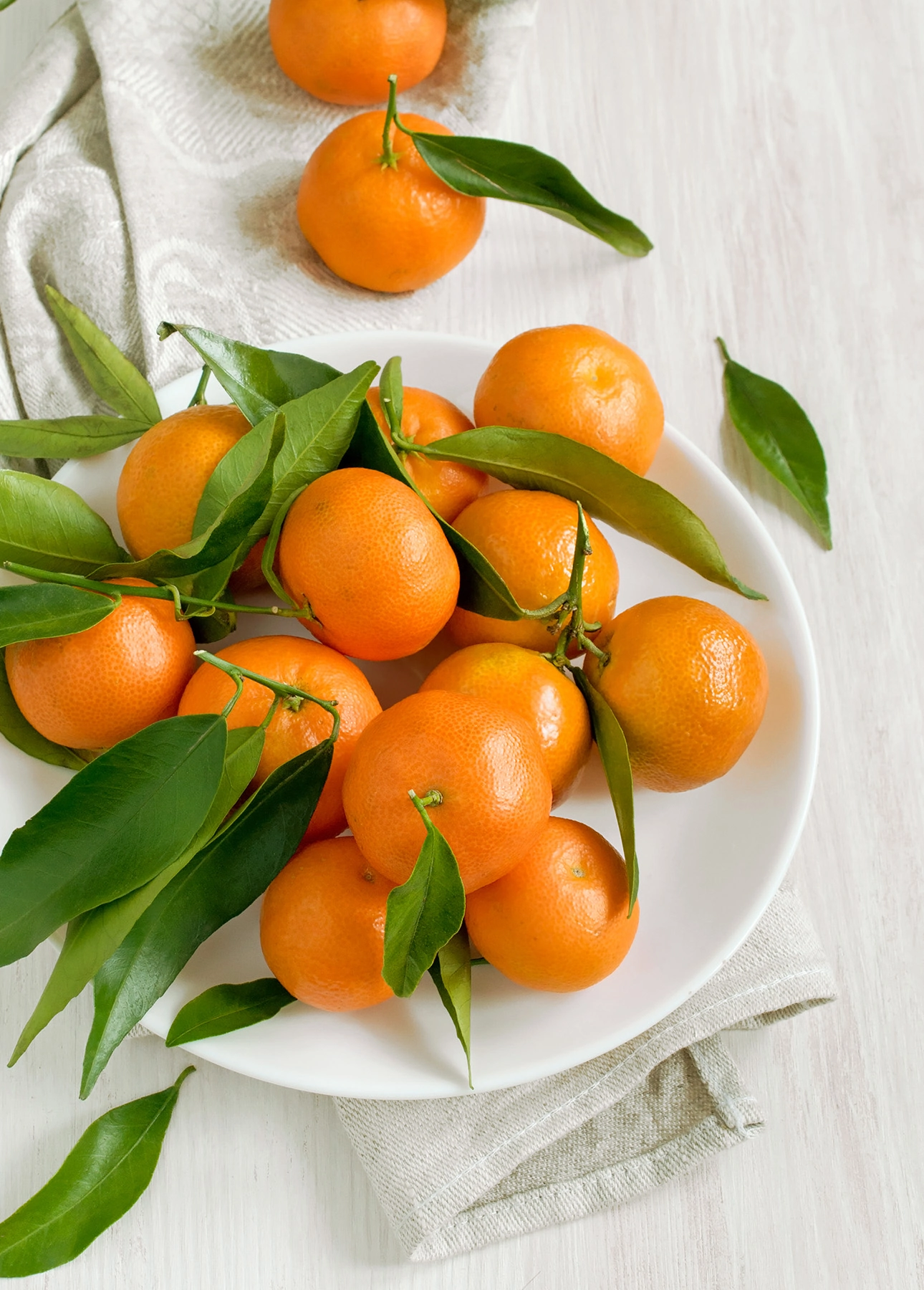
You also don’t need to be overly specific about the type of orange you use here. Navel oranges work very well, but mandarins, clementines, tangerines, and similar sweet citrus varieties are all great options. As long as the fruit is fresh and fragrant, it will add lovely flavor to the cupcakes.
Fold the batter just until combined
Once the wet ingredients are added to the dry, mix gently and stop as soon as the flour disappears. It’s tempting to keep going until the batter looks perfectly smooth, but overmixing will make the crumb tighter and less delicate.
That matters in any cupcake recipe, but especially in vegan baking, where you want to protect whatever lift you’ve built into the batter. A light hand helps the cupcakes bake up softer and taller, with a structure that won’t collapse on itself when you take them out of the oven and a tender texture you want from fluffy vegan carrot cupcakes.
Choose your frosting based on flavor and texture
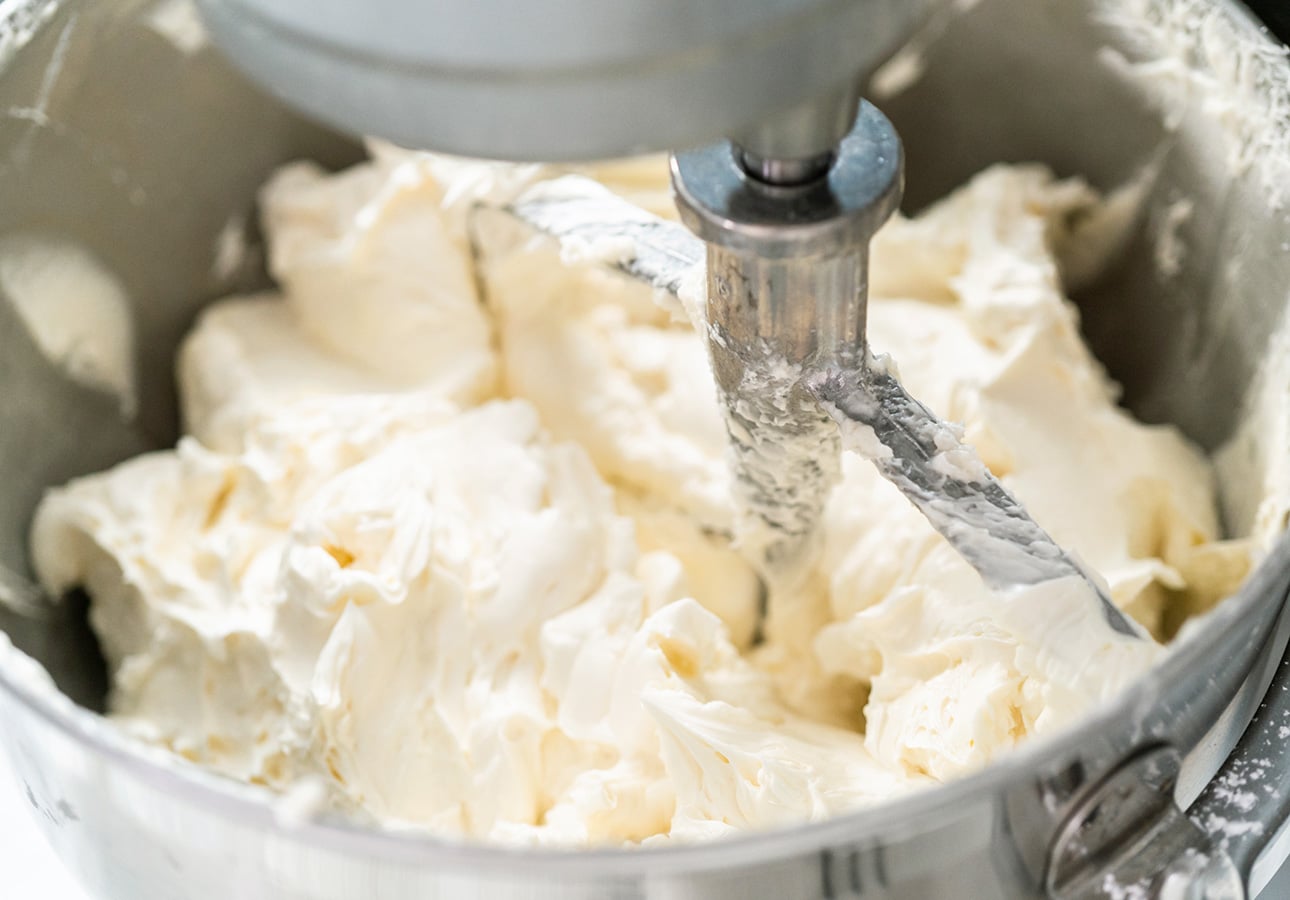
If you want a frosting that pipes beautifully and holds its shape well, vegan butter is your best friend. If you want a more classic carrot-cake flavor, you can replace part of the vegan butter with vegan cream cheese for a tangier finish. It gives the frosting that familiar tang people often expect from carrot cake.
That said, vegan cream cheese tends to make frosting softer than regular cream cheese would, so it’s not always as stable at room temperature. My approach is simple: if presentation matters most, lean more heavily on vegan butter. If flavor is most important, add the vegan cream cheese and chill the frosting before piping. Both options are delicious—it just depends on the result you want.
Always serve these vegan carrot cupcakes at room temperature
These cupcakes are best once they’ve had a bit of time to lose their fridge chill. Cold frosting can feel firm and slightly dense, and the crumb won’t seem quite as soft or aromatic straight from the refrigerator.
At room temperature, everything opens up: the frosting tastes creamier, the citrus notes come through more clearly, and the cupcakes feel more tender. If you’re making them ahead, that’s completely fine—just plan to take them out a little before serving so they taste their best.

Don’t skip make-ahead planning
These are a great make-ahead dessert, which is one more reason I like them so much. You can bake the cupcakes in advance, frost them later, or fully assemble them and refrigerate until needed. That makes them especially handy for birthdays, spring gatherings, Easter brunch, or any moment when you want a dessert that feels a bit celebratory without being fussy.
They also freeze surprisingly well. That’s one more thing I love about this recipe: it isn’t just delicious, it’s flexible, too. You can make them ahead, pipe that beautiful frosting over the cupcakes, then freeze them in a large airtight container. That way, you’ll always have a homemade dessert ready when you need (or crave!) one.
A non-vegan option
Want to make these carrot cupcakes with classic dairy ingredients instead? I’ve included notes in the recipe card for a non-vegan variation, so you can choose the version that works best for you.
Vegan Carrot Cupcakes FAQ
Can I make these vegan carrot cupcakes without egg replacer?
You can make vegan cupcakes with flax eggs, chia eggs, applesauce, or banana, but those substitutes won’t give you the same result. This recipe was developed with egg replacer because it helps create a lighter, fluffier texture. If you swap it out, the cupcakes will likely be denser.
Are these vegan carrot cupcakes also dairy-free?
Yes. Since the recipe uses plant-based ingredients instead of milk and butter, these are both vegan carrot cupcakes and dairy-free carrot cupcakes.
Why are my vegan carrot cupcakes dense?
The usual culprits are overmixing the batter, using coarsely grated carrots, or replacing the egg replacer with another substitute. This recipe is designed to produce fluffy vegan carrot cupcakes, so changing those details can significantly affect the texture.
Can I make vegan carrot cupcakes with cream cheese frosting?
Yes. You can replace part of the vegan butter in the frosting with vegan cream cheese for more tang and a more classic carrot-cake flavor. Just keep in mind that the frosting will be softer, so it helps to chill it before piping.
How do I store vegan carrot cupcakes?
Store the frosted cupcakes in an airtight container in the refrigerator for up to 3 days. For the best texture and flavor, let them come back to room temperature before serving.
Can you freeze vegan carrot cupcakes?
Yes, you can freeze them, even after frosting, in an airtight container for up to 1 month. Thaw them at room temperature before serving.

More “Covertly Vegan” Desserts to Try
If you love desserts that just happen to be vegan, here are a few more recipes to try. These are the kinds of treats everyone happily digs into, whether they follow a vegan diet or not.

Vegan Carrot Cupcake Recipe
Ingredients
For the cupcakes
- 1½ cups all-purpose flour
- 1 tsp baking powder
- ½ tsp baking soda
- ½ tsp ground cinnamon
- ½ tsp ground ginger
- ½ tsp kosher salt, or fine sea salt
- ¼ cup orange juice, preferably freshly squeezed
- ¼ cup plant-based milk (oat milk, soy milk, or almond milk)
- 1 tbsp egg replacer (see note)
- 1 tsp pure vanilla extract
- 1 cup granulated sugar
- ¾ cup extra-virgin olive oil, or canola oil
- 1 tbsp finely grated orange zest (about 1/2 orange)
- 1¼ cups finely grated carrots (4.4 oz)
For the vegan frosting
- 1 cup vegan butter, room temperature, or substitute half for ½ cup (112 g) vegan cream cheese
- 2½ cups powdered sugar
- 1 tbsp finely grated orange zest (about 1/2 orange)
- Pinch kosher salt, or fine sea salt
Instructions
- For the cupcakes: Preheat the oven to 350°F (175°C). Line a muffin pan with parchment paper cups.
- In a large mixing bowl, whisk together the flour, baking powder, baking soda, cardamom, ginger, and salt. Set aside.
- In a second mixing bowl, whisk together the orange juice, plant milk, egg replacer, and vanilla extract. Whisk in the sugar, olive oil, and orange zest. Add the grated carrots and stir to incorporate, making sure the carrot distributes evenly throughout the mixture.
- Pour the wet ingredients over the dry ingredients and fold, using a spatula, right up until no streaks of flour remain. Divide the batter between the prepared muffin cups, filling each cup about ¾ full.
- Bake for about 22 minutes, rotating the pan halfway through, or until a toothpick inserted in the center of a cupcake comes out clean. Transfer the pan to a cooling rack and let the cupcakes cool completely before frosting.
- For the vegan frosting: In the bowl of a stand mixer fitted with the paddle attachment, or in a large mixing bowl if using a hand mixer, beat the vegan butter or vegan cream cheese until creamy and smooth, about 3 minutes, scraping the bowl with a spatula as needed.
- Sift in a third of the powdered sugar, then mix at low speed to incorporate. Repeat twice to incorporate all the sugar. Add the orange zest and salt. Beat on medium speed, until the vegan frosting is light and fluffy, about 5 minutes.
- Pipe or spread the frosting over the cooled vegan carrot cupcakes using a piping bag, offset spatula, or knife.
- SERVING: Always serve the vegan carrot cupcakes at room temperature. If the cupcakes are refrigerated, bring them back to room temperature 25 minutes before serving.
- STORAGE: Store the frosted vegan carrot cupcakes in an airtight container in the refrigerator for up to 3 days. You can also freeze the frosted cupcakes in an airtight container for up to 1 month. Bring frozen cupcakes back to room temperature 40 minutes before serving.
- NOTE: Egg replacer is a powdered product designed to replace eggs in baking by helping batters bind, rise, and stay moist. You can usually find it online, in natural food stores, or in the natural foods section of larger grocery stores.
Notes
- In the cupcakes, replace the egg replacer and orange juice with 2 large eggs.
- In the frosting, replace the vegan butter and cream cheese with dairy butter and cream cheese. Use only butter, or half butter/half cream cheese.
Did you make this?
Tell me how you liked it! Leave a comment or take a picture and tag it with @foodnouveau on Instagram.
This site is a participant in the Amazon Associates Program, an affiliate advertising program designed to provide a means for the site to earn fees by linking to Amazon and affiliated sites.
If you click on an affiliate link, I may earn advertising or referral fees if you make a purchase through such links, at no extra cost to you. This helps me create new content for the blog–so thank you! Learn more about advertising on this site by reading my Disclosure Policy.
Author: Marie Asselin
WHAT DID YOU THINK OF THIS RECIPE?
Rate + Review