- V
- GF
- NS
- DF
- View Recipe Key
Mortadella, Burrata, and Pistachio Pizza
Mortadella, Burrata, and Pistachio Pizza

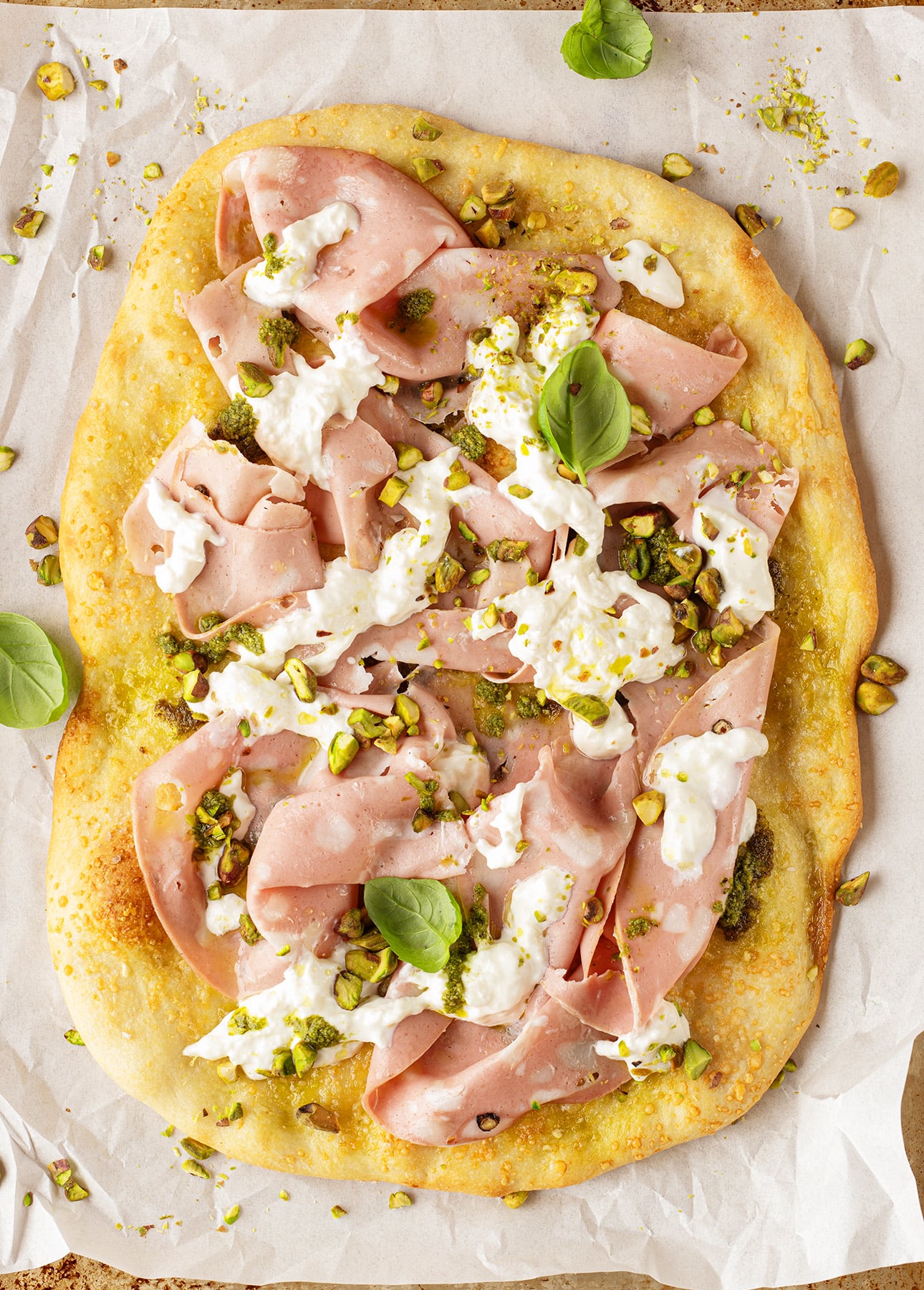
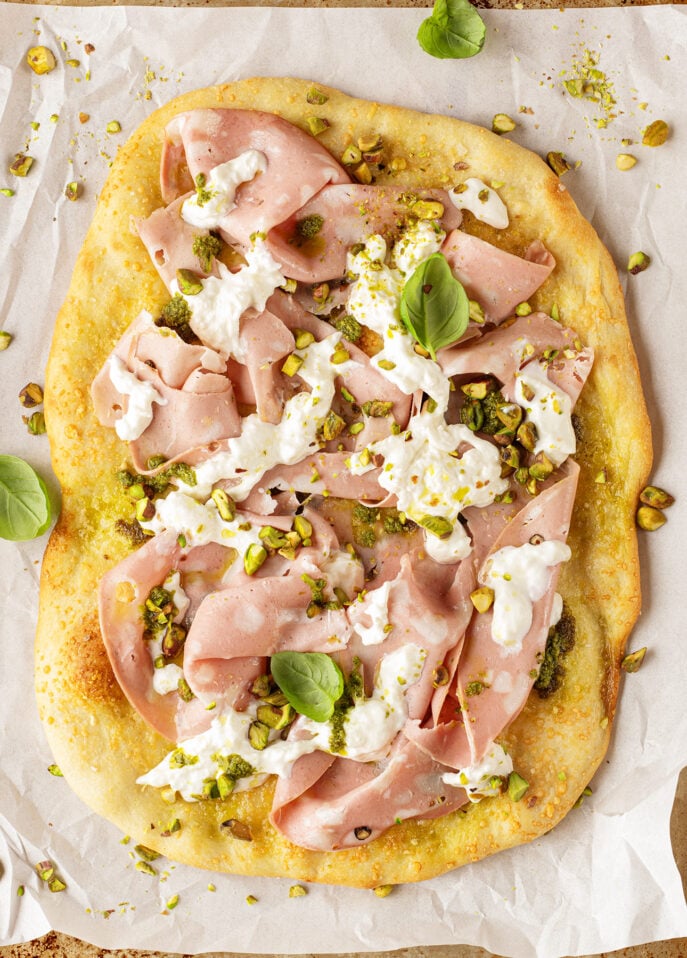
This mortadella, burrata, and pistachio pizza is a luxurious white pizza inspired by Sicilian ingredients, built on a crisp Roman-style crust.
This post contains affiliate links. Full disclosure is at the bottom of the article.
This mortadella, burrata, and pistachio pizza is one of those combinations that feels instantly special, but it’s rooted in a flavor profile I came across again and again in Sicily. There, mortadella, pistachio, and creamy cheese are especially common on flatbreads, focaccia-like breads, and sandwiches, and once you taste the trio together, you fall in love with it. What makes this burrata pizza recipe work so well is the combination of the saltiness of the mortadella, the cool creaminess of the burrata, and the sweet, buttery crunch of pistachios.
One of my delightfully pistachio-themed lunches in a Sicilian caffè:

Even though I most often saw this combination served on softer flatbreads in Sicily, I think it also makes a delicious burrata pizza on a crisp Roman-style crust. I’ve come across similar white-pizza combinations in pizza bianca and Roman-style pizza contexts, so the leap feels completely natural. That thin, crackly crust provides a beautiful base for the creamy toppings.
This is not a red-sauce pizza, and it shouldn’t be. A sauce-free base keeps the whole thing closer in spirit to pizza bianca and gives the toppings room to shine. In my version, the crust is baked with my usual flavor base—olive oil, finely grated parmesan cheese, and sea salt—plus a layer of pistachio pesto. After baking, I finish it with mortadella, burrata, and crushed pistachios.
This is the kind of pizza I make when I want something a little dramatic, but still grounded in ingredients that truly belong together. And that’s really the secret here: the order of the toppings matters just as much as the toppings themselves.
This stand-alone recipe is built on my Roman-style pizza dough, which I use whenever I want that signature thin, crisp texture. If you’d like all my detailed tips for making the dough, shaping it, transferring it, and baking it, head over to my Roman-Style Pizza from Scratch post. That’s my full master guide. Here, I’m focusing on what makes this particular flavor combination work so well.
What is Burrata Cheese?
Think of burrata as mozzarella’s more luxurious cousin. It has a soft outer shell made from stretched mozzarella, but the inside is filled with shreds of fresh mozzarella mixed with cream (stracciatella), giving it a loose, luscious texture. That’s why burrata is best added after baking on this pizza: it’s meant to stay cool, creamy, and fresh, not melt away in the oven.

Why this Mortadella Burrata Pistachio Pizza Works so Well on Roman-Style Crust
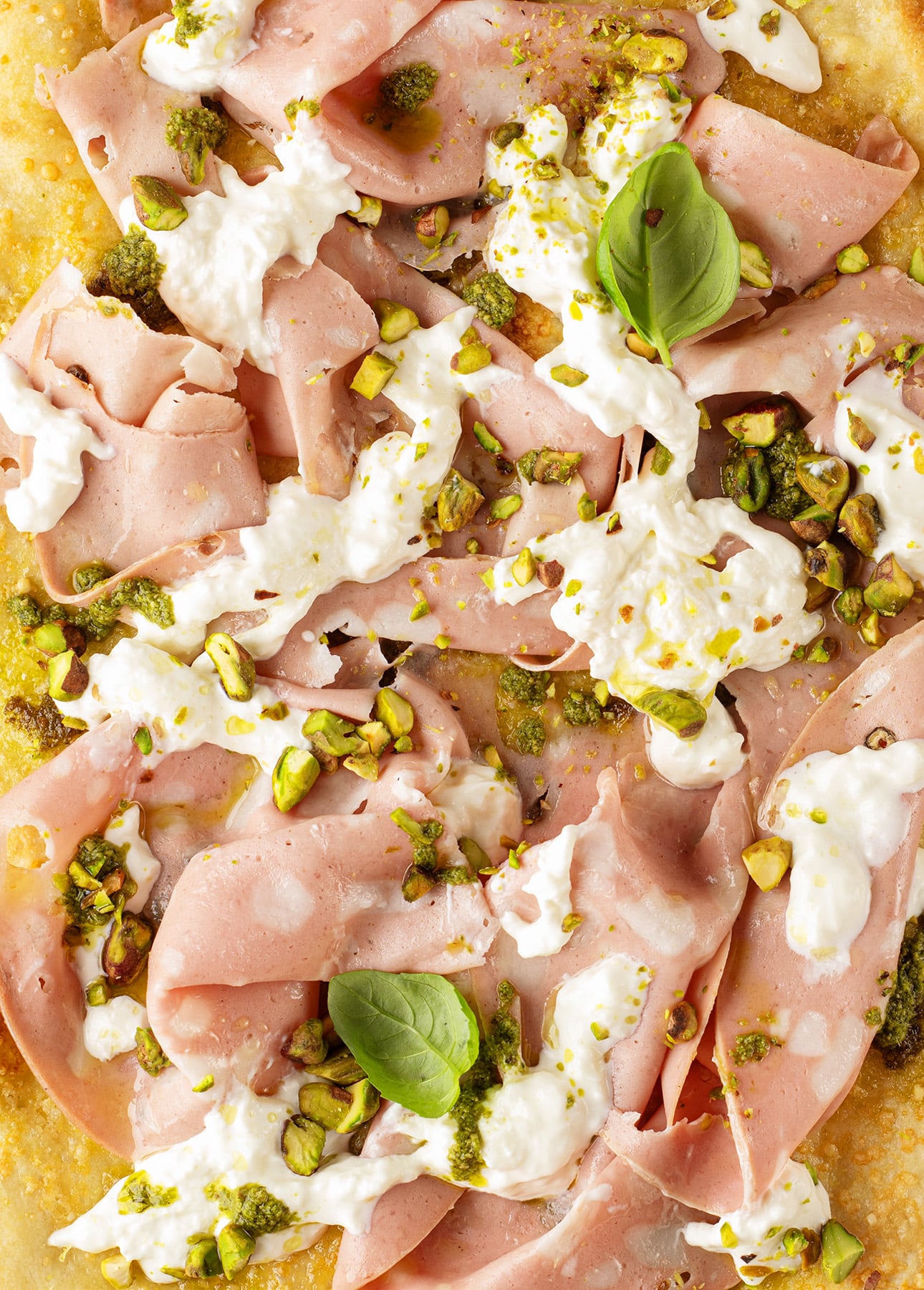
This pizza works because every ingredient brings something different to the dish. The mortadella is silky and savory, the burrata adds cool creaminess, the pistachios bring crunch, and the pistachio pesto ties everything together with a deeper nutty note. On a crisp Roman-style crust, all those textures and flavors stay distinct, which is exactly what makes each bite so good.
That contrast is a big part of the appeal. You get the delicate saltiness of the mortadella, the freshness of the burrata, the crunch of the pistachios, and the crispness of the crust all at once.
This is also a wonderful example of why Roman-style pizza is such a good canvas for elegant toppings. Because the crust is thin and the toppings are used with restraint, each ingredient gets to shine.
The Sicilian Inspiration Behind this Pizza
Why this flavor combination feels so Italian
This trio feels like it was born to be once you’ve tasted it. Mortadella brings gentle spice and savoriness, burrata adds cool creaminess, and pistachios add both crunch and sweetness. In Italian food culture, pistachios are especially associated with Sicily, while mortadella and burrata come from other parts of Italy, which makes the combination feel both distinctive and unmistakably Italian.
Why it’s often served on flatbreads in Sicily
In Sicily, I most often encountered this flavor profile on flatbreads and focaccia bases rather than on Roman-style pizza. That softer, thicker format is absolutely delicious and suits the toppings beautifully.
Easy, no-knead homemade focaccia:

Why it also works beautifully on Roman-style pizza
What I love about adapting this combination to Roman-style pizza is that the crust brings a completely different kind of balance. It gives the toppings a crisp base and lets the contrast in textures stand out more. It’s a natural variation—just with a thinner, crisper base.
How to Assemble this White Roman-Style Pizza
Start with the pistachio pesto
For this pizza, I spread pistachio pesto over the dough after brushing it with olive oil and adding my usual shower of finely grated Parmigiano Reggiano and sea salt around the edges. That gives the crust a deeply savory, slightly nutty flavor base that works beautifully with the toppings added later. Pistachio pesto gives this pesto burrata pizza its addictive, nutty, savory backbone.

Add the mortadella after baking
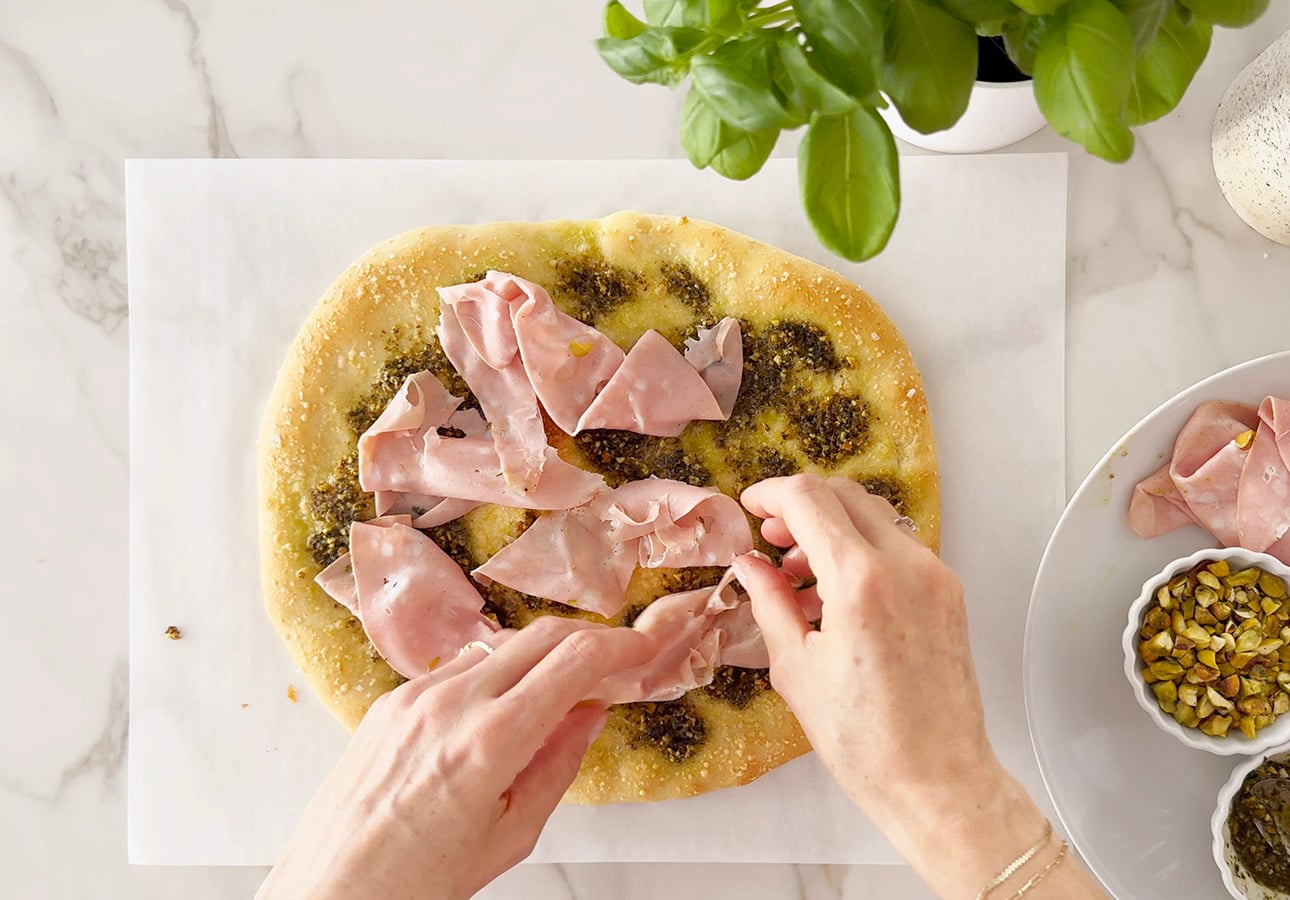
Mortadella is at its best when it’s added after baking. If you bake it, it loses some of that silky, tender quality that makes it so appealing in the first place. I want it to stay soft and delicate, almost draped over the hot pizza rather than cooked into it.
Finish with burrata and pistachios at the end
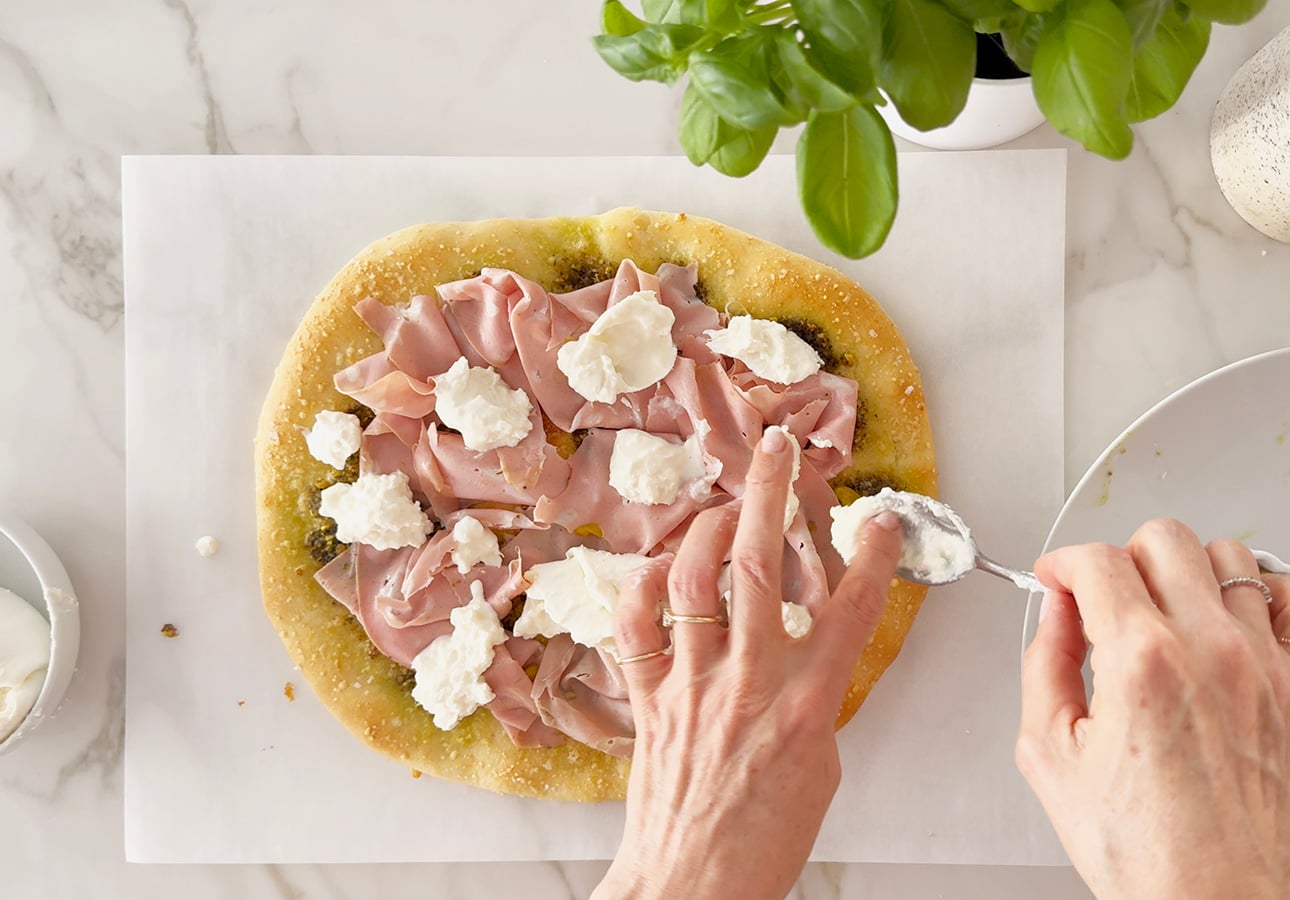
Burrata is definitely a finishing cheese, not a baking cheese. Tear it over the hot pizza just before serving so it stays cool, creamy, and fresh. Then scatter over the crushed pistachios for crunch. This is the moment the pizza really comes together.
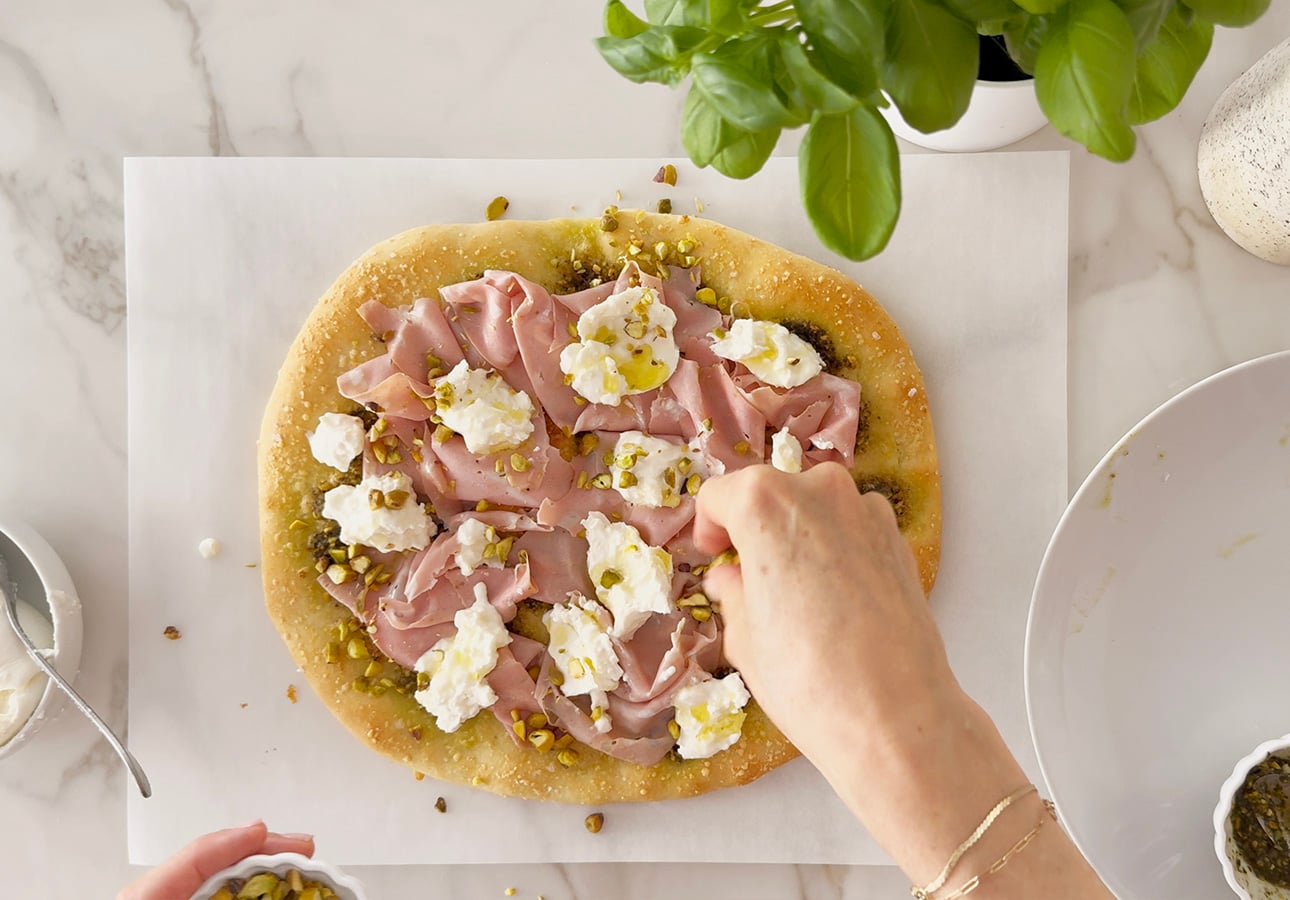
Finish with something fresh
Once the mortadella, burrata, and pistachios are in place, I like to add a few fresh basil leaves over the top. It brings a welcome note of freshness and also ties in nicely with the pistachio pesto underneath. If you don’t have basil, a small handful of arugula works well, too. You can also spoon a little extra pistachio pesto over the pizza—loosening it first with a bit of olive oil so it drizzles easily—if you want to echo that flavor even more. Add some freshly ground black pepper and enjoy!

Ingredient Notes for the Best Mortadella Burrata Pistachio Pizza
What is mortadella and which kind should you use?
Mortadella is a traditional Italian cooked pork sausage with a delicate, almost creamy texture and a mild, gently spiced flavor. For this pizza, look for good-quality thinly sliced mortadella that tastes savory and refined, not heavy or overly processed. I like setting it into loose folds over the pizza rather than laying it on in big flat sheets, so it looks more natural and you get more with each bite.
You may come across pistachio mortadella (if you find it, you should try it!), but it’s not required for this recipe. Any good, ideally freshly sliced mortadella will work well here, especially since the pizza already brings in plenty of pistachio flavor through the pesto and the crushed nuts on top.

What is Burrata, and why is it so good on this pizza?
Burrata is a fresh Italian cheese with a mozzarella-like shell and a soft, creamy center. It’s the cheese I recommend for finishing this pizza because that cool, creamy texture works so well against the hot crust, the pistachio pesto, and the savory mortadella. Burrata isn’t hard to find: these days, it’s sold in many grocery stores, most often in the specialty cheese section.
Since the pizza already has plenty of flavor on the base, it doesn’t need another cheese baked underneath the toppings. For the best texture, let the burrata sit at room temperature for a short while before serving.
Burrata vs other cheeses
For this pizza, I recommend burrata as the finishing cheese. It adds that cool, creamy contrast that works so well against the hot crust and savory toppings. Since this pizza already has pistachio pesto on the base, it doesn’t need another cheese baked underneath the toppings. For the best texture, always let the burrata sit at room temperature for a short while before serving. These days, burrata is easy to find in many grocery stores, especially in the specialty cheese section.
Pistachio pesto vs pistachio cream
I use pistachio pesto here, not pistachio cream. The two are quite different: pistachio pesto is savory, usually made with pistachios, oil, cheese, and sometimes herbs, so it works naturally on pizza. Pistachio cream, on the other hand, is smoother, richer, and often very sweet, which makes it better suited to pastries and desserts.
You also don’t need to buy a specialty pistachio pesto to make it work: just blend 2 tablespoons (30 ml) finely chopped pistachios into 1/4 cup (60 ml) regular pesto and you’re done. It’s quick, easy, and perfect for this pizza.

Salted vs unsalted pistachios
You can use either salted or unsalted pistachios for this pizza. I actually like using salted pistachios because they season the finished pizza nicely, which means there’s usually no need to add extra salt at the end.
If you’re using unsalted pistachios, they’re often raw, and I recommend roasting them first to deepen their flavor and crisp them up a bit. Spread them on a small baking sheet and roast at 325°F for 5 to 8 minutes, keeping a very close eye on them—pistachios are delicate and can go from pale to burned surprisingly fast.

Pistachios are one of the pricier nuts, partly because they take more work to grow, harvest, and shell, so I like to buy them in bulk online when I can. Just make sure you’re ordering from a source you trust, ideally one with high turnover, because nuts can go rancid if they’ve been sitting around too long.
VIDEO: How to Make Roman-Style Pizza Dough from Scratch
If you’d like to see exactly how I make my Roman-style pizza dough from scratch, this video will walk you through the full process step by step. It’s the easiest way to get a feel for the dough, see how thin I stretch it, and understand how I bake it to get that signature crisp Roman-style crust.
Helpful Tips to Make Mortadella, Burrata, and Pistachio Pizza
If you have a pizza stone, make sure to use it
For this pizza, I really recommend baking on a pizza stone if you have one. It’s the best way to get the crisp, well-baked Roman-style crust I’m after here. Put the stone in the oven before preheating it so it can heat up gradually, then leave it in the hot oven for at least 30 minutes before baking the pizza. Once the pizza is ready, slide it onto the hot pizza stone and bake immediately. It’s a small step, but it makes a big difference.
If you don’t have a pizza stone
You can still make this pizza without a stone, but I’d recommend preheating a heavy baking sheet in the oven first so the dough hits a hot surface right away. If you have two identical sheet pans, stack them and preheat them together for at least 20 minutes before baking. That extra mass helps retain heat and brings you a bit closer to the strong bottom heat a pizza stone provides. It works well—but if you bake pizza often, a rectangular pizza stone is still well worth having.
If you don’t have pistachio pesto
You can make a quick version in minutes by blending 2 tablespoons (30 ml) finely chopped or crushed pistachios into 1/4 cup (60 ml) regular pesto. That gives you the same general effect without needing to hunt down a specialty ingredient.
If you want to make this pizza ahead of time
You can make the pizza dough ahead of time. To do so, follow the instructions in my Roman-Style Pizza from Scratch post.
You can prep the pistachios and have the mortadella ready in advance, but assemble the final toppings only just before serving. Since the main ingredients of this pizza are added after baking, it cannot be reheated without losing some of its appeal.
How to keep the burrata beautifully creamy (and not melty)
Don’t add it too early. Tear it over the hot pizza right before serving so it keeps that lovely cool, creamy contrast.
How to reheat leftovers
This is one of those pizzas that is best freshly made, but if you do have leftovers, reheat the base in a hot oven first, then add fresh burrata afterward if possible. Burrata doesn’t really improve with reheating.
More Pizza Recipes to Try
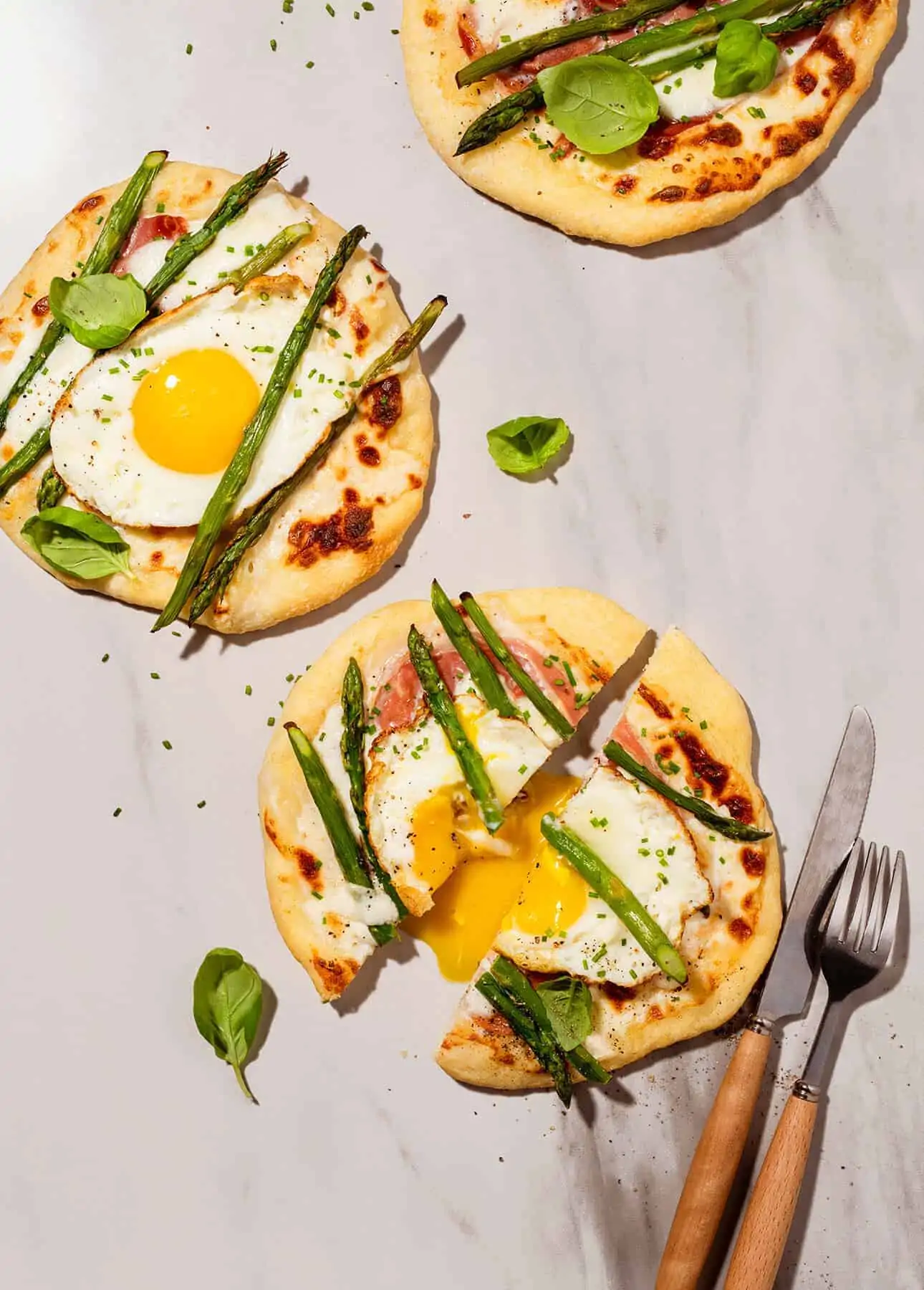
If you enjoy homemade pizza, you might also like my Roman-Style Pizza from Scratch master recipe, Prosciutto and Cherry Tomato Roman-Style Pizza, Zucchini and Thyme Roman-Style Pizza, or Breakfast Pizza.
Mortadella, Burrata, and Pistachio Pizza Recipe
Ingredients
- 1 ball homemade Roman-style pizza dough (half a batch)
- Extra-virgin olive oil
- Fleur de sel, or flaky sea salt
- ¼ cup finely grated Parmigiano-Reggiano cheese
- ¼ cup homemade pistachio pesto (see note)
- 6 slices mortadella
- 1 ball burrata cheese (about 4.4 oz / 125 g)
- 2 tbsp crushed pistachios (see note)
- Fresh basil leaves, to taste (optional)
Instructions
- Position a rack in the lower third of the oven. Place a pizza stone on the rack and preheat the oven to 475°F (245°C). Preheat for 45 to 60 minutes to allow the stone to absorb as much heat as possible.
Shape the Roman Pizza Dough
- Cut out a sheet of parchment paper that is the same size as your pizza stone. (See note.) Place the ball of pizza dough over the parchment paper. Using your hands, spread out the dough in a very thin, large rectangle with rounded corners, sprinkling the dough with a bit of flour if it sticks. The thinner you spread out the dough, the crunchier the crust will be.
- Cover the crust with a clean kitchen towel and let rest for 15 minutes.
Garnish and Bake the Pizza
- Generously brush the pizza dough with extra-virgin olive oil. Sprinkle with the grated Parmigiano-Reggiano. Spoon the pistachio pesto over the dough.
- Using a large cutting board or the back of a large baking sheet, carefully transfer the pizza (with the parchment paper) onto the preheated pizza stone in the oven. Bake until the crust is browned and crisp, about 8 minutes.
- SERVING: Pull the pizza out of the oven. With your hands, gently spread the mortadella over the pizza. Drain the burrata and place in a small bowl. With a spoon, break open the burrata, then spoon it over the pizza. Sprinkle the brushed pistachios over, then finish with a drizzle of top-quality extra-virgin olive oil and some fresh basil leaves. Serve immediately.
Video
Notes
- My homemade pistachio pesto recipe is easy, but if you don't have time to make it, you can whip up a quick version in minutes by blending 2 tablespoons (30 ml) finely chopped or crushed pistachios into 1/4 cup (60 ml) regular pesto.
- I recommend using salted pistachios because they season the finished pizza well, so there’s usually no need to add extra salt at the end. If you’re using unsalted pistachios, they’re often raw, so roasting them first deepens their flavor and crisps them up a bit. Spread them on a baking sheet and roast at 325°F for 5 to 8 minutes, keeping a very close eye on them—pistachios are delicate and can go from pale to burned surprisingly fast.
- If you’re baking the pizza on parchment paper, check that your brand is rated for high heat and safe for the oven temperature used here. Trim the paper neatly so it doesn’t overhang or touch the oven walls or heating elements.
Did you make this?
Tell me how you liked it! Leave a comment or take a picture and tag it with @foodnouveau on Instagram.
This site participates in the Amazon Associates Program, an affiliate advertising program designed to provide a means for the site to earn fees by linking to Amazon and affiliated sites.
If you click on an affiliate link, I may earn advertising or referral fees if you make a purchase through such links, at no extra cost to you. This helps me create new content for the blog–so thank you! Learn more about advertising on this site by reading my Disclosure Policy.
Author: Marie Asselin
Mortadella on a pizza?! Brilliant!!
Right?! Such a good combination 😍 Mortadella on pizza is one of my absolute favorites—especially with burrata and pistachios!