- V
- GF
- NS
- DF
- View Recipe Key
Sweet Pea Risotto
Sweet Pea Risotto

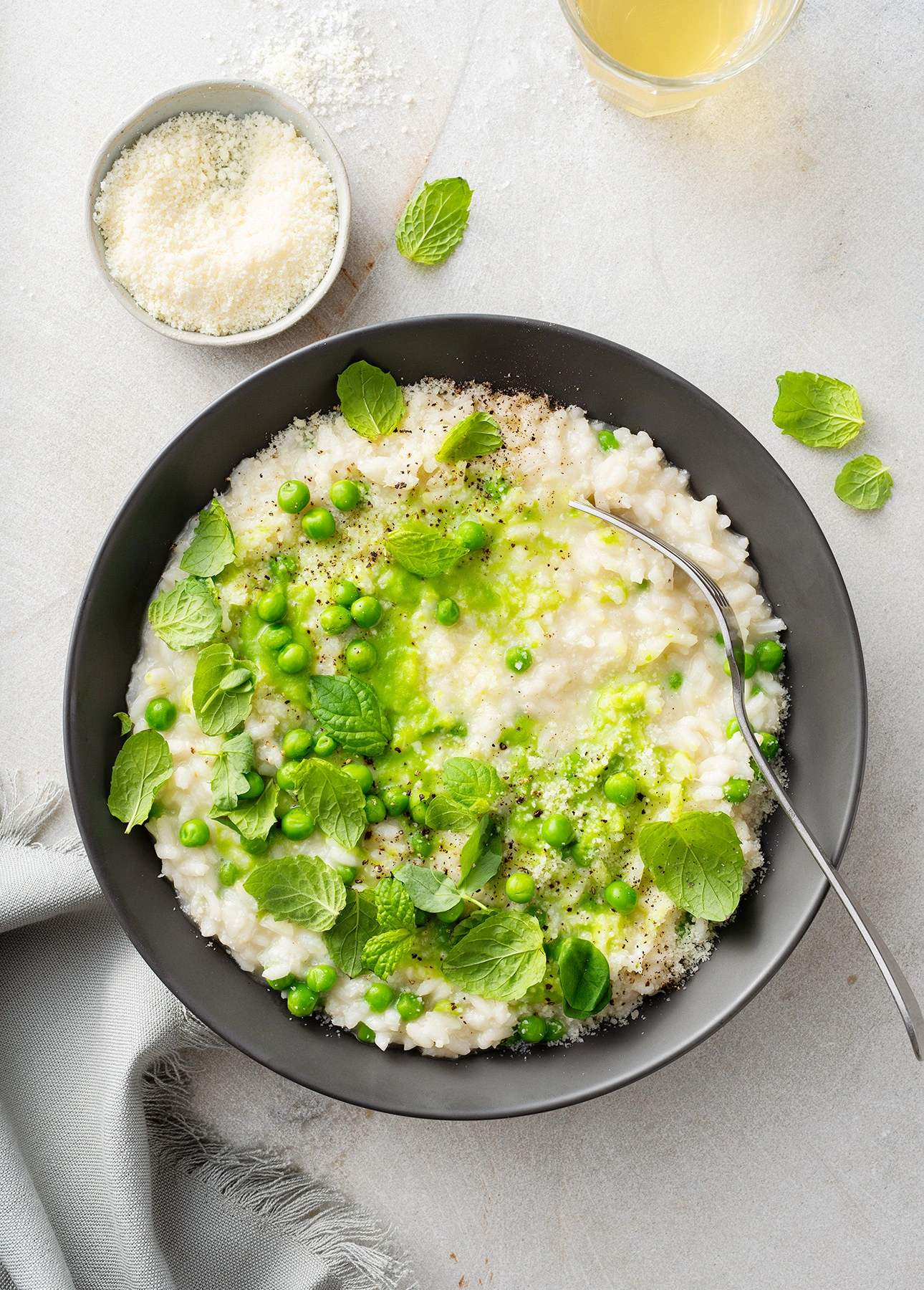
Sweet pea risotto is a fresh, creamy spring dish that works beautifully with fresh peas in season or frozen peas any time of year. Learn how the combination of a simple pea purée and whole peas creates its vibrant color and bright flavor!
This post contains affiliate links. Full disclosure is at the bottom of the article.
Every spring marks the exciting return of local, seasonal produce. I live in a northern country, and while it’s true that the vast majority of our produce is imported and available year-round, some vibrant, fresh local fruits and veggies simply have no substitutes. Rhubarb is one of the first evergreen stalks to emerge after the snow disappears from gardens, marking the imminent return of warmer seasons. Asparagus is the vegetable I’m most excited to see pop up at local produce stalls. And local strawberries are my absolute favorite: I devour basket after basket of them from June to October.
But sweet pea risotto is the dish I most look forward to making when fresh peas finally show up.
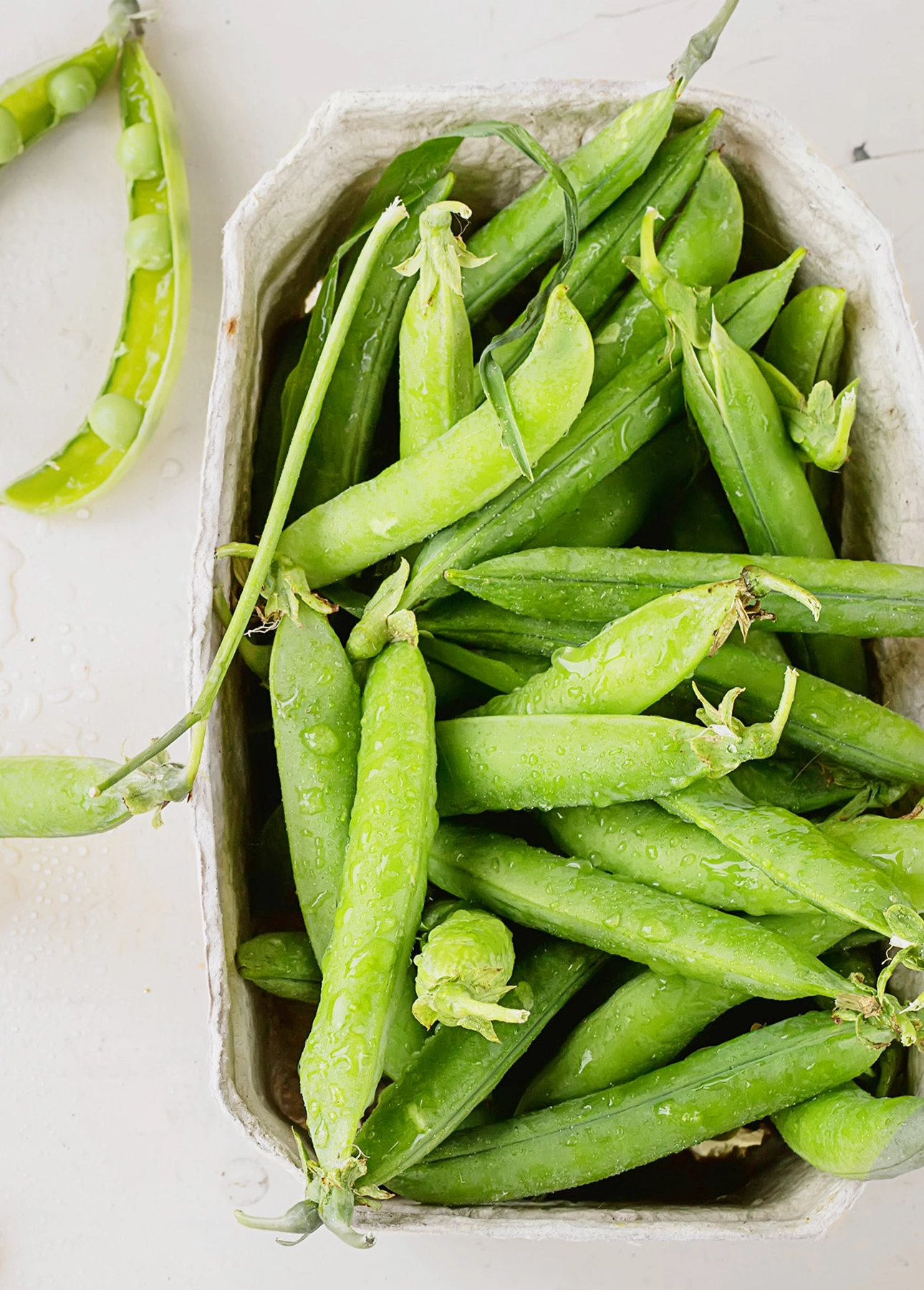
Fresh, sweet peas have long eluded me, mostly because their season is so short—it usually lasts a couple of weeks, from early to mid-June where I live. For years, I wasn’t aware enough to spot them at the market and would always wake up around the end of June thinking, “Hey, wasn’t it supposed to be sweet pea season right about now?” And sure enough, when I’d ask at the market, I’d hear that I had missed the short season yet again.
So, a few years ago, I set a reminder on my calendar to recur annually in early June. The reminder is short and, well, sweet. It simply says, “SWEET PEAS 🌱.” And though it may seem a little odd that I actually need to be electronically reminded to seek out sweet peas every year, my reminder has ensured that I haven’t missed out since—a delicious win in my book.
Sweet peas are delicate and can basically be eaten raw—they’re so fresh, crunchy, and sweet! If you use them in cooking, you want to apply as little heat to them as possible so you can enjoy them at their bright green best. Whether I use them in a lunch bowl, a soup, or this beautiful sweet pea risotto—my favorite dish to highlight sweet peas—I make sure to add them late enough that they keep their color and sweetness.
To highlight them to all their bright green glory, in my sweet pea risotto, I briefly blanch the peas, then use them in two ways: I purée some of them and stir that vivid green purée into the risotto near the end of cooking, then fold in the remaining whole peas for extra pops of sweetness and texture. It’s this two-part technique that gives the dish such a fresh pea flavor and its especially bright color.
This easy pea risotto is elegant enough for a special dinner, but simple enough to make on a weeknight. It’s creamy in the classic Italian way, using no cream at all—just the right risotto rice, warm broth, and plenty of Parmigiano-Reggiano. And because fresh peas have such a short season, I’ve also made sure this risotto with peas works beautifully with frozen peas, too.
If you love spring risottos as much as I do, you should also try my Lemon Asparagus Risotto.
The Secret to Creamy Sweet Pea Risotto
Risotto has a reputation for being fussy, but once you understand the basics, it’s actually one of the most relaxing dishes to cook. The process is simple: use proper risotto rice, keep your broth warm, add it gradually, and stir often enough to encourage the rice to release its starch. That’s what gives you that lush, creamy texture—without adding any cream.
Use the right rice for risotto
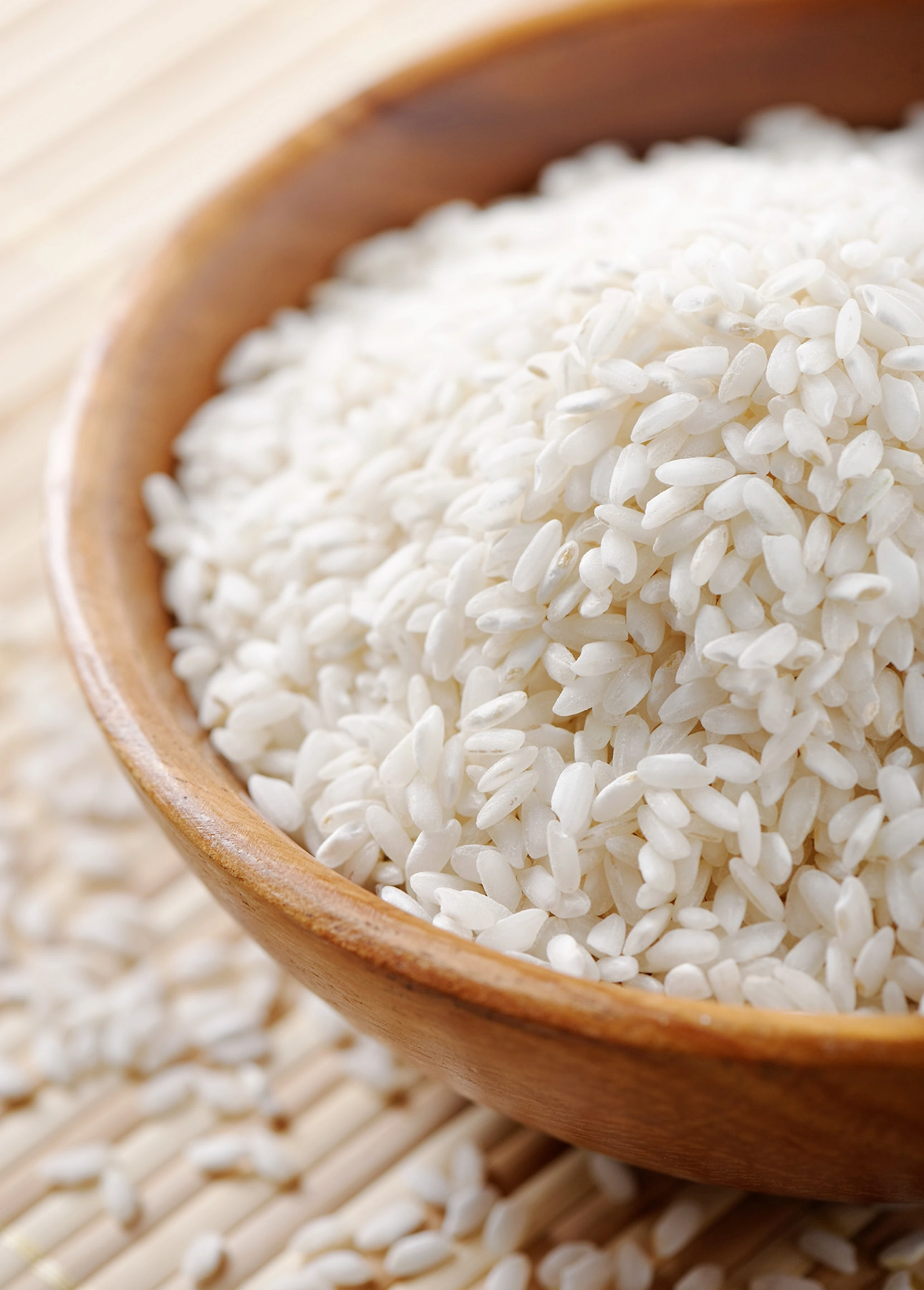
For the best sweet pea risotto, use a true risotto rice such as Arborio, Carnaroli, or Vialone Nano. These short-grain Italian rice varieties contain the starch that gives risotto its signature creamy texture while still letting the grains keep a bit of bite. Arborio is the easiest one to find, but Carnaroli is especially wonderful if you can get it.
Keep the broth warm
One of the easiest ways to make good risotto is to keep the broth warm on the stove while you cook. Adding cold broth to the pan slows everything down and interrupts the cooking process. Warm broth keeps the rice cooking steadily and helps you get a smoother, creamier result.
Use a pea purée for bright color and flavor
Sweet peas cook very quickly, which is why this recipe uses a short blanch to preserve their bright color and fresh flavor. Then, instead of simply stirring all the peas into the risotto whole, some are blended into a smooth purée and added near the end of cooking. This gives the risotto its especially vivid green color and deeper sweet pea flavor, while the remaining whole peas add texture and little bursts of sweetness.
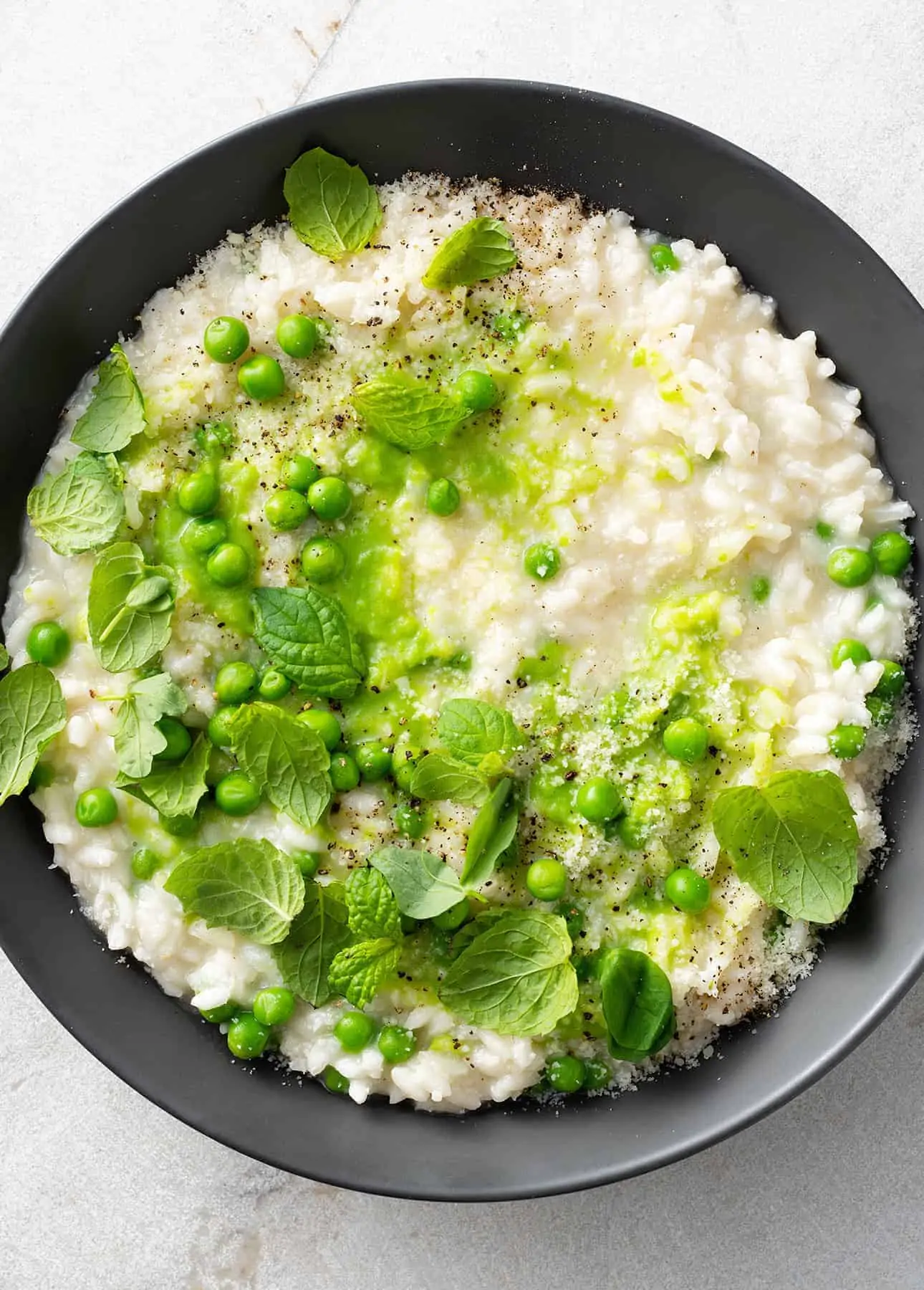
Helpful Tips for Making Perfect Sweet Pea Risotto
What makes this sweet pea risotto a little different from many other pea risotto recipes is that it uses the peas in two forms. After a very quick blanch, some of the peas are puréed and stirred into the risotto, infusing the rice with sweet pea flavor and giving it its lovely green hue. The rest are folded in whole at the end, so the finished dish still has texture and little bursts of sweetness throughout.
Use fresh peas when you can, frozen when you need to
Sure, this risotto is wonderful when made with fresh sweet peas you shelled yourself, but if you missed the season—or simply prefer the convenience of ready-to-use peas—frozen peas are absolutely fine to use. In fact, because sweet pea season is so short, a lot of us make pea risotto with frozen peas most of the time.
That said, quality matters here. When sweet peas are front and center in a dish like this, you want a flavor that’s as close to the fresh vegetable as possible. After trying many brands over the years, I’ve found that organic frozen peas usually have the sweetest, freshest flavor and the nicest texture.

Freeze your own sweet peas during peak season
Keep your eyes peeled every June for packages of fresh shelled sweet peas in the produce section of your supermarket. Some producers make them widely available at that time of year, and they’re often on sale because they don’t have a long shelf life. This is a great opportunity to stock up and create your own frozen sweet pea stash.
To do so, spread the shelled peas out over a baking sheet and freeze until hard, then transfer them to airtight freezer bags or containers. In a fridge freezer, I’d use them within a month for the best color and flavor. In a chest freezer, they’ll keep much longer, though they’re still at their best within six to twelve months.

Use peas two ways for the brightest flavor and color
My pea risotto recipe doesn’t just stir in whole peas at the end. It also blends some of the blanched peas into a simple purée, which gets stirred into the risotto near the end of cooking. That extra step is what gives this sweet pea risotto its especially vivid color and deeper pea flavor, while the whole peas still provide texture and sweet little bursts in every bite.
Use the best broth and cheese you can
As is often the case with simple Italian dishes, using the best ingredients you can get your hands on makes the biggest difference. In this very simple spring pea risotto, I strongly recommend using a mild, low-sodium broth—or homemade broth if you have some on hand—so it complements the peas rather than overpowering them.
The same goes for the cheese. This is not the place for shelf-stable grated parmesan. Use real Parmigiano-Reggiano. It brings the salty, nutty depth that makes a creamy pea risotto taste fully finished, and it helps create that classic silky texture.

Adjust the texture before serving
The perfect risotto should not sit in a stiff mound; it should loosen gently across the plate. If your sweet pea risotto tightens up while it sits, just stir in a splash of warm broth right before serving. This small step makes all the difference between a risotto that feels heavy and one that feels beautifully fluid.

Garnish simply
This sweet pea risotto doesn’t need much. A drizzle of good olive oil, a few fresh mint leaves, an extra shower of Parmigiano-Reggiano, and a crack of black pepper are all it takes. Mint is especially lovely here: it lifts the sweetness of the peas and makes the whole dish taste even more springlike.
Scale it up for guests
Like all my risotto recipes, this one serves two generously, which I personally find far more useful than the usual four- to six-serving format. But it’s very easy to scale up for guests. Just keep your broth warm, use a wide enough pan, and resist the urge to rush the process.
Why Sweet Pea Risotto Is Such a Lovely Spring Dish
Sweet peas have such a short season that they always feel a little special to me. Their flavor is delicate, sweet, and green in the freshest possible way, making them perfect for risotto. The rice gives the dish body and comfort, the Parmigiano-Reggiano adds savory depth, and the peas keep everything bright and lively.
This sweet pea risotto is one of those dishes that looks and tastes quietly elegant. It’s not complicated, and it doesn’t rely on many ingredients. It simply lets one beautiful seasonal vegetable shine.
If peas in risotto are as much your thing as they are mine, my Shrimp Risotto with Peas is another favorite to try.
Sweet Pea Risotto FAQ
Can I use frozen peas for sweet pea risotto?
Yes—absolutely. This recipe works very well with frozen peas, and they’re often the most practical option since fresh sweet pea season is so short. Use the best-quality frozen peas you can find for the sweetest flavor.
Do I need to blanch fresh peas for risotto?
For this recipe, yes—but only very briefly. The peas are blanched for just 1 minute, then shocked in ice water to preserve their bright color. Some of the blanched peas are puréed and stirred into the risotto near the end of cooking, while the rest are added whole. This quick step helps create the risotto’s especially fresh pea flavor and vibrant green finish.
What rice is best for pea risotto?
Arborio, Carnaroli, and Vialone Nano are all excellent choices. Arborio is the easiest to find, while Carnaroli is often prized for its texture. Any true risotto rice will work better than regular long-grain rice.
Can I make sweet pea risotto ahead of time, and what should I do with leftovers?
Risotto is best served right away, while it’s still loose and creamy. That said, leftovers can be refrigerated for up to two days. Reheat them gently in a skillet with a splash of broth or water to loosen the texture before serving.
If you end up with extra risotto, don’t let it go to waste: chilled risotto is perfect for making arancini. If you’ve never tried it, my How to Make Arancini post walks you through the process.

More Creamy Risotto Recipes to Try
If this sweet pea risotto has you in a risotto mood, I have plenty more where that came from. From bright spring flavors to deeper, cozier combinations, browse my roundup of 20 comforting, creamy risotto recipes to find your next favorite.

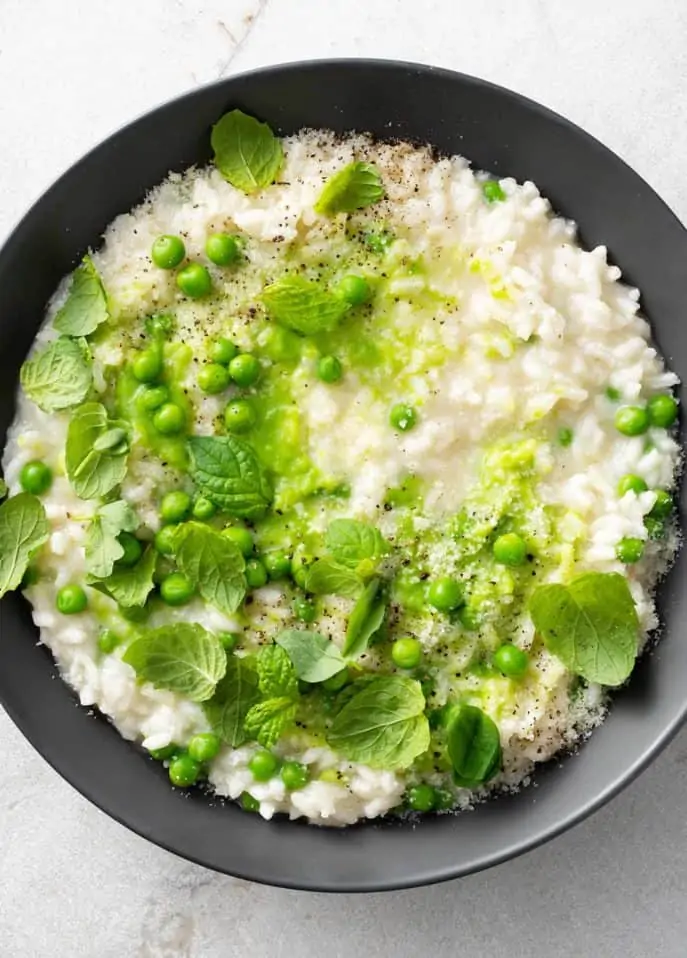
Sweet Pea Risotto Recipe
Ingredients
For the sweet peas
- Ice cubes
- 1 ½ cups shelled, fresh sweet peas, or frozen sweet peas
- 2 tbsp water
- Kosher salt, or fine sea salt
For the risotto
- 3 cups vegetable broth, or chicken broth
- 1 tbsp butter
- 1 tbsp extra-virgin olive oil
- 1 shallot, minced
- 5 oz risotto rice (Arborio, Carnaroli, or Vialone Nano)
- ½ cup dry white wine, such as Pinot Grigio
- 2 oz finely grated Parmigiano-Reggiano cheese
- Freshly ground black pepper
To serve (optional, to taste)
- Extra-virgin olive oil
- Fresh mint leaves
- Freshly ground black pepper
Instructions
- To prepare the sweet peas: Fill a mixing bowl with cold water, then add plenty of ice cubes to make the water ice cold.
- Bring a small saucepan of water to a boil. Add the sweet peas and blanch for 1 minute. Drain and immediately transfer to ice water. Let cool for 5 minutes, then drain and pat dry.
- Measure out 1 cup (250 ml) sweet peas and set aside. Using a hand blender, puree the remaining peas with the water and a pinch of salt. (You can also mash the peas and water together with a fork, then season it with salt and mix well. It’s okay if the puree isn’t completely smooth.)
- To prepare the risotto: Pour the broth in a medium saucepan. Bring to a slow simmer, then lower the heat, cover and gently simmer for 5 minutes. Lower the heat to the minimum, then keep warm.
- In a large saute pan or a cast-iron braiser set over medium-low heat, melt the butter in the olive oil. Add the shallot and cook, stirring, until soft, 3 to 4 minutes. Add the risotto rice and stir for 2 minutes, until the grains are translucent around the edges. Add the wine and stir vigorously while the wine is bubbling up, scraping down the bottom of the pan to loosen the caramelized bits. Simmer until the wine is fully absorbed.
- Add 1 ladleful of the broth and simmer, stirring from time to time, until the broth is almost completely absorbed. Continue adding broth, one ladleful at a time, allowing each ladle to be absorbed before adding more.
- When there's about 1 cup (250 ml) of broth left, stir in the sweet pea puree into the risotto. Add ½ cup (125 ml) broth, stir and keep cooking until the broth is almost fully absorbed. Stir in the grated Parmigiano-Reggiano cheese. Stir until the cheese is fully melted and incorporated. Stir in the blanched sweet peas. Season with black pepper, taste the risotto, and season with salt if needed. Stir in the remaining broth.
- The risotto should now be loose and extremely creamy. Cover and turn off the heat. The risotto can stand for about 5 minutes but sit hould be served as soon as possible for the best texture.
- SERVING: Serve the risotto in warm bowls, then garnish each serving with a drizzle of flavorful extra-virgin olive oil, fresh mint leaves, and some freshly ground black pepper, if desired. Serve immediately.
- STORAGE: This sweet pea risotto is best enjoyed within minutes of being made. If you do have leftovers, refrigerate in airtight container for up to 2 days. To reheat, transfer to a nonstick skillet, add a couple tablespoonfuls of broth or water and warm up over medium-low until the risotto is loose and hot. Serve immediately.
- MAKE IT VEGETARIAN: Make sure to use vegetable broth.
Did you make this?
Tell me how you liked it! Leave a comment or take a picture and tag it with @foodnouveau on Instagram.
Disclosure Notice: This site participates in the Amazon Associates Program, an affiliate advertising program designed to provide a means for the site to earn fees by linking to Amazon and affiliated sites.
If you click on an affiliate link, I may earn advertising or referral fees if you make a purchase through such links, at no extra cost to you. This helps me create new content for the blog–so thank you! Learn more about advertising on this site by reading my Disclosure Policy.
Author: Marie Asselin
Love the combination of sweet peas and risotto in this recipe. Definitely a great way to take advantage of pea season!
It’s a simple dish, but such an elegant one! People often take sweet peas for granted but when you can enjoy them fresh, wow! Do they shine bright ✨
I need this risotto in my life right now. And I NEED you to style my plate! The most beautiful risotto on the web. Thanks for the inspiration!
Haha thank you so much, Enriqueta! I love dressing beautiful plates. It’s my former life as a designer coming out!
This risotto is lovely! Your recipe is easy and fuss-free, beautiful in color, and healthy. Thanks so much; I will definitely make it.
I hope you’ll love it Jenny! Let me know how it goes for you.
I LOVE sweat pea and I am so glad I have come across another amazing way to use it in recipes. I can’t wait to make this risotto.
I hope you’ll give it a try Kate! It’s a great way to put sweet peas front and center while the season lasts.
Nothing like fresh sweet peas! Love the pop of sweetness in this creamy risotto.
The combination of flavors is truly delightful!
We are so with you on the fresh peas. Here we will be seeing them in the next couple of weeks and be rest assured we will buy a ton and freeze! Love pea risotto! Thank you for sharing great tips and tricks! One of our all time favorites!❤👍👌🥰😛
Thanks so much for the kind comments! They mean a lot, coming from you! Risotto is my go-to comfort meal, so every opportunity I get to make one using seasonal veggies and ingredients, you can be sure I seize it! 🙊
Marie, this is a phenomenal recipe to make use of the best peas one can find! Love how easy it is.
Thank you Ksenia! I hope you’ll give this delightful risotto a try.
My family and I love sweet peas a lot, and this is a perfect dish to make for us for tonight. Thank you for sharing this with us.
Thanks so much Amy, this dinner is a family favorite. I hope yours will love it too ❤️
We love sweet peas here in our house and grow them by the bushel full so I’m excited to enjoy this recipe all summer long.
How lucky are you to be able to pick sweet peas in your own garden! I hope you’ll use some of them to make this risotto. I’d love to know how you like it!
I can make a meal out of risotto. Fresh peas this time of year are so delicious. This looks like the perfect summer side dish.
I love risotto so much I always have it as a meal! It’s so versatile, but this particular version is really delicate and elegant. Perfect for summer!