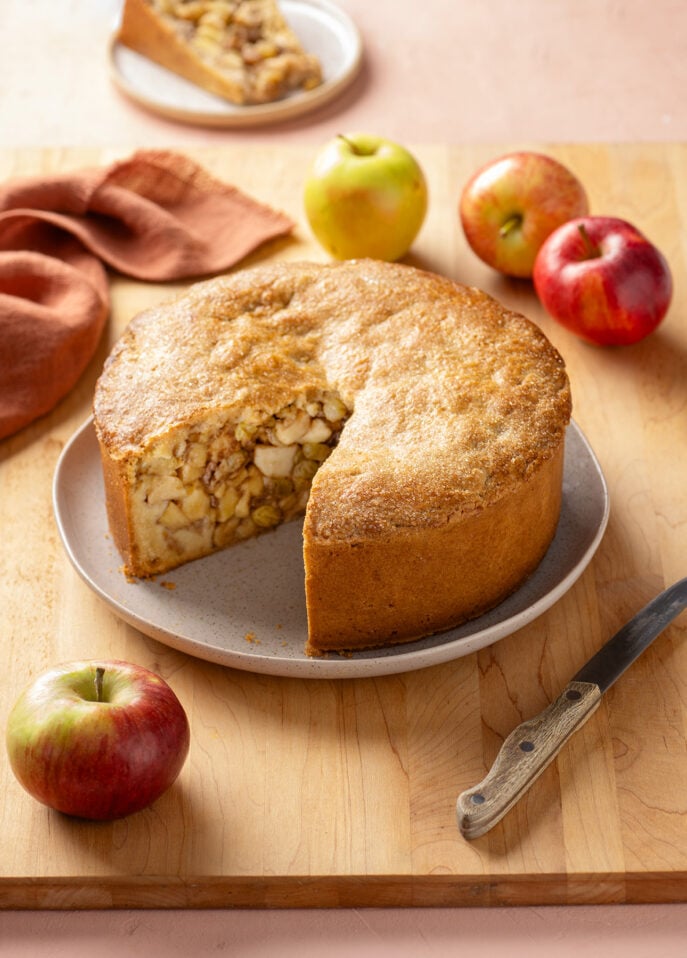
Dutch Apple Pie Recipe
Learn how to make a deep-dish Dutch apple pie, a spectacular dessert with a crunchy crust, tons of apples, and a generous sprinkle of spices.
Servings 12 servings
Ingredients
For the crust
- 1 ½ cups butter, cut into cubes, room temperature
- 1 ⅓ cups brown sugar, packed
- Pinch kosher salt, or fine sea salt
- 2 eggs, lightly beaten
- 4 ¾ cups all-purpose flour
- ¼ cup almond flour (finely ground almonds)
For the Dutch spice mix (speculaaskruiden)
- 4 tsp ground cinnamon
- 1 tsp ground cloves
- 1 tsp grated nutmeg
- ½ tsp ground ginger
- ¼ tsp ground white pepper
- ¼ tsp ground cardamom
- ¼ tsp ground coriander
- ¼ tsp ground aniseeds
For the filling
- 21 oz Golden Delicious apples
- 21 oz Lobo, Spartan, Paula Red, or Jersey Mac apples
- 7 oz Braeburn, Gala, or Cortland apples
- ½ cup sultana or golden raisins (optional)
- ½ cup chopped walnuts (optional)
- 2 tbsp melted butter
- ⅓ cup packed brown sugar
- 1 tbsp Cognac, Brandy or Calvados (optional)
- 1 tbsp cornstarch
- 2 tsp speculaaskruiden spice mix (see instructions to make it below, or use a combination of ground cinnamon and ginger)
- 1 tsp finely grated orange zest (about ¼ orange)
- 1 tsp finely grated lemon zest (about ½ lemon)
- 2 tbsp freshly squeezed lemon juice (about ½ lemon)
For baking
- 1 egg, lightly beaten
- 1 tbsp cane sugar (optional)
Instructions
- For the crust: In a food processor, cream together the butter and brown sugar. Set aside 1 tbsp of the beaten eggs for brushing later, then add the remaining eggs. Sprinkle in the salt and process until incorporated. Scrape down the bowl.
- Add the flour in three additions, mixing in the almond flour along with the second flour addition, pulsing and scraping down the bowl each time. The dough should come together into a soft, pliable ball—moist but not sticky, similar to Play-Doh.
- Grease a 9 in (23 cm) springform pan.
- Divide the crust mixture into thirds. Use one-third of the mixture to cover the bottom of the pan, pressing it down in an even layer.
- Use a second third of the crust mixture to cover the sides of the pan: Pick up chunks of the mixture and roughly press it against the sides of the springform pan until you’ve fully covered it.
- Now press it more carefully to create a smooth edge, making sure the sides seamlessly connect with the bottom crust. You can press a glass with straight edges against the bottom and sides to help you even out the crust.
- Cover the rest of the crust mixture with plastic wrap and leave at room temperature while you prepare the filling.
- For the Dutch spice mix: Mix all the spices together and store in an airtight spice bottle or glass jar.
- For the filling: Peel and core the apples, then cut them into ¾ inch (2 cm) cubes. In a large bowl, mix the apples with the raisins and walnuts (if using), then add the brown sugar, butter, liqueur (if using), spices, cornstarch, zests, and lemon juice.
- To assemble the Dutch apple pie: Preheat the oven to 375°F (190°C).
- Transfer the apple filling into the prepared crust and firmly press it down with both hands to pack it in.
- Spread the remaining crust mixture all over the apples. You’ll need to first dot the crust mixture in chunks over the apple surface, then spread and smooth it down using your fingers or a spatula. Make sure the top crust fully covers the apples as enclosing them will help them cook and soften.
- Brush the reserved beaten egg over the top of the pie, then sprinkle with the cane sugar, if desired.
- Set the springform pan over a baking sheet (some juices may leak out during baking), then bake for 75 to 85 minutes. Check on the pie after 45 minutes: if it’s golden brown, loosely cover it with aluminum foil to prevent it from getting too dark.
- To check whether the Dutch apple pie is done, use a bamboo skewer or a small, very sharp knife to poke through the pie. If the pie is done, you’ll easily pierce through the apples. If you feel they’re still a bit crunchy, continue baking until they’re soft.
- Transfer the Dutch apple pie to a cooling rack and let it cool completely—at least 3 hours, ideally overnight. This resting time allows the filling to settle and bind, making it easier to slice.
- Carefully unmold the Dutch apple pie, running a sharp knife around the pie if needed, and use a serrated knife or a very sharp chef's knife to slice into generous wedges.
- SERVING: Serve at room temperature garnished with whipped cream, or warm, topped with vanilla gelato or ice cream.
- STORAGE: Store leftover Dutch apple pie at room temperature in an airtight container or under a cake dome for up to 2 days.You can also refrigerate the pie in an airtight container for up to 5 days. Make sure to return the pie to room temperature before enjoying.To freeze, wrap individual slices well and freeze for up to 2 months. Thaw in the fridge, then let it come to room temp or warm gently. The slightly cakey, press-in crust handles freezing much better than a super-flaky pastry.
Did you make this?
Tell me how you liked it! Leave a comment or take a picture and tag it with @foodnouveau on Instagram.