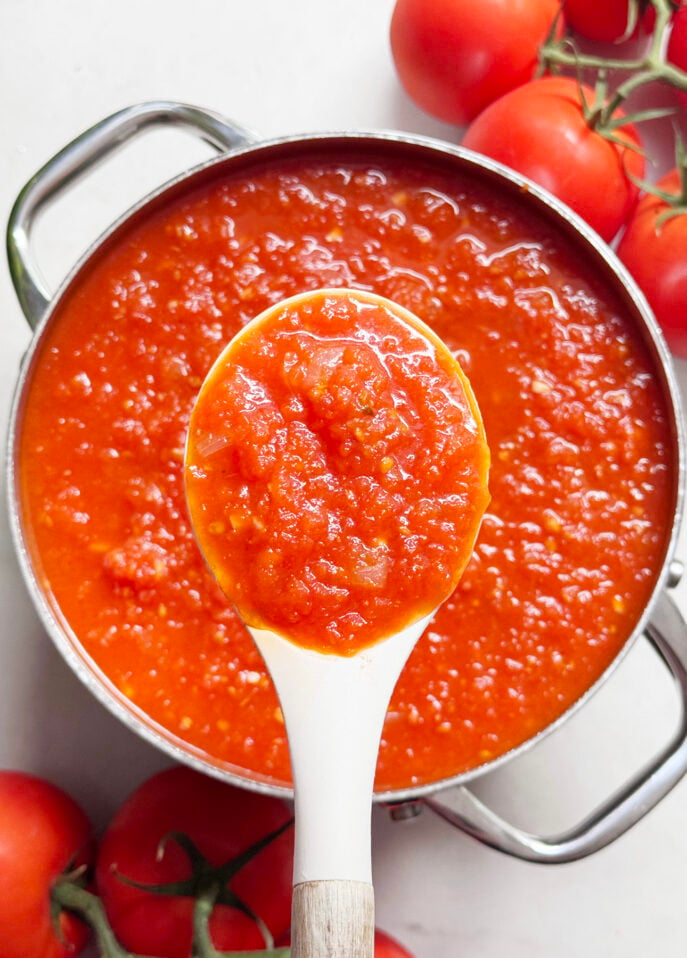
Fresh Tomato Sauce Recipe
Make this easy fresh tomato sauce recipe with any ripe tomatoes. Learn how to peel, season, thicken, and finish it chunky or smooth.
Servings 4 cups sauce, depending on the tomato variety
Ingredients
- 5 lbs fresh tomatoes, Roma, San Marzano or any other variety
- 2 tbsp extra-virgin olive oil
- 1 medium yellow onion, minced
- 4 cloves garlic, minced
- 1 tbsp tomato paste (optional)
- ¼ cup dry white wine (optional)
- 2 tsp kosher salt, divided, or fine sea salt (adjust to taste as needed)
- Freshly ground black pepper
Optional flavorings (use any or all)
- Fresh basil leaves
- ½ tsp crushed red pepper
- ½ tsp dried oregano
Instructions
- Peel the tomatoes: Bring a big pot of water to a rolling boil. Slice a shallow “X” on the bottom of each tomato. Plunge them in the boiling water until you see their skin roll back, 10 to 15 seconds. Fish them out and let them cool for a couple of minutes before removing their skins. Do this step in 2 or 3 batches to make sure there’s just one layer of tomatoes in your pot at a time.
- Prepare the tomatoes: Once the tomatoes are peeled, chop them roughly or dice them, depending on the texture you're trying to achieve. You can use a food processor to speed up this process. Keep all of the tomatoes in a large bowl as you go: the flesh, the seeds, and the juice.
- Cook the base of the sauce: Heat the olive oil in a big pot over medium-low heat. Add the onion and garlic and cook until translucent (don’t let it brown!), about 5 minutes. Pour the white wine into the pot and scrape the flavorful bits that may have stuck to the bottom of the pot. Let the wine evaporate (about 3 minutes more).
- Simmer the sauce: Add the chopped tomatoes as well as 1 teaspoon of the salt and freshly ground pepper to the pot. Raise the heat to medium-high to bring the sauce to a boil then turn the heat to low again to let it simmer, uncovered. Stir once in a while.
- The cooking time will vary from 30 to 50 minutes depending on the variety of tomatoes you used (less time for Italian varieties; more time for regular garden tomatoes). You want the final sauce to be thick, not watery. How to tell if the fresh tomato sauce is ready: The key is to look at the sauce before stirring it when it has simmered for about 5 minutes. At the beginning of the cooking time, you’ll see a thick layer of watery juices rise to the surface. As the sauce simmers, you’ll see less and less of that juice rising. The sauce is ready when it’s topped with just a thin layer of juice and you see tomato chunks surfacing here and there.
- Finish the sauce: When the sauce is ready, turn off the heat and taste. Season with 1 teaspoon (5 ml) salt, or more to taste. Stir in the chopped basil, if using. If you’re not serving the sauce right away, let it cool completely before storing.For a smooth sauce: Use an immersion blender directly in the pot, or carefully transfer the sauce to a stand blender and process until smooth.
- STORAGE: Refrigerate the sauce in airtight containers for up to 4 days, or freeze for up to 3 months.
Notes
Note about canning: This recipe is intended for refrigerating or freezing and has not been tested for shelf-stable canning. If you want to can tomato sauce, use a recipe specifically developed and tested for safe canning.
Did you make this?
Tell me how you liked it! Leave a comment or take a picture and tag it with @foodnouveau on Instagram.